
Be Organic Podcast – Season 2, Episode 26. Jessica Van Antwerp: Helping People Heal Through Exploration
Let’s talk about travel! While we might not be able to travel right now, before you know it we will be off and roaming this beautiful earth. Did you know travel can be a huge part of your health & wellness journey? There is a reason why travel often leaves you rested & rest. Getting out of your natural environment can be vitally important to healing.
Our guest this week is Jessica Van Antwerp is the owner and CEO of Integral Travel, providing wellness retreats and education to teach people how to unlock the natural healing capacity of their bodies while connecting with others and the planet. She draws on over a decade of experience in the health and wellness industry, as well as the wisdom she’s gained through her personal struggles with anxiety, weight, low self-esteem, and addiction.
TIME STAMPS:
3:20 How Jessica Found Her Path (jump to section)
15:05 Process to Help Heal (jump to section)
19:52 About the Retreats (jump to section)
28:08 Opinion on True Physical Health (jump to section)
35:00 At Home Tips (jump to section)
38:46 Where to Find Integral Travel (jump to section)
Transcription Below
Landon Eckles: Be Organic listeners, hey guys, what is going on? This is Landon, your co-host and CEO of Clean Juice joined as always by my beautiful wife and co-founder of CEO Kat Eckles. We are just super excited to be chatting with y’all today.
We’re super excited because we are talking about a topic that we’ve never talked about, and it’s one that I believe that everyone who’s listening right now is going to be super pumped to hear because it’s about travel. And travel is awesome. Travel is fun. And most of us have not been traveling. So, let’s talk about travel. We are super excited to be talking about helping people heal through exploration.
We’ve got an incredible guest for you, as always. I’m gonna allow Kat to do our introduction on.
Kat: Yes, we are so excited to have Jessica with us today. Jessica Van Antwerp is the owner and CEO of Integral Travel. They provide wellness retreats and education to teach people how to unlock the natural healing capacity of their bodies, while connecting with others and the planet. She draws on over a decade of experience in the health and wellness industry, as well as the wisdom she’s gained through her personal struggles with anxiety, weight, low self-esteem, and addiction. There is nothing more fulfilling to her than empowering people in their own well-being and helping them to heal their hearts.
We are so excited to have Jessica on the show today. I’m ready to jump in and hear all the things you have to say and teach us about these retreats you do. So, Jessica, thank you so much for joining us today.
Jessica Van Antwerp: Thanks so much for having me. I’m excited to be here.
Kat: So excited. It’s funny that we’re doing this podcast today. I didn’t even know this was the topic until I got to the studio today. I’m a Christian and I’ve been on my own spiritual journey. But the one kind of piece of Jesus’ life that has been sticking out to me recently is when he kind of got filled with the spirit and then he went into the wilderness, he went into solitude. We saw the same biblically with Paul when he changed from Saul to Paul and he went off by himself. I just was kind of meditating on this fact and I’m like, how many people don’t do this today? How many people don’t take that time and really put the effort into developing their spiritual self. A lot of that is through retreat and leaving their normal lives and taking themselves out of the environment that they are in to be alone with their thoughts.
It’s just so cool we are talking about this today because that’s kind of, I’m assuming the premise of what you do. You are pulling people out of their natural environments to heal and focus on their healing and focus on their well-being. And I think it’s such an important piece of life that so many people don’t do just because of the business.
Jessica: Yeah, absolutely.
Kat: Yeah, that really just allows people to heal and develop themselves correctly. So, I’d love to kind of hear, basically your bullets here.
Jessica: Exactly.
Kat: I know that you specialize in helping people heal through exploration, and of course that’s a connection to nature, which is amazing. I’m big on grounding and all of these things. I just kind of wanna hear about your premise of what you do, why you do it, and how it really helps other people?
How Jessica Found Her Path
Jessica: Yes. As you mentioned, I own Integral Travel. Our top level offering, if you will, is wellness retreats. But we have a bunch of other offerings that lead up to a more immersive experience.
I went into massage school in 2009, as sort of a solution to how to help people more effectively than bartending. There’s sort of like an insight to being a bartender when people just pull up a seat and tell you all their problems. All I could really do at that time was like listen, and nod my head, and offer really uneducated advice. But I wanted to have a more tangible way to help people. So, massage school was sort of the door that just opened up for me. Going into that realm, this whole world of health and wellness was opened to me, things that I had never even thought about in terms of spiritual health, emotional health, mental health, and how every layer of our being is interconnected and they communicate with one another. So, you may have some physical symptoms that are cropping up, but it may be because of some emotional thing that you haven’t healed or a spiritual thing that isn’t addressed. So, just learning about this over the last 10 years and really putting it into practice in my clients, in my private practice, has been incredible to see the growth that people have experienced.
Our ultimate purpose and mission of Integral Travel is to heal people’s hearts. And I think that’s a lofty goal, you know? We can’t do that obviously without people’s participation and willingness and desire. We think that, with that as the ultimate goal, then so many other problems sort of solve themselves on the way down, sort of like a trickle down kind of effect.
But we really want to empower people in their own health, help people feel good, and feel vital in their bodies to address their pain patterns, to look at their own addictions and why they may be engaging in destructive behaviors. Yeah, just take control over their own bodies, their own lives so that we don’t have to feel like a victim to our circumstances.
That point in particular, that last one being victim to one’s circumstances, was really driven home to me in 2012 when I was managing a wellness center. The irony of this story is never lost on my every time I relay my experience. I was working like 90 hours a week, setting up the wellness center, getting it up and running, and totally lost track of all my own self-care and personal health practices. And I had actually turned to drinking to relax at night, drinking coffee in the morning to wake up because I was only sleeping like six hours a night and smoking cigarettes actually to have an excuse to go outside and take some deep breaths, even though I was inhaling toxic air. That eventually led to a nervous breakdown on my part. It’s not something that I would wish on anyone.
But that particular day, a gentleman walked into the studio that I was managing and said, “I’m here to talk to someone about teaching QiGong.” I had practiced QiGong before. We went into the studio. He gave me a little 10-minute preview, 15-minute preview or something, and used that. I dove into the practice. Practiced every single day for six months. And that is what healed me from the breakdown.
Kat: What is QiGong for those of us that don’t know?
Jessica: QiGong is a combination of two different words. Qi means energy and gong is cultivation or exchange.
So most people have heard of Tai Chi. Perhaps have even seen people doing it, whether on the TV or in the park somewhere, whatever. Tai Chi is a type of QiGong. So, QiGong is a practice of energy cultivation. Essentially on a physics level, you are manipulating the vibration of your body, of your cells, and your frequency with the intent to get rid of stale emotions in your body, things that are no longer serving you. And therefore, make way for new, fresh energy from the universe to come into your body. So, this is the energy that causes plants to grow, moves the wind, moves the planets in their orbits. It’s an incredibly powerful force. Really learning how to call that into your body is incredibly healing.
Kat: You know what is so interesting is I’m sure just like Tai Chi, they’ve probably been using this method of healing in the eastern world for longer than any of us could ever realize. Whenever I learn about these practices, it’s always just mind blowing that we’ve completely lost them in our Western society and completely don’t integrate them. They even seem hokey, they seem strange to people. But you and I can attest to many of these things I’ve done energetically as well, that, I mean, it really is life-changing and it’s something that we’re just so used to taking a pill, or taking this, or taking that, but it’s like when we can really look at these practices how much they can impact us, it’s crazy. They have been going on for years, and years, and years, and centuries. We have just totally lost sight of them.
Jessica: Millennia, yeah, absolutely. I mean, again, kind of going back to physics, because I like to be science-based in my approach to health and wellness. I understand that QiGong, because it’s a foreign word and a foreign practice to most of us in the western culture, can be a little strange and difficult to wrap your mind around. When you think of it from that atomic, and even subatomic level of just kind of changing the vibrations of your cells, that’s what those pills are doing also. Those pills you are taking, even if you don’t take supplements or any kind of pharmaceuticals, the food you eat is changing the vibration of your body. You are becoming one with the food and the food is becoming one with you.
With QiGong, we are just sort of like bypassing the intermediary of this external thing, changing our vibrational frequency and learning how to do that on our own.
Kat: It’s so true. Even when you talk about food, what we do at Clean Juice, we do all these organic smoothies, organic juices, and that was interesting for me as well as I studied food. Food as it relates to frequencies and energies and when you are looking at organic kale, organic ginger, or cucumber or even fruit, they are all high frequency, high vibration foods. When you are looking at fast food and processed food, and meats that are laid in with pesticides and antibiotics, they’re all low frequency foods. So, when you say that, you become your food, it’s like when you are eating high frequency organic fruits and vegetables, your whole body is operating at a high frequency and a high capacity as to when you are lowering yourself down with all the fast foods, processed foods as most Americans are. That’s just setting the stage to not be able to heal and operate correctly. I can relate to what we do with the frequencies and how important that is.
Jessica: Exactly. Even beyond that physical level of the vibration, you can change your diet and be eating all the high vibration foods, right? But if you’re not dealing with the stress, the internal reaction to your circumstances, then there are still some other forces at play within your body that are changing the way your body functions.
Kat: Absolutely.
Jessica: You know, stress causes the body to function in a different way. The focus of the eyes changes. The blood moves away from the core, digestion, out to the limbs, so you can run away. This was all programmed when we were going to be eaten by a saber tooth tiger on the plains or something like that. That’s just the physiological way that the body functions. It’s not focused on healing when you’re in a state of nervous system activation because it doesn’t know if you’re gonna survive the night or even the next five minutes when you feel a threat to your life.
But we exist in these perpetual states of sort of artificial threat of the looming deadline from our boss, this thing, or just the mountain of the to do list that is weighing down on us that we just don’t seem to have enough time in the day to do everything for everyone. That again, affects the way that your body changes. Not only eating the high vibration foods but then internally performing some alchemy so that you are more in control of the way that your body is functioning. Do you have conscious control of shifting out of that state of fight or flight and into the rest and digest mode? I think that is one of the things that we focus on at Integral Travel, really downshifting the nervous system activation, again, to activate the natural healing capacity of the body.
Kat: That’s so important. I’m not sure people even realize that they are living in this fight or flight. I know that I haven’t done it so many times. And sometimes, I remember when we were starting our company, it was exciting. We were having so much success. We were going, going, going. There were a lot of great things happening. On the tail-end of that, I’m exhausted. I’m running myself down and don’t realize how much restoration I really need to be able to deal with these things correctly.
Then you have the whole other added element of all these traumas that all of us are dealing with womb traumas to childhood traumas and all these things that our body has held onto for so long. And we’re hitting adulthood and we’re going 90. We haven’t even dealt with the stuff that happened to us when we were two and three years old and our body holds on to that. I think there is so much healing that everybody needs to do there with themselves and their spiritual self.
I love what you do because it’s just honoring that in a way. You know, it’s honoring to say, “I need to slow down. I need to slow my body down. I need to slow my mind and my spirit down so I can really acknowledge not just my day to day but all of the things in the past that happened and I can release them so I can move on in a healthy way.” I just think it’s really, really special. I love that.
Jessica: Thank you. You got it.
Kat: I know you talked about your nervous breakdown and I appreciate you being open and sharing with that. I guess I would love to hear how just kind of nature and being in nature, your process helped to heal things like that nervous breakdown, anxiety, and addiction? Just the kind of success stories that you have seen on your retreats?
Process to Help Heal
Jessica: Well, nature in itself has healing properties. We’re just beginning to understand that from a scientific point of view. Really since the industrial revolution is when human beings started becoming more and progressively more disconnected from nature. Like we used to live in rhythm, in cycle with the seasons, you know, like being mostly outdoors and having sort of temporary shelters in nomadic days. And really following the weather, eating seasonally, eating what’s available to us in our local area.
I think going back to that ancient wisdom, just like you were talking about Qigong as a practice that’s been going on for millennia. This is really like ancient and sort of basic stuff. We have become so enamored with modern technology and the modern way of life that we’ve lost track of that ancient wisdom. There are studies being done that are showing that being in nature, spending a two or three-day weekend in nature versus two or three-day weekend in a city has an effect on your T-cell count. These are your immune cells that actually fight off infection that lasts for up to two to three months after you get back from that weekend. There are all sorts of healing properties that nature can imbue into our own bodies to make us feel more healthy. So, being in nature and connecting with the natural environment at any one of our destinations is an integral part of each of our trips, each of our retreats.
One of the most profound transformations I’ve seen, well, there’s two stories. One is of a gentleman who was a student in the massage school where I teach, and he went on one of the retreats. He was just sort of like a grumpy guest. Nothing was ever good. He was always sort of sour about everything. He had trouble getting along with a lot of other people in the classroom. He was a really challenging student. He went on one of our retreats to Thailand. He came back an entirely different person. He underwent an incredible transformation during the journey, which is challenging. I’m not going to sugar coat it and say, you just come back to this light being. But you have to go through some darkness to get to the lightness sometimes in terms of confronting the way you’ve been, the way that you’ve treated people in the past. So, he definitely went through a few dark days of the soul during this retreat and came out the other side. He is so kind, so loving, and joyful. He has a smile on his face. Every time you see him, he wants to give you a big hug. It’s just amazing. That’s why we do what we do.
And then there was another woman who also went on one of our Thailand journeys in a different year and she was struggling with an addiction to opioids for pain. So, she was in pretty constant chronic pain. And even over there, we had to break away from the group to take her back to the hospital to get her prescription refilled. But by the end of the journey, she had gone like five days without any of the painkillers. These trips to Thailand, basically we’re living outside. We sleep, depending on the destination, we were sleeping in huts or cabins. They are all open areas. There is generally no air conditioning in the places that we go in Thailand. So, we feel the heat of nature when it’s hot. We feel the rain when it’s rainy. We are very immersed in the local environment. She has also undergone a similar transformation as the first gentleman that I was talking about. She has become such a joyous being, is way more empowered in her own health, managing her pain, and way more motivated to help others also to seek out natural solutions and kick that opioid addiction.
About the Retreats
Kat: That’s amazing. Tell me a little bit about these retreats just fundamentally. How many days are they there? And you mentioned Thailand, do you usually go to those types of locations? Where are some of the other ones that you have?
Jessica: The number of days of the retreats vary based on the destination. We have some domestic retreats here in the States that are just four days, so sort of a long weekend. When we go overseas, we like to spend at least a week, if not more. Those two people actually went on very long journeys in Thailand, they went on like five week journeys in Thailand. We are sort of shifting away from that length of retreat. That was also at a time when we were teaching Thai massage and they were both there to learn Thai massage and how to do that for other people. Now, we are focusing more on just general health and wellness practices because there is such a need for it in our modern education system. We are not really taught how to take care of ourselves, even though we spend our entire lives in these bodies. We’re sort of trying to teach people what they may have never learned to begin with. And also, of course, invite people to share their own wisdom that they have learned through their personal care journey over the years, a bit of a digression.
We are going to Baja this fall. We have also been to Scotland, Morocco, Costa Rica. Once COVID slows down, looking at doing a retreat at an eco village in the center of Kenya. Really, just sort of all over the world. If you ask me where I wanna go, I’d be like, “Where don’t I want to go?” I’ll go there.
Kat: That’s so amazing. Love that. And I think, like you said, just connecting with the world, the nature, and the different pieces is healing in and of itself. I love that.
What does a typical day look like there? Are you doing talk therapy, yoga, what can one expect when they are on one of these retreats?
Jessica: Great question. The day generally follows a pretty easy flow. It’s not super rigorous in terms of the time spent on this activity or that activity. But we generally start the day with some sort of movement practice, like yoga to just wake up the body. That is before breakfast. Then we have breakfast. To do an activity, generally an outside activity in nature, wherever we are in the morning, come back for lunch, and then a more mellow movement practice, probably like a QiGong practice which is just slow, mindful movement, coordinated with breath in the middle of the day. And then afternoons are reserved for either free time or wellness treatment. So, we always like to incorporate some treatments in each one of our retreats. So, whether it’s massage or acupuncture or reiki session, cranial sacral. We’ve even had astrologers come and sign on to be part of the trip and provide astrology readings. Personal nutrition consultations. That is focused in the afternoon. And if you’re not receiving one of the treatments, you have some free time. And then, dinner. There is always an evening discussion that ties in sort of the activities that we were doing for the day and how they relate to our health and wellness. We usually finish with an evening meditation.
There are various little wellness kinds of chats throughout the day that ties in the activities we are doing on how our body’s natural capacity to heal itself. Massage for example, just being the way in nature has positive effects on one’s health. So, do touch. Touch has been shown to increase all of the happy hormones, serotonin, dopamine, decrease cortisol and adrenaline and those sorts of stress hormones. It decreases blood pressure, it decreases the respiratory rate, and just helps the body shift into that parasympathetic nervous system state, that rest and digest state. Every single one of the activities that is incorporated in the retreat has been chosen specifically for its effect on the nervous system.
And then educating our participants about those things. It’s super easy to go home and take a 10 minute walk around your neighborhood and be in nature, under the trees, and breathing that fresh air. It’s easy to incorporate a little bit more touch into your daily life. The goal is that people learn tools and techniques that they can take back home with them and incorporate into their daily lives.
Kat: That’s awesome. I imagine there is a big piece of just rest that’s important with all this. It’s like sometimes we are going, going, going. We are jam-packing our schedules and our days. I love that there is movement and learning, but it’s also just probably rest and reflection and reminding your body what it feels like to not be in a constant state of what’s next.
Jessica: Exactly, exactly. The jungle yoga retreat that we go to in Thailand, there is no internet there. There are no phones, no internet, no TV. So, you just get this respite from the constant pings and dings and notifications that are coming out of whatever device or perhaps even multiple devices, you know, as we go throughout our days. It’s really fascinating, the first few days to witness other people and experience it myself. It’s sort of like a technological addiction of reaching for your phone because it’s a habit to check whatever notification, check your email, check to see if anything came through on social media. And to see how people really slow down over those first few days. And then, on day four, it’s like everyone is really there. They are super present. And then that’s when the magic really starts to happen. We connect with each other as human beings without that distraction of the phone. It’s a really special time.
I think that taking a vacation is different from going on a retreat, right? Taking a vacation you can often fall into the same trap of that go, go, go, do, do, do, cram in as much as you, particularly if you are in an international destination where you are probably not going to get an opportunity to go again. You just have to see all the things. You have to go see the Eiffel Tower, go to the Louvre, and all the spots, you know, in Paris. You come back from your vacation and you are just as tired, if not more tired than when you left.
So, yeah, the retreats are really about slowing down. It’s about depth of experience as opposed to breadth of experience.
Kat: I love that. That’s so great. I know that you believe like I do, so much of physical health has to do with emotional, mental, and spiritual health. I know we have kind of touched on this a little bit. But maybe explain in your own words, because I always try to accentuate that on this podcast when I have anybody that comes on that talks about this correlation just because I truly believe it’s so important. I believe it’s probably the most important piece of health, and it’s probably talked about the least. You really have to deal with this spiritual, emotional, mental side of yourself if you wanna see true physical health. So, I would love to just kind of hear your thoughts on that and any opinion that you have.
Opinion on True Physical Health
Jessica: Yeah, absolutely. I’m very sensitive to skepticism around the interconnectedness of these layers of being. So, I like to always address that sort of first. For people who are still learning about how mental things, emotional things show up in the physical body, just think about when you’re nervous about something. The nervousness is an emotion, right, that shows up in your body in a specific way. Maybe you sweat a lot, maybe your palms sweat, maybe you get butterflies in your stomach. These are physical manifestations of an emotion that you’re experiencing. Or if you’re angry, maybe you get hot, maybe you get red. Like there are things that are happening in your body because of an emotion that you’re feeling. So, then it expresses itself through that way.
I sort of interpret things through the lens of Chinese medicine given my background in shiatsu, which is a specific style of body work based in Chinese medicine, the same system of medicine as acupuncture. It is a super beautiful system. Even if we do grasp this concept of the interconnectedness between the body, the mind, the spirit, and all levels of emotions and mental activity, it doesn’t always give us how things are interrelated or give us an understanding of what to do about it. So, Chinese medicine for me, through the lens of the five elements, has helped me understand the correlations, the mental correlations that show up in our bodies, the emotional correlations that show up in our bodies, and then how to address them from sort of an elemental perspective.
I know we are sort of getting into heavy theory here. The elements in Chinese medicine, fire, metal, water, wood, and Earth. If you think about water putting out fire, that’s a controlling elemental relationship. Some things that are associated with the fire element are your vivacity that is coming out through your tongue. Like actors have a lot of fire elements in them. Teachers also have a lot of fire elements because they get up in front of a group of people and are teaching things. If you have an issue with stuttering, something with your speech, related to the fire element, stuttering, a lisp. Water element correlations to kind of draw that under control to sort of tame the fire, if you will. So, water element being associated with deep psychological states. Like if you think about like waters running deep. There are all these expressions in our modern lingo that sort of allude to the elements. And to their wisdom and power. So, slowing down when you speak sort of may be a way to address the stuttering.
I might be going off on a really unrelated tangent here. I think it’s fascinating. And for me, it just brought everything into focus. It was like, oh, okay. Learning about all the correlations of all these elements helped me, you know, take that frame, if you will, turn it and put it into between myself and my life and all the symptoms I was dealing with or whatever, and be it like brought everything into focus. It was like, this thing is related to that thing. And that thing is related to that thing. It’s all this one system. It’s not a separate symptom over here, this separate thing over here, and this separate thing over here.
Maybe a simpler example. The wood element in Chinese medicine consists of the gallbladder and the liver organ networks. It’s associated with decision making. Well, gallbladder specifically is associated with decision-making. And it runs that meridian, that energy pathway in the body runs down the side of the body to the hips. So, oftentimes hip issues are associated with some gallbladder sort of issue.
My husband had a double hip replacement a number of years ago. He was in a previous marriage also and that was not going well. They had talked about divorce, but they weren’t, you know, really convinced that that was the right way to go. Well, after he had his double hip replacement, they made the decision to get a divorce. The physical can also affect the other layers also. So, maybe his hip issues were due to this like indecision, not choosing a stance, deciding what direction to go, and it manifested into this intense hip pain. Once he addressed the hip pain, then all of a sudden the decision became easier.
Kat: It really is all related. Again, it’s like something that they’ve understood in Eastern medicine for long before we came in and almost eradicated it out of our normal vocabulary and normal culture in America. It’s sad because I think it’s just an important piece of well-being and health for everyone. I just really applaud people like you that are bringing it to the surface and talking about it and educating and creating the space to honor that.
Jessica: Well, thank you for allowing me to share it with you and your listeners.
Kat: So, before we go, what are some things that maybe people can do at home if they don’t have the capacity whether it’s time or finances to go on one of these retreats? What is a suggestion for someone to do at home to make a change in their daily life to improve it and connect with nature?
At Home Tips
Jessica: Well, I definitely think that going for walks is a great way to just connect with nature, slow down. You know, I think a lot of times we associate the need for exercise and movement with things like hardcore, cardio intense, interval training, something where you sweat. But really just movement in general is so good for your body. Gentle moving helps pump your lymph which is basically your body’s waste disposal system. It gets your blood flowing. It helps you breathe a little more deeply. And it gives you the added benefit of spending that time outside so you can get some fresh air. I know there are some air quality issues around different parts of the country right now with a lot of the fires going on in the west. But you can still get the effect of the greenery, being outside, and moving your body. So, taking walks is a really easy and free one.
Again, incorporating touch, however that may be. If you don’t have the financial resources to get a massage for example, even just start incorporating it within your home life, with your loved ones, your children, your spouse. Just be more conscious of touching one another. That gives you the added benefit of syncing your nervous systems. Your nervous system has a concept called entrainment where the frequencies in which they are vibrating may be dissonant and different at first, but if you stay in contact for 10 to 20 seconds they sort of sync up. Then it just enables an easier flow with your partner, your loved ones. So, incorporating touch.
Drinking good water. I mean, enough water I think is a challenge for many Americans. But drinking good quality water. If you are just drinking tap water, you’re actually ingesting a credit card-sized worth of plastic every single week because of all the microplastics that are in our water supply. So, good filtered water. Please do not use a one-time use disposable water bottles. But a reusable water filter that you can just attach to your tap.
Integral Travel, we also have a lot of resources for every financial kind of tier. So, we have free meditations that will help you ramp down out of that sympathetic nervous system activation state down into the parasympathetic rest and digest. We have a whole suite of those free meditations on our website. I also teach two online Qigong classes every week by donation. So, there’s no financial obligation to participate. I just want to share this work with people because I truly credit it with saving my life and helping me heal from my nervous breakdown. And it’s an incredible and powerful practice. So, those classes are available by donation. We are also about to launch a suite of cleanses that will help. I have an intro to QiGong course. You know, there are a lot of resources through the Integral Travel website as well that people can just start doing on a daily basis, at home, on their own.
And then if they want that more immersive experience, they can kind of work their way up to a retreat.
Kat: I love that. So, good. Well, Jessica, thank you so much for joining us today. We’re so excited to chat with you and like I said just learn more. I really honor and appreciate what you do.
If our listeners would like to learn more about you, where would they go? Let’s just share your website and any social media, anything like that where they can learn more?
Where to Find Integral Travel
Jessica: Yeah, thanks so much for having me on, Kat. It’s really been a delight to chat with you. I really respect and honor the education that you’re helping to provide to people. We all have a similar goal in mind, which is health, wellness, and feeling good.
So, if people want to connect with us, www.IntegralTravel.com is the website. They can sign up for the newsletter. We’re always sending out the latest things that we are learning about health and wellness, in addition to our latest offerings and products.
We are on Instagram @Integral_Travel. And we are on Facebook as well @IntegralTravel. We do have a YouTube channel as well with all sorts of videos of little stretches, pain patterns, and we are constantly coming up with new videos, new meditations and like to share those with the world. Lots of different ways to connect.
Kat: I love it. Well, again, thank you so much for joining us today. I’m excited for our listeners to learn more and I just wish you all the best with this venture and just everything you’re doing. Just know we are rooting for you and really respect the healing work that you’re doing. So thank you for sharing with us today and best of luck as you move forward.
Thank you so much for tuning in today to Be Organic. We’re so excited for you to become healthier in body and stronger in spirit.
Landon: So if you like what you heard today, please be sure to subscribe on Apple Podcast to never miss an episode,
Kat: And we’d love to connect with you over on Clean Juice’s Instagram. Give us a follow, slide into our DMs with any suggestions for guests or topics that you might wanna hear more about.
Landon: All right, y’all. Thanks for listening. Have a great week and remember to Be Organic.
[music]
Kat: Just a quick legal disclaimer, we are not doctors. While we absolutely love discussing wellness nutrition with our expert guest, you should always talk to your physician or other medical professional before making any dietary or lifestyle changes. They can assess your specific needs and come up with a plan that works best for you.
In addition, this is for educational purposes only. Clean juice franchises are only offered by delivery of a franchise disclosure document in compliance with various state and federal laws.

Be Organic Podcast – Season 2, Episode 25. Dr. Nick Goin: Your Innate Healing Potential
We believe chiropractic care should be an essential part of everyone’s daily life – but why? Should you only see a chiropractor if you have aches and pains? What about pregnant women, infants/pediatrics, or people with neurodevelopmental disorders? Join us as we dive into specifics about the benefits of chiropractic care and how it can change your life.
Joining us to talk about all things chiropractic care is Dr. Nick Goin. Dr. Nick suffered from chronic allergies, eczema, and back pain in which medication and prescription drugs failed to get him well. After years of no medical cure, it was then from principled chiropractic care that healing came. This radical healing experience transformed his life and led him to pursue chiropractic care as a way of life and as a career.
TIME STAMPS:
5:00 How Dr. Nick Goin Found His Path (jump to section)
8:03 Four Pillars of Health (jump to section)
11:47 Starting Points for a Patient “Falling Apart” (jump to section)
15:37 Chiropractic Care and Pregnancy (jump to section)
19:33 Early Adjustments for Infants (jump to section)
23:02 Neurodevelopmental Disorders (jump to section)
29:13 Adult Care (jump to section)
36:07 Where to Find Dr. Nick (jump to section)
37:07 Tip for Organic Living (jump to section)
Transcription Below
Kat Eckles: What’s up, the organic listeners? Thank you so much for joining us for another episode of our podcast. As always, Landon and I are so grateful for all of you that decide to tune in. And just more importantly, we’re excited for you as you’re on this health journey and you’re just choosing to spend the next 30 to 45 minutes with us learning a little bit more about health, learning a little bit more about what you can do to make your life better, and ultimately make others life better because you’re living as your best self.
I know that you’re going to learn a ton from our guest today. I’m so excited to chat with him and just get to know more about what he does. I’m excited to introduce Dr. Goin. He is up from Ohio. He pursued his undergraduate degree in business management from the University of Michigan. Dr. Nick suffered from chronic allergies, eczema, and back pain in which medication and prescription drugs failed to get him well. After years of no medical cure, it was then from principle Chiropractic Care that healing came.
This radical healing experience transformed his life and led him to pursue chiropractic care as a way of life and as a career, Dr. Nick went to Davenport, Iowa where he knew he could excel in his study of chiropractic care and natural healing. Learning all that he could, he graduated with Magna Cum Laude honors from Palmer College of Chiropractic. He also had the honor and privilege of interning and working for one of the country’s top pediatric and family chiropractors, Dr. Tony Ebel.
Dr. Nick now specializes in pediatrics, pregnancy, and family care. He also has a special focus on autism sensory processing disorders, ADHD, and other neurodevelopmental disorders.
Dr. Nick, thank you so much for joining us. We are so excited to have you today.
Dr. Nick: I am excited too. As we were just talking before the show started, when the Clean Juice opened up here in Perrysburg, the owner of that location Ross told us to check out the podcast. As we were driving home, I told my wife, “How cool would it be to have the honor and privilege to be on their podcast.” And here we are today getting to talk and hang out. I’m super grateful and excited to be here.
Kat: My producer and I just exchanged looks like that was so great. And it’s an honor for us. You know, I think that’s kind of the heart of why Landon and I started this podcast. We felt like because of our industry and what we do, we get to have so many great conversations and get so much knowledge from people like you and guests that come in and just people that are far wiser than we are about health. We were getting all this information and it was like we are almost culpable if we don’t share it with other people.
The Lord has blessed us with so many people’s lives interact and intercede in this wellness world. There is just so much to know and learn. We needed to put all this information we were getting into one place and let our guests and listeners kind of get to know it. I’m so glad that when you listened to us that is what you thought because that was just kind of the mission of this podcast. That makes me really happy to hear that is kind of where your head was at.
Dr. Nick: Yeah, for sure.
Kat: You know what’s interesting too? We have five kids. Two of our kids have, well maybe not full on sensory processing disorders, but a few things. And one of them had an injury early on in life that he suffered from and he was delayed. And I can say without a doubt that the two of them, chiropractic care was probably the biggest thing that helped to heal them and helped them to move forward. So, I have a very personal success story with using chiropractic care and what a difference I saw with kids. I can attest to what you guys do and how important it is.
I guess I would just like to hear a little bit about healing from within and what that means to you and how you use that in your chiropractic care and what kind of got you started here?
How Dr. Nick Goin Found His Path
Dr. Nick: Yeah, no, absolutely. I would say the healing from within for our family’s philosophy and belief system for really how we believe that God has really designed the body because we know when you give the body the right things, it is meant to thrive and have vibrant, abundant life. That is really kind of our belief system at which we live our life.
How we integrate that into our practice is, a big part of our practice is not just applying chiropractic care and giving adjustments. It is really educational too because I feel like when you have the right belief system, the outcomes for your health are going to be way better. I always tell people that our thoughts on a daily basis, the more that we think them, certain thoughts, really kind of drive our belief system.
This system that we have really drives the decisions that we take and those decisions then determine our outcomes. So, the healthier the belief system, as far as health and living organically, right? Really drives a healthier outcome and the lifestyle that they are going to really produce. So, we do a lot of education with our patients and really get them to understand this help within principle. Doing this for seven years, I have really found that the philosophy and the mindset that people come in with is unfortunately, in my opinion, not correct. And a lot of people just believe that they’ve been given bad luck, or bad genes and that there’s just nothing to do about it. That is so false. There are answers. God has created the body to heal, function, and function well.
Kat: That’s so true. I believe that so much. It’s probably something that I highlight on almost every episode. People are probably like, “Okay, shut up, Kat, I get it.” But emotions and mindset, like you said, and just beliefs. Everyone gets funny about affirmations, but it’s important and so true. It’s just keeping that positive self-talk and positive thoughts and working through negative emotions and making them into positive. That is the root and foundation of healing your body. All this other stuff matters. But without that emotional piece being healthy, I truly don’t even believe that your body can heal. I think it’s that important. I appreciate you highlighting that. I have a very strong belief in that too.
Dr. Nick: Yeah, for sure.
Four Pillars of Health
Kat: One thing that I really love is you say that everything you and your wife Ashley do falls under the four pillars of health, which you call faith, function, fitness, and food. So, I would love for you to explain that philosophy a little bit and what each one of those mean to you?
Dr. Nick: Yeah. When we look at health, my mindset back in the day, was I knew I was healthy if I looked good or felt great. But as I really started to understand health from a deeper perspective I knew that it was so much more than that. It’s not just one thing that produces health. It is a multifaceted aspect to really living your optimal potential. And these four things are really kind of the things that we really set the pillars and foundation for our health and what we do on a daily basis.
Faith, I mean, that’s huge for us. That’s everything. That’s the biggest cornerstone and pillar to be honest with you. Our faith, as you just talked about with your mindset and your belief system, is true for us in every way that we believe that God has created the body to thrive and be well. But he is our Lord and Savior too. That is again the cornerstone of what we believe.
As far as function goes, fitness and food that kind of speaks for itself. But as far as function goes in the way of chiropractic, that is kind of the two that tie together functioning chiropractic. When we look at chiropractic and from the world’s eye view, a lot of people picture chiropractic as a great therapy, if you will, for neck pain, back pain, migraines, things like that. As I started to understand chiropractic even more as I was going through chiropractic school, I understood that chiropractic was so much more than that. We are not just working with a big hunk of muscles, ligaments, and bones. But within, inside the spine, it is the most important organ system that we have, which is the nervous system. The nervous system is what really dictates all functions for our body. That is the foundation, the baseline for where all health thrives from. The healthier we can provide an environment for the nervous system to communicate with the rest of the body, the healthier that individual is going to be.
Kat: Yeah, that’s so true. I think people are getting more and more into functional exercise, functional medicine, and now, of course, functional chiropractic care. And I think it’s just such a great belief and understanding of how the body all works together and how important it is. It’s like you will see someone has a liver problem, but really you need to adjust the spine and be doing all these things. The body works together in unison with each other. I think that concept is really going to propel the future of medicine to really help understand that we can’t just look at one thing. We have to really look at the body holistically to figure out what’s going on and what we need to fix.
Dr. Nick: Yeah, absolutely. I agree 110% on that.
Starting Points for a Patient “Falling Apart”
Kat: When you meet a patient, I know that you are having appointments, fixing them, and adjusting them. But you are also trying to change other things in their life and that’s where the true healing really comes in. What are some parts and practical things you teach your patients in your education program? And what are some of the things you focus on in food and fitness? If I came in and I was like, “Oh, my gosh, I’m falling apart.” Where would you start with me?
Dr. Nick: Where do we start, that’s kind of like opening Pandora’s box right there. We always start with, what I would say, less is more. When we introduce a patient in the practice, we don’t have them change anything from a lifestyle standpoint, except getting adjusted. Because what we want to do first and foremost is see how the power of chiropractic can play such a huge role into their healing journey, for whatever it looks like they are coming in for.
But when we start to look at other things outside of the world of chiropractic and really get neurologically the body functioning at its optimal level. Like we talked about the four pillars of health, there are more things outside of chiropractic that can really generate a healthy, organic lifestyle. From food, to fitness, to emotional, and spiritual well-being, I always go with this principle of, add rather than subtract.
The reason why I say that is because when you start taking something away from an individual, a lot of times what will happen is the brain will neurologically try and go out to seek or find what was taken away. Because what was taken away from that individual was most likely pleasurable to their brain. So, when you deprive the brain of its pleasure, it will go and seek that out. I always go with the principle, add rather than subtract because unfortunately when we take things away first, that is when we have an inconsistency in the success.
We can see a lot of things like people not being able to achieve their goals, people with diets yo-yo in their weights and not as successful as they could be. So, I always go with the principle of adding. You are not taking anything away but adding something little and simple to the lifestyle. And once we get that established and get that addition of whatever that might be for the individual, we get that consistency, we can really start to subtract some of that unhealthy, unwanted behaviors or lifestyles out of the equation.
Kat: That makes total sense. I think that’s the greatest place to start, just do one thing. Then we can add all these things on and start to learn more and more about how to make your body healthy. But it’s like, if we can just get them to show up to chiropractic care, to your office, and adjust certain things, we can slowly add on from there. I love that concept.
Dr. Nick: Yeah, half of the battle is just showing up.
Kat: Exactly. One thing that I love about you guys is that you really focus on family, pediatric, and pregnancy care. I know we have a ton of moms that listen to this, and probably certainly many pregnant people. I would love to hear your philosophy on why that’s so important for pregnant women? And I can say, I only did chiropractic care with my last child, my fifth, and his birth was like 20 minutes long. It was fast, labor was fast, and I had a really great experience. My pregnancy was easy. I was less tired. So, again, from personal experience, I had a really great success with chiropractic care during pregnancy. I would love to just hear the benefits and all that you do for your patients who may be expecting?
Chiropractic Care and Pregnancy
Dr. Nick: Let’s dive into pregnancy first and then we can really dig into pediatrics thereafter. We see a lot of pregnant women in the office for a multitude of different reasons. Some come into the office for just the aches and pains of what pregnancy can put onto the female body. We also see a lot of women in our office for baby positioning, breech position, not optimal position of the body, they will come in for that. And all sorts of other things. In the same respect too, just wanting to optimize their labor and delivery process as well.
So, taking care of pregnant women is definitely much different than just taking care of someone who is not. There are so many different things that are at play. But a lot of the benefits that I always tell women is the healthier we can really make the alignment of the pelvis, the better the process of delivery is going to go. The way that I explain it to a lot of patients, I love to teach through analogies. If you think of the pelvis like a door, the hinges on a door are very much like the different joints in the pelvis. If the hinges are not lined up, just exactly that door is going to have a much harder time opening and closing. It’s going to take a lot more force to open and close it.
That same principle really does apply to the alignment of the hips and the pelvis. If there is any imbalance structurally to the hips, then it does not allow for an easy ability for the hips to open up during that birthing process. If it’s coming against a little bit of resistance of the opening, it just leaves a little less room, essentially in the birth canal, for the baby to pass down through that to have an optimal delivery process. When that doesn’t happen, unfortunately, we can see little kiddos get stuck in the birth canal or we can see a very long and labored delivery process. And unfortunately, sometimes it can lead to C-section because it’s just not progressing properly.
On top of just working within the actual structure pieces of the pelvis and the hips, we do a lot of soft tissue work too which is really unique for prenatal care. We look at a lot of the supporting ligaments that connect the pelvis to the uterine wall, which we always kind of explain as, almost like strings to a hot air balloon. If you think about the hot air balloon, like the uterus, any tension or abnormal tension along the ligaments there can leave the shape or the position of the uterus to not be balanced from side to side. When that is not cohesive and balanced from side to side, that can leave the baby to want to favor one side of the body or another, or sometimes doesn’t allow the baby to get into the full head down position.
So, there are really a lot of benefits outside of the general aches and pains that we can have for a lot of women that come in for pain to just improve the optimal birthing process and efficiency to also baby position as well.
Kat: I love that. And then, what about once the baby is born? I know some chiropractors do house calls within 48 hours. I had my newborn there within a week or two. What are the benefits of that early adjustment for some of these infants?
Early Adjustments for Infants
Dr. Nick: Yeah, I mean, the early benefits of that adjustment are really going to be to help set the tone and trajectory for their neurological development. When we kind of shift gears and talk about the pediatric world and infant world here, the first year of life is when the brain has its most rapid growth process. If we have a stressful birth process or maybe potentially some trauma to the birth process, that affects the baby. It can affect the way their neurology is developing. If we can get at that right away, we can help set the tone to a much better trajectory moving forward for them for optimal growth and development. If we don’t get to that, that can lead to a lot of different potentials for that little one. Sometimes you will see kiddos that come into the office with excessive colic or crying, come in with maybe some excessive spit up or reflux, sometimes their digestive regularity is not as fluid and regular as it should be.
Sometimes kiddos come in with maybe a favoring of their head to one side or another, or maybe some latching challenges. A lot of time that is due to stress on the nervous system due to the birthing process or potentially the position they were in within utero. A lot of times when we can get ahead of this from an early on standpoint, we can really ward off a lot of potential challenges that come along with some infants.
Kat: You know, it’s funny, my oldest daughter who is 14 now, she had pretty bad torticollis when she was born. She was in the birthing canal for a while, etc., etc. Honestly, she probably didn’t start chiropractic care until the last few years. She developed severe migraines. I wonder how much of that is related. We go to the chiropractor now once a week and if she misses an appointment it’s almost guaranteed she will get a migraine. But if we stay on it, keep on, she’s pretty much in remission from them. I never put that together that it could have been that birthing trauma that all these years later it is affecting her.
Dr. Nick: That’s such a true point. In our consultation examination process, why do we do such a deep history, we don’t just look at the last year, or just the last couple weeks or months, we really dig really far back. All those details in the history, even far back, just make all of the difference into discovering the root cause as to why people have x, y, or z different challenges.
Neurodevelopmental Disorders
Kat: Absolutely. Let’s talk a little bit about some of these neurodevelopmental disorders like autism, SPD, or ADHD. How do you see chiropractic care really helping them? And why do you think it does? Maybe if you could explain to me physiologically? It’s crazy because again if you get an adjustment, then all of a sudden a month later, my son was walking when he was severely delayed before that. I would just love to understand how that is all related and maybe give some hope to people out there that have kids that are struggling.
Dr. Nick: Absolutely. It all comes back to the nervous system. We have been talking about the nervous system quite a bit today. But neurologically, I guess we can kind of go back to the foundations of this, from a chiropractic perspective, we look at the health of the spine, the alignment of the spine. When there is any abnormal positioning or shifting of the spine out of its normal alignment, this starts to create a stress response in the nervous system. When we look at the nervous system and look at the stress response, this fight or flight, sympathetic response in the nervous system, what this does is completely changes the cascade of function neurologically and physiologically of the body.
Again, I love to teach through example. So, if you think about a stressful situation. For example, getting chased by a bear. What happens in this sympathetic stress response state, again, is that your physiology changes. And we know that because when you get chased by a bear certain things happen. Your body is going to prioritize a lot of the resources for the cardiovascular system, for the muscular system, it is going to release certain hormones and chemicals in the body in order to evade that stressor. But with the same respect, the body starts to shut down other processes so that way the body can thrive in others, like running away from the bear. The body starts to shut down normal digestive function because it’s not the most opportune time, as you are running away from the bear, to go to the bathroom or find where your next meal is coming from. It’s not the most opportune time to take a nap or rest. It’s not the most opportune time to learn a new task or something new just in general. That state of neurology is just not optimum for that. So, obviously it’s a very different situation that we are talking about and a little bit more of an extreme example. But when there is a lot of stress built up neurologically, it just doesn’t allow for balance processing.
A lot of times what we see is that these kiddos on the spectrum are neurologically wired a little bit more for this stress response type of activity from a nervous system standpoint. You can think about when you are getting chased by a bear, that’s an obviously very stressful situation and very anxiety producing situation, a very heightened stimulatory type sensation. And again, it’s not the most opportune environment to just be calm, rest, and relaxed to allow for optimum processing and development of the brain. Our goal, from a chiropractic perspective, is to reduce the amount of stress neurologically on the body to really get the brain to rewire from a stress response state to what we call a rest and digest state or what we call the parasympathetic side nervous system.
And this is ideally where we want a lot of kiddos to be, especially those on the spectrum that are maybe dealing with some ADD, ADHD, autism type things. This is where the brain again develops and really thrives. This is where rest and relaxation come into play. Digestion, immune function, and just the healing process in general. So, it really comes down to just the amount of stress neurologically and how that really affects the individual. It’s so different from autism to sensory processing to ADHD and other neurodevelopmental disorders. We could go to the specifics of all of them but from a very general basis, it’s really getting the nervous system to shift out of a fight or flight stress response into a more rest and digest stage.
Kat: How often are you thinking that these kids need to come in for an adjustment? I know there are a lot of differing opinions on that. Do you try to kind of front load your treatment to see them often in the beginning and then taper it off? Or is it something that you see weekly or what do you usually like to do?
Dr. Nick: Yeah. So, I would say just to put a general rule of thumb on it, because again every case is so different. We use time and repetition to get us to our kind of goal. Essentially what I mean by that is we typically give the parents a specific timeframe of what we’re looking at. Whether that be four weeks, eight weeks, 12 weeks, whatever that timeframe looks like for that individual, usually we are working several times per week. As we kind of talked about a little while ago was that especially for kids, the brain is developing at such a rapid rate. The more the brain starts to fire and wire into the stress response state, the more it just becomes more of the normal way of the brain and neurology just operates. We have to essentially be a kind of reverse engineer. We have to consistently give it different and better input several times per week if we are going to want to rewire the way that the brain is kind of functioning.
Kat: I love that. I love it too, it’s like we’ve talked a lot about kids. But you treat the whole family. You treat adults, the parents that are coming in with their kids. I know this is kind of a loaded question, but what are you seeing a lot of adults for? Are there specific things that you’re helping with? I know from my experience chiropractic care helps literally with everything. But what are some of the biggest benefits even for adults when they are coming in to see you?
Adult Care
Dr. Nick: Yes. I would say, you know, obviously parents do come in with a lot of aches and pains. One thing I’ve learned with being a parent is that I put the health of my kiddo and my family above my own a lot of times. A lot of times parents come in just lost and putting off taking care of themselves for a long time. We do honestly see a lot of adults with just different aches and pains and things like that. We are in an environment where we sit way too much a lot of times.
So, we do see a lot of people with low back pain because they’re just not moving and getting enough motion throughout the day. We are honestly at the computer quite a bit and behind technology, so a lot of times we will see what we call “text neck” which can drive a lot of neck discomfort, headaches, migraines, like you were talking about with your daughter and certain things. But also, stress. We just live in such a fast-paced world that I feel like parents are under a lot of stress with travel sports and trying to manage all the things. A lot of times we see people with a lot of anxiety and again a lot of stress in general. We found that chiropractic is just a fantastic piece of their wellness team, if you will, to keep them rocking and going at 100%.
Kat: Totally. I think for me, it’s so funny, my husband went to the chiropractor. It’s a joke because I’m always ahead of the curve. He’s like, “I’m like six months behind everything you do.” But he saw the chiropractor for years before I did because he always had back pain and I never did. So, I was like, “Oh, I don’t need to go. There’s no reason for that.” I mean, literally as someone who doesn’t suffer from aches, pains, back pain, injuries really, it still changed my life. The fact that I can sleep better, my digestion is better, I have more energy, and all of these little things that make my life so much better. From one thing from visiting the chiropractor once a week, it was crazy to me. I didn’t realize how important my nervous system was or how much stress it was under before I started getting this chiropractic care that I didn’t even know I desperately needed.
Dr. Nick: Yeah, absolutely. I always tell people too, it’s kind of very similar to a cavity. Before you experience the pain, that disease process has been developing for months, if not years. A lot of people go, just kind of under the radar for such a long time, again thinking that they are healthy because they feel well or they look well. But really inside, their body is not functioning optimally. But you don’t know sometimes how good you can feel until you feel good.
Kat: That’s so true. And I love something you say, “We are not the last resort, we are the first line of defense.” I think that’s so true. And it’s so important too. We have treated medical care in our country for so long as sick care, you know, but there’s this huge piece that’s preventative that if we can all start to learn at a early age, like there’s these certain things we can do like chiropractic care that are going to be the first line of defense and really help our bodies fight off anything coming at us, it’s so important to integrate them early and often into our routine.
Dr. Nick: Yes. That’s why we love taking care of kiddos. I’ll tell you, it is easier raising healthy kids than fixing sick adults, I will tell you that. So, when we can start it off right, from an early age, there is just so much potential that can happen from that.
Just like you said too, just from our healthcare standpoint, we are very reactive in nature. Again, waiting until we feel something or we have a symptom of some sort. We love seeing people that come in with symptoms. But you know, some of my favorite things are when people kind of get the big idea and they just want to live a healthy life and have a great quality of life. That is where I would love to be the first line of defense. And again, using the analogy, I feel like dentistry has done such a fantastic job at this preventative nature that people understand that they need to brush their teeth once or twice a day to maintain healthy teeth. But we don’t necessarily treat that same mentality in our health and wellness lifestyle as well.
Kat: I’ve never even thought about that, so true. It really is. I think too, we are met with so much on just a daily basis from all the toxins in our world, whether it’s food or environment or stress or all the things we are going through, I’m sometimes like, when I know my kids are getting the chiropractic care, and they’re doing these couple things, and they’re taking their supplements, it’s like I don’t have to stress as much about removing all those other things because I’m giving them a healthy foundation for their bodies to maybe fight off the Chick-fil-A nuggets that I let them cheat with or whatever because they are starting from a better foundation. I think it’s like a little bit of a peace of mind kind of insurance policy that there is this one thing I’m doing that allows their body to take in the other toxins they are met with, that they’re going to inevitably be met with anyway, and just kind of process them through a little bit better.
Dr. Nick: Yeah, I think the key is giving the individual the best ability to adapt to the world around them.
Kat: Exactly.
Dr. Nick: I like to look at the body very similar to, a bucket, I want to keep the stress level in our bucket to a bare minimum so that way whenever we encounter whatever stress it is, again whether it’s a Chick-fil-A nugget or just breathing in potentially some of the toxic air, whatever it may be, your body is going to have a better resilience to it than if your bucket was already full. Any little thing that may come into the bucket at that point would cause it to overflow and cause the body to break down and be unwell.
Where to Find Dr. Nick
Kat: Absolutely, absolutely. Well, Dr. Nick, it’s been so great getting to chat with you today. I know this is just a great insight for people that might not understand chiropractic care, might even be a little bit scared of it. So, I hope that it helped open some people’s eyes to what is out there and a great thing it can be for the whole family.
I appreciate your time today. I would love for you to share where our listeners could find you, maybe Instagram, a website, like you said, you’re located up in Ohio, so just kind of your practice information and anything you could share with us.
Dr. Nick: Yes. We are located in Perrysburg, Ohio. The name of our office is Innate Healthcare-Practic. You can find us on social media, Facebook, or Instagram. Our website is www.GetInnateHealth.com.
Tip for Organic Living
Kat: Awesome. We’d like to end on this one question. What is your one tip or best tip for living life organically?
Dr. Nick: Great question. I think it’s simple. It’s two words and how I sign all of my emails. It is, “all in.” So, no matter where you are on this health and wellness journey, whether you’ve been doing it a long time or just new to the scene, whatever you do, go all in. Because one thing I know is that when you play all out and go all in your success is going to be way better than if you did not.
Kat: I love that. So good.
Well, awesome Dr. Nick. Thank you again for joining us today. I just gave you a follow on Instagram. I can’t wait to keep up with you guys and all you’re doing. We just appreciate this knowledge. Hope to get to chat again soon.
Dr. Nick: Yes, thanks for having me on. Appreciate your time.
Kat:Thank you so much for tuning in today to Be Organic. We’re so excited for you to become healthier in body and stronger in spirit.
Landon: So if you like what you heard today, please be sure to subscribe on Apple Podcast to never miss an episode,
Kat: And we’d love to connect with you over on Clean Juice’s Instagram. Give us a follow, slide into our DMs with any suggestions for guests or topics that you might wanna hear more about.
Landon: All right, y’all. Thanks for listening. Have a great week and remember to Be Organic.
Kat: Just a quick legal disclaimer, we are not doctors. While we absolutely love discussing wellness nutrition with our expert guest, you should always talk to your physician or other medical professional before making any dietary or lifestyle changes. They can assess your specific needs and come up with a plan that works best for you.
In addition, this is for educational purposes only. Clean juice franchises are only offered by delivery of a franchise disclosure document in compliance with various state and federal laws.
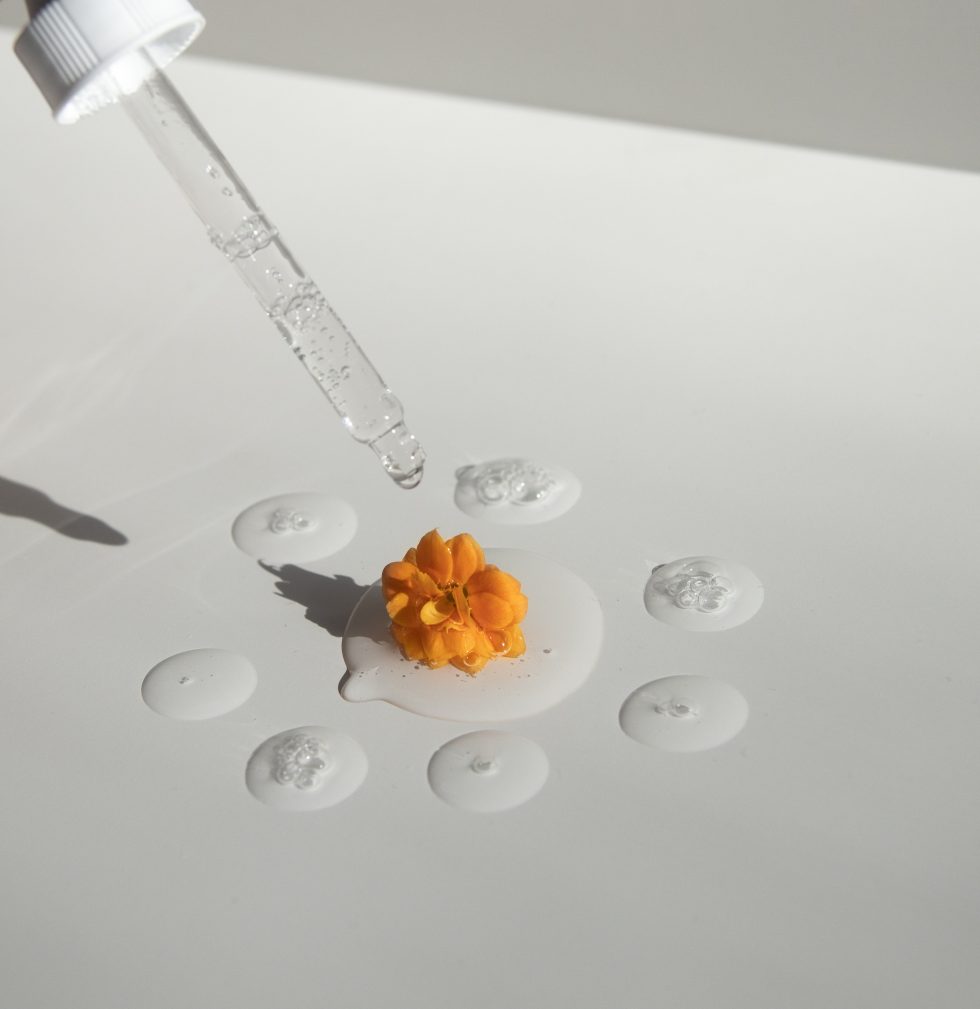
The Clean beauty movement has been on fire and with good reason. Nearly all of the skincare products we find on the shelves are layered with ingredients that our great grandparents have never seen before and we’re over it. It’s time for some natural products to grace our skin because what we’re using is determining what our skin feels + looks like now, and will inevitably set the course for how our skin will look + feel years from now, and that’s kind of important. Why? Our skin is the largest organ on our body, which only heightens the importance of why we need to do all the things to take care of it, but what does that look like?
We’ll Tell You What It Doesn’t Look Like
From parabens, phthalates, and sulfates to oxybenzone, triclosan, hydroquinone, and artificial fragrances, you can find all of these nasty ingredients and more in your skincare products. Is your head hurting from trying to read all of those harsh words, yet? Because ours is. All of these ingredients can be found in your makeup, nail polish, sunscreen, shampoos + conditioners, hair dyes, and the list goes on. We are sure some of you have experienced irritations from certain products, and what do we do? We throw it away and move onto something marked “sensitive skin,” which fixes the short-term effects, but what are these products doing to us long term?
“Products are tested to make sure they don’t cause short-term problems, such as skin irritation. But they’re not tested for long-term safety,” says Dr. Kathryn M. Rexrode, associate professor of medicine and chief of the Division of Women’s Health at Harvard Medical School. The FDA only steps in when someone has made a claim against a product stating that it has caused damage, but other than that, the purity of a product is left to the hands of a money-hungry industry that doesn’t really care about the long term effects for us. It’s pretty upsetting, right? Well, let’s do something about it. How? Let’s take baby steps and then let’s take a plunge.
The Baby Steps
Obviously we all can’t afford to just throw away everything in our bathroom because so and so said so, but what we can do is start looking at the ingredients in the products that stay on our skin the longest. Body lotions, face lotion, body oils, face serums, primers, sunscreen, + makeup all seep into our skin and are there all day long. When you use products that aren’t natural, they have the potential to deplete your skin from its natural state, fill your body with harmful toxins, speed up aging, and some body lotions can even be the cause of weight gain because it’s interfering with your hormone production. So what do you do? Look at the ingredients. If you see any of the nasty words listed above in your products, start looking for an alternative.
Some alternatives for clean skincare are Primally Pure for facial cleansers, ILIA Makeup, The Organic Pharmacy for sunscreen and other options, + The Honest Company for body lotions, and for a list of Goops 2021 list of non-toxic favorites, check their picks out here.
Once you’ve found a clean alternative to the products that stay on your skin the longest, start throwing away the old products that have harmful toxins in them, and when you’re ready, start looking at other daily habits + products that are used on your skin, hair, and nails.
Take the Plunge
Taking the plunge could mean a lot of things, but really, we just want you to keep choosing better products that will help you step into a new you and start creating new daily habits that will benefit you, your future, and your skin. What daily, weekly, and monthly habits can you start incorporating? What shampoo + conditioner do you use? What about your soap, shaving cream, and nail polish? We have a snazzy new brand that you might have heard of called freecoat nails. What is it? It’s a non-toxic beauty bar that focuses on providing people with non-toxic options. They also have an organic sugar scrub that is made in-house + it feels like pure goodness on your skin (no lie). There aren’t too many non-toxic beauty bars out there, but we’re trying to change that so we can create the new norm.
Another change you should start to think about is your hair dye. If you dye your hair on your own or get it done professionally, you’re exposing yourself to 5,000 different chemicals including some known to disrupt the body’s natural hormone balance or to have cancer-causing effects in animals, according to studies. A study was published online on Dec. 3, 2019, by the International Journal of Cancer, which states that they found a link between hair dye and breast cancer. “Women in the study who used permanent hair dye at least once in the 12-month period leading up to the study had a 9% higher risk of developing breast cancer than women who didn’t use hair dye. And when the study authors broke the findings down by race, they found an even higher risk for African American women. Women in that group who used any permanent dye in the previous 12 months had a 45% higher risk of developing breast cancer compared with women who did not use hair dye. It didn’t seem to matter how often or for how many years the women had used the dye,” states Harvard Health Publishing.
Clean Beauty, It’s a Way of Life
There are so many different things you can do in order to incorporate new daily habits that will lead to a healthier you and a healthier future, but it’s all about what works for you. If you’ve found new, healthier + clean habits that work for you, what are they? If you use non-toxic skincare or hair products that you love, what are they? Leave it in the comments for our readers so we can all grow in this Clean Beauty movement together, because it shouldn’t be a movement, it should be a way of life, and we’re ready to live it.

Join us as we dive into the world of the gut microbiome! Learn about the environmental factors that are impacting your gut microbiome, chronic inflammation, and what you can do to fix your gut microbiome. We talk about everything from food & air to mycotoxins and digestive issues with Dr. Asia Muhammad.
Asia Muhammad is a naturopathic doctor that uses evidence-based medicine to provide individualized care to each patient. She has a special interest in gastroenterology, mind-body medicine, and stress management, as increasing research demonstrates the role of stress in disease. She dedicated three years post-graduation to an independent residency at Arizona Digestive Health where she treated thousands of patients suffering with gastrointestinal disorders.
TIME STAMPS
2:34 Dr. Asia’s background in naturopathic medicine (jump to section)
7:00 Chronic inflammation & the impact your environment has (jump to section)
8:42 Environmental factors that contribute to inflammation (jump to section)
11:30 Food & the impact it has on your gut health (jump to section)
13:02 Steps to take to change your microbiome (jump to section)
15:00 Mycotoxin – what they are & how to avoid them (jump to section)
23:02 Irritable Bowel Syndrome isn’t a thing (jump to section)
27:15 Healthy bowel movements (jump to section)
33:15 The brain & gut connection (jump to section)
35:04 Dr. Asia’s tip for living life organically (jump to section)
Transcription Below
Landon Eckles: The organic listeners. Hey guys, this is Landon. Thank you so much for joining another episode of the Be Organic Podcast, powered by Clean Juice. We are so excited to have you in today, and we are going to be talking about the microbiome specifically, change your microbiome, change your life, and we’ve got an awesome guest for you, like always.
I’m going to allow Kat, our co-host, to introduce our wonderful guest.
Kat Eckles: Yes, we are so excited to have Dr. Asia with us today. Asia values the power of lifestyle modifications to achieve optimal health. She uses evidence-based medicine to provide individualized care to each patient. As a naturopathic doctor, she’s able to provide care in the realm of nutrition, exercise recommendations, supplementation botanical medicine, and mind-body therapy, such as hypnosis.
She has a special interest in gastroenterology, mind-body medicine, and stress management, and as increasing research demonstrates, the role of stress and disease. She has received additional training in mind-body therapies including hypnosis, guided imagery, biofeedback, autogenic training, and progressive muscle relaxation.
She dedicated three years post-grad to an independent residency at Arizona Digestive Health, where she treated thousands of patients suffering from gastrointestinal disorders and we’re so excited to have her on the podcast today to speak about something that so many people suffer from.
Dr. Asia, thank you so much for joining us today.
Dr. Asia Muhammad: Thank you for having me. Thanks. I’m excited to be on here with you guys.
Kat Eckles: That’s awesome. And I love it when we get to talk about the role of stress and when we have guests on the show, that really can attest to how much stress can put on your body and how much it really is a root of disease.
I don’t think people even sometimes realize that they’re stressed and realize how much of an effect that’s having on overall physical health. I’m really excited to dive into that.
Dr. Asia Muhammad: Oh, totally. Let’s, let’s go for it.
Kat Eckles: Awesome. Maybe you can tell us quickly your background and tell our listeners your health story and what made you want to pursue a path in naturopathic medicine.
Dr. Asia’s Background in Naturopathic Medicine
Dr. Asia: I got started when I was an undergrad. I thought I was going to go to school and become an MD because that’s all I knew about medicine. My mom, when I was a really young girl, would always say ‘You’d make a great doctor!’ I don’t know how she saw that.
I think if she would’ve told me I would’ve been a great lawyer or a dancer, that’s what I would’ve done. But I, thought I would go to school and be a doctor and I’ve always had an interest in science, in the human body, but I’ve always also been interested in nature. I didn’t know that there was like a meshing of the two.
So prior to like learning about naturopathic medicine, I was just on this MD track. I was in school and I remember shadowing MD surgeons, primary care doctors, and other specialists. This is when I was an undergrad and I just remember always being so bored in these offices with these doctors and wondering if there was more to medicine beyond just the conventional aspect.
I remember I went and shadowed this vascular surgeon, and he was literally rolling patients in and rolling them out. Placing stints, rolling one in, rolling the next one out, and I just remember thinking, this cannot be it. I didn’t know how else to research alternative forms of medicine.
I just always assumed that the MD route was the only route. I got sick, really sick one semester in school, and I had some sinus issues and then I was overwhelmed with my course load and school. I think that just added to the stress in my body. My mom has this book by this woman, and it says, ND on the back.
I didn’t know what ND meant. I just remember always looking at this book when I was a young girl and knowing that if I had an issue, a menstrual cramp, or a headache, I would open the book flip chart and it would say, if you have a headache, drink this tea or take these herbs. I was always obsessed with this book.
This night, which is crazy how the universe, how God works, you know, the night that I was sick, I was looking through this book. It was also the same night I was getting ready to pay for my MCAP prep course, which is a couple of thousand dollars at the time. I googled ND and I just had this epiphany and I always tell this story where everything just felt right.
I don’t know if I’ve had a moment like that since then, where everything just kind of clicked and it happened within a few seconds. I Googled it and I knew this is what I’m doing. I’d applied and got in.
Landon Eckles: That’s amazing. That’s a really great story and I love it when people just follow their passions.
So many times on this show we get amazing individuals like yourself where it’s something they knew they wanted to do as a child, and sometimes it’s something you kind of stumble upon. And then sometimes it’s kind of a mixture of both, right? The fact that you are doing what God put you on this earth to do is a really cool thing.
Kat and I are huge personal proponents of natural medicine, and we see a natural path and just really love your profession and what you do. Kudos to you, for following your heart on that.
Dr. Asia: Thank you. Yeah, it’s been a beautiful journey and it’s not been an easy one, because naturopathic medicine is not licensed in all 50 states.
I’m in Missouri, which is an unlicensed state. There are challenges that come with being a naturopathic doctor and alternative medicine practitioner. But it’s just so rewarding when I see patients and they’re at this starting point, and then we’re able to kind of help them transform their health. It’s really rewarding.
Landon Eckles: Absolutely. Well, let’s jump into really what you do and how you see patients, and what you’re seeing out there. We know that so many people suffer from chronic diseases, right? How many people would you say suffer from these chronic diseases?
Dr. Asia: The CDC put out a statistic a few years back, and I’m not sure if it’s 60 or 70% of people have chronic disease, but everybody that I see is a chronic disease patient. I don’t see acute cases, I see some upper respiratory issues, acute, like cold and flu cases, but most of what I see are people who have had chronic issues for years or decades.
That’s the bulk of my practice. I’d say 99% of my practice is a chronic disease.
Chronic Inflammation & The Impact Of Your Environment
Landon Eckles: Recently you’ve been quoted by saying that chronic inflammation is the hallmark of chronic disease in America and that the majority of contributing factors stem from our environment, and if you change your microbiome, you change your life.
Right? Which is now the title of our show. Can you expand on that for our listeners?
Dr. Asia: Our environment is our lifestyle. It’s what we eat, it’s the air we breathe, it’s the quality of our sleep. It’s what we put on our body. Lifestyle or our environment is an all-encompassing term that I use when explaining our connection with chronic inflammatory disorders and underlying chronic inflammation.
When you look at disease, you see all these quotes online and they say all disease starts in the gut. There is some truth to that. The truth is that the entire point of the GI system is to digest and assimilate our nutrients and protect us from bacteria, viruses, pathogens.
Outside of what we come into contact within our daily lives, the gut is the single barrier that prevents what we put in our system from actually fully getting into the body. When you look at that, I mean, in chronic disease there’s so much literature documenting the role of not only just healthy eating patterns with chronic illness, but just also the microbiome, specifically how the bacteria there changes so much that it actually changes the output into the system, which tends to reflect in chronic disease cases.
Environmental Factors That Contribute To Inflammation
Landon Eckles: When we’re talking about the environment, you mentioned some things. What are some of those factors that are actually in our environment that could be contributing to some of these diseases?
Dr. Asia: For example, the air we breathe, I just did an environmental toxin test on myself to see if there’s something going on where I live at.
For example, mold toxins. You see a lot more burgeoning literature around mold now or conversations around mold. That’s one that I find to be problematic in almost all the patients that I run these tests on. Everybody comes back with some type of current mold toxicity in their system.
I’m talking about black mold, which is a really toxic mold and affects your neurological system, affects your kidney system, it affects the entire body, your mitochondria, those are just some, in terms of the air we breathe. Then in terms of the foods we eat, that’s a really huge one there.
The types of foods we eat, the quality of the foods that we eat and how they actually positively or negatively change gut bacteria. There are gut bacteria that we know are associated with having a robust mucus membrane in the gut, which is the first barrier of protection in the gut, it’s that mucus lining.
When that mucus lining gets disrupted, you find all types of issues in terms of GI issues, and then also chronic inflammatory issues because the gut lining is only one cell layer thick, whereas your bones are cell on top of cell on top of cell, on top of cell until you get a dense strong bone.
Your skin is the same thing. It’s cell layer on top of cell layer on top of cell layer. Your gut is not like that. Your gut is literally one cell layer. It seems like a lot of layers because it’s folded upon itself when you look at the intestinal tract. But if you were to stretch it out, it’s about as thin as a sheet of tissue paper.
It’s highly sensitive and it’s really permeable to what we put in our body, what we’re eating, what we’re drinking, even stress, and even hormones act upon the gut. I’m going to just keep blabbing, but what was your question?
Landon Eckles: No, no, no. You answered it. I have a couple follow ups for you.
The first thing you said environmentally was mold, right? We’re breathing some stuff that we shouldn’t be. That’s kind of hard to change, right? Unless we’re doing mold tests in our home, Kat and I have actually done that. We’ve had mold tests in our home, and we’ve had some mold remediation because we live in a home that was built in ‘94. There are definitely some things there that we had to take care of. But I think that it’s one that’s kind of hard to control, right? But one thing we really can control is food. And you mentioned that and talked a lot about that.
Let’s talk a little bit about what types of food you eat, what types of food you recommend. Do you believe in organic? I’d love to start to peel back the onion on that one.
Food & The Impact It Has On Your Gut Health
Dr. Asia: I do eat organic foods as much as possible, I eat organic, to be honest with you.
I eat one meal a day, two meals a day max. That’s really because it works better with my schedule. Intermittent fasting works really well for me. I do eat organic. I grew up eating organic. My mom is a complete hippie and she’s completely against the system, whatever the system is for you.
She’s against it. She’s an independent thinker, researcher and she’s always had us growing up in the mindset of really knowing what we’re putting into our body. I eat completely organic. If I am out somewhere, I also will try to source organic meals. If not, sometimes there are foods in the grocery store that, for example, dandelion greens.
If I find those and they’re not organic, I’ll just do a baking soda and apple cider vinegar wash on them to get as much pesticides as possible off of them. That’s how I eat, in terms of organic and inorganic.
Landon Eckles: That’s awesome. I think that it’s funny, you and I are are pretty similar in the way that we eat because I agree with you.
I actually intermittent fast. I actually did a podcast on that, just talking about how that’s benefited me over the past year to year and a half that I’ve been really dedicated to it. Also, of course, organic is a big thing for Clean Juice. We only serve organic foods and that’s something that we’re super passionate about and totally are aligned with you on that. Um, nice.
Getting back to the microbiome and, again, the title of the show – Change Your Microbiome, Change Your Life – What are some steps we can take to change your microbiome? We talked about the diet, but what are some other things that we can do to really change our microbiome?
Steps To Take To Change Your Microbiome
Dr. Asia: Some other things we can do to change your microbiome it’s just really simply eating fiber, right? When I say fiber, I just mean fruits and vegetables. You can also do fiber, such as powders. But fiber is like gas for the car, but it’s like gas for your colon cells and your microbiome.
Just like your car needs gas to run, your colon cells need the breakdown products of fiber to run and be efficient. The bacteria in our gut basically eat fiber. Say you’re eating an apple – the bacteria will munch the apple fibers down and produce these short chain fatty acids. They’re these four carbon fatty acids that are essentially fuel for the gut.
There’s so much research around butyric acid as one of these short chain fatty acids, butyrate, that helps with reducing inflammation in the body outside, not only the gut, but the body as well. Prebiotics are also really good. But the interesting thing is prebiotics tend to be foods.
They’re also fiber-rich foods that help to feed the gut, not necessarily all the time, because I do use non-fiber prebiotic sources as well, I do think that prebiotics and fibers, though, are the first two places I start with patients who have any kind of dysbiosis in their gut.
I’ll start with that. I have a case today I have to see that has a really severe dysbiotic gut. What I’m going to do for them is pretty much look at their diet, which I pretty much already know what their diet is, and then add in maybe a really good prebiotic formula and then also push smoothies with them.
Because that’s a really simple way to get some fiber in and pack a bunch of nutrition.
Mycotoxin – What They Are & How To Avoid Them
Landon Eckles: Absolutely, I’m a big fan of smoothies. I love smoothies. We serve a ton of smoothies at Clean Juice. Also, I eat a smoothie every single day for lunch, and that’s certainly something that’s helped my healing process and in my gut,
I want to talk to you a little bit about mycotoxins and you’ve recently had a post on mycotoxins where you talk about mycotoxin testing. You said that you’ve never seen a test come back normal. That really kind of was crazy to me and it really actually blew my mind.
Can you first explain what mycotoxins are and how we can avoid having these toxins in our bodies?
Dr. Asia: Mycotoxins refer to mold toxins, fungus toxins, right? Mycotoxin testing are usually urine testing where you just urinate into this tube and then it processes, and you see the amount of toxins that are there inside of your urine.
It correlates to the body’s burden of toxin. What may be in the system. I’ve not seen a single test come back, I don’t even know how many tests I’ve run, but a lot of the patients I see have chronic disease and so I don’t really expect to see normal tests, to be honest with you.
Fungus and mold are so prevalent in our environment, in the air we breathe, that many people will have some type of mold toxin or fungus toxin in their system. It’s not necessarily the toxin that’s the problem because fungi have been around longer than humans apparently. That’s not necessarily the issue, but the issue is the body’s ability to actually properly metabolize it and break it down.
That’s a bigger issue for me because like I said, we all encounter many different toxins on a daily basis. I find that patients have a terrible time detoxing because their detox pathways are extremely, not shut down, but just extremely reduced in terms of capacity to function.
I found that out through SNP gene testing and there are a few genes, some cytochrome genes and some superoxide dismutase genes and a few other genes that are responsible for certain detoxification processes. I usually always find them beneath a full capacity. I’ve not seen actually one person yet where they have the proper ex genotype that expresses full capacity to detoxify.
When I see no toxins, then my next thought is, well, how well is the body able to actually detoxify. And there are many genes involved in detoxification and we don’t know about the human genome, as of yet, but when I see mold toxicity, that’s where I’ll start. And then if a patient has a lot of the mold, people that I see have really severe symptoms, they have mast cell activation syndrome, which is a really severe and intense syndrome where patients are in and out of the hospital depending on the severity of their disease.
A lot of them have excessive mold in their system. What I’ll do is start them off with genal binders. Binders are things that are supposed to bind up the mold so you can excrete them. When you think about mycotoxins, you’re talking about the mold and the toxins and molds produce.
Because sometimes people will say, well, mycotoxins, but I want to get the mold out too if the mold is producing toxins and how do we get the mold out as well. But mycotoxins is a word that kind of encompasses both mold and mold toxins. Not just the black mold, but toxins that black mold may produce also.
When I see patients who have mold toxicity, the first thing I do – actually, I don’t actually just put them on binders. I will support the system and give them things to support their liver. I may put them on different burdock for a few weeks and then I may actually support their kidneys as well.
Because your liver and your kidneys are your biggest detoxifying organs, your skin is one too, but your liver, your kidneys, your colon – your liver and your kidneys are really big. With the gut, for me, the biggest thing is just pooping. If they’re getting to the bathroom every day, a couple times a day, that’s great.
I know they’re excreting. The purpose of binders is to help bind up toxins. And then you also want to make sure somebody’s pooping. I they’re binding, you want them to be eliminating it. That’s what can happen, is you have these toxins circulating. The one thing about the body is that it’s going to do its job – it works the same way every day, right? If you are helping to support the system, the system is going to run. When I give patients binders, my thought is, okay, we’re binding this up, but I don’t want it to recirculate. It’s not like the liver’s trying to hurt the entire system, but the liver will just do its job.
If you are absorbing toxins from your gut, no toxins in the gut, which they can be there, but what will happen, is that the liver will once again try to process them and then put them back into the gut to be excreted. If they’re not actually excreted, they get recirculated. It becomes this cycle.
What you want to do is give binders to help eliminate more toxins and then you can repeat mycotoxin tests along with like organic acid tests to just evaluate it from a different component or different aspect, more mycotoxins in the system and see the numbers coming down or reducing. But it really just depends on the patient.
If my test comes back with mycotoxin, which I’m sure it will, I’ll probably do a more intensive protocol because I know my body. But if I have a patient who has a couple mast cell cases, like I’m working on right now. There’s a local GI doctor who will refer me some in his complex cases.
They’re typically always mast cell cases. He usually sees them, he’s a gastroenterologist. He sees them for their GI complaints, but he’s stepping, not necessarily stepping into, but he’s also into alternative medicine, whatever that means. He will send me these cases and it’s so interesting, their symptoms, these mass cell cases, they’re so severe and the slightest thing can send them to the hospital, and they’ll have a severe reaction, like an anaphylactic type of reaction.
It gets to the space where some doctors won’t even touch them because they’re just too much of a risk to treat these patients. They end up being on tons of antihistamines, right? Because the mass cells produce excessive histamines.
They end up being on excessive antihistamine therapies, such as some of the typical anti-acid medications or antihistamines, so being on compounded antihistamines will be on tons of high doses of quercetin and so forth. When I see them, my goal is just supporting their system where they’re at.
Then we’ll begin a really gentle binding protocol. Sometimes I don’t even begin with mycotoxin binding protocols. I’ll just start with gentle binders to make sure their body’s able to tolerate say just a normal fiber binder because fiber’s a binder too, right? It’s complicated, but microtoxins are very interesting.
I really wonder how prevalent this is. You think about all these kids in these moldy school buildings, right? Their learning capacity and their concentration and attention capacity. It just blows my mind that this is not actually investigated beyond what it is.
Landon Eckles: Is this a test that you run on almost every one of your patients that come in?
Dr. Asia: No, not necessarily. It just depends. If I see a case where somebody says they have had severe IBS, I’m not going to run mycotoxin because I pretty much can figure out what that is. Right? I don’t even have to run a test for that. I know they have dysbiosis, they probably have intestinal inflammation and so forth.
I can go straight to protocols for those cases if it’s more like a fibromyalgia, chronic autoimmune case. For really severe kind of sleep issues, hormone issues, I will run them for, for those cases. Outside of that, I don’t run them for everybody. Not everybody actually cares.
Irritable Bowel Syndrome Isn’t A Thing
Landon Eckles: Yeah, I got you.
I’m actually, I’m really glad that you mentioned IBS, which is irritable bowel syndrome. Because you’ve said in the past, right, that IBS actually isn’t a thing. If you’ve been diagnosed with IBS, there’s probably some kind of underlying issue and I’d love, because so many people, if they have an upset stomach occasionally or whatever, say I just have some IBS.
You clearly don’t agree with that, and you think that there’s something else that’s going on. Tell us a little bit about what you’ve seen in your patients and that they could be struggling with that’s not IBS that might be able to help some of our listeners who think that that’s something they struggle with.
Dr. Asia: Yeah, I honestly love IBS cases because I just love proving a GI doctor is wrong. It’s just because it’s crazy. But I work with GI doctors. They’re in my residency with them, so I’ve seen literally thousands and thousands of patients who have IBS, and they just say here’s some visi, which is a medication for diarrhea, IBS diarrhea.
Here’s some lens. I don’t know, I’m a teaser. Whatever they give them for IBS, constipation. I remember the doctor, one of the doctors I work with, I remember hearing her in a room telling a patient you’re just going to be constipated the rest of your life. Take the lens and life will be fine. It’s one pill a day. You go to the bathroom at the same time. I don’t know why you’re constipated. It’s just happening.
I just remember thinking their entire professional career is understanding the GI track and you can’t even poop. Right? I remember thinking, what is this?
What am I, where am I working? I see these IBS cases and I like to do one of two things. I’ll either go straight to protocols, or I’ll do some functional GI testing just to give us a more objective information to go on. A lot of times with IBS, like I said, I do see tons of dysbiosis.
There’s a history there. There’s sibo, which is small intestine bacteria overgrowth. There is food sensitivities, there is leaky gut, or you have increased intestinal permeability because your intestines should be permeable. If your intestines are not permeable, you’re probably dead because you do need nutrition to come across for your entire body, right?
That’s the purpose of your gut. But when it’s too permeable, then it’s an issue. I see leaky gut, let’s see, that’s pretty much the top three that I see. Sibo, leaky gut, or some type of food sensitivity, or I’ll say intestinal inflammation caused by either history, long history, certain medication use, or I see microscopic colitis, which it’s inflammation of the colon, but it’s not like an ulcerative colitis where it’s macroscopic where you can actually see it without a microscope. You can see the ulcers; you can see the inflammation. If you did a scope microscopic, you go in and everything looks fine. But you take some tissue samples, and you have inflammation on a microscopic level and it’s causing these diarrhea symptoms.
I do see underlying associations with the history of drug use such as ibuprofen, leaf, aspirin, Advil, other medications patients have used long-term. When I see those cases, I either will go straight to protocol, which is four weeks of this, then let’s follow up, see what happens. Or we’ll do a stool test and put together a plan specifically based on the stool test, which ends up being the same because they all reveal some type of leaky gut or inflammatory markers, which is wild because when you see inflammation in the colon, usually doctors say let’s do a scope and make sure it’s not ulcerative colitis and some autoimmune issue. But I have been seeing lately a with underlying intestinal inflammatory markers and it’s not normal.
They’re really high and the doctors don’t know what to do because it’s not, they do a scope, and it’s not ulcerative colitis, so they’re not going to give you prednisone for that or colitis meds or Humira or any of those types of LEA medications, which are like anti-inflammatories for the gut, which is what they give for ulcerative colitis patients.
They don’t really know what to do, so they say well here’s some probiotics. Even then when I was in the GI office, we had a fridge full of the best probiotics that you could ever find. No, they never gave them out to patients.
Never gave them out and they just did not really believe that they did much, which just blows my mind, because there’s so much literature around the bacteria. There are more bacteria in the gut than there are body cells, and so you can shift so much with just probiotics.
Landon Eckles: Wow. We have the best, really incredible.
Dr. Asia: Yeah, it is.
Healthy Bowel Movements
Landon Eckles: You’ve talked a little bit about bowel movements, right? I want to touch on that a little bit. Because it’s not a topic that people either are comfortable talking about or talk about really ever at all. For our listeners, just talk to us about what a healthy bowel movement literally looks like and if ours isn’t in the right cadence or it’s not looking the right way, what can we do to either get healthy or maybe remove some of these toxins that we’ve been talking about.
Dr. Asia: This is my favorite thing to talk about. By the way. I love talking crap.
Landon Eckles: Yes. That’s funny. That’s great.
Dr. Asia: Isn’t that a funny answer?
Landon Eckles: That’d be a cool podcast. Talking crap, but literally. Anyway, I might change the title of this episode to Talking Crap with Dr. Asia.
Dr. Asia: You should.
Landon Eckles: Yeah. I love it.
Dr. Asia: That’s awesome. The best bowel movements in the land look like this. They are nice, formed sausage shaped stools that easily come out. You get this urge to go to the bathroom. You sit on the toilet, the stool is expressed, and that’s it. It’s not a lot of straining. There aren’t little, small pebbles at the bottom of the toilet.
They’re not pencil thin stools that you got a strain and push out. There’s not undigested food in the stool. There’s no mucus, there’s no blood. All of those are signs of unhealthy bowel function. When I see that patients will say they’re constipated. I’ll say like, what does constipation mean?
Because it means something different for everybody. For me, constipation is that it takes me three days or beyond three days, once a month or once a week, which I’ve seen that. But for some people, constipation is just, I go to the bathroom once a day and it’s this really small amount of stool, which is still constipation, right?
But they’re not fully evacuating. I will ask them, the first thing I ask is, what’s your eating frequency? Because if you snack all throughout the day and you’re not having solid meals, it’s going to change how your bowel frequency is as well. It changes your stool volume. That’s one thing I’ll ask patients.
If they say, I eat three meals a day, then I say you’re obviously constipated if you’re only having small volume stool. That’s how I start when I ask about bowel habits and bowel frequency and when I see bowels that are small volume or hard to pass, obviously there’s a few things I think.
Number one, are you drinking enough water? If your body is dehydrated, your cells are dehydrated, your skin’s dehydrated. It’s going to pull it from your colon. Your colon is where we get our water from, your colon, your kidneys too, but your colon is a big source of water exchange in the body.
If your body’s dehydrated, it’s going to pull it from your intestinal tract, which means your stools are going to be more dry in heart. That’s one thing I’ll ask. I’ll ask about fiber intake. Are you eating five to nine servings of fruits and vegetables a day? Everybody says, no. I can count on one hand. I can count on one finger how many people I’ve seen that are say I eat five to nine servings of fruits and vegetables a day.
One serving is a half a cup. I’m say, listen, make a smoothie and then have some veggies for dinner and lunch. You can pretty much get more than that, in that capacity. That’s one thing I’ll do. I literally have seen patients just change their bowel habits with constipation. Just by changing their diet.
No supplements, no fiber powders, nothing like that. Even just drinking water has changed people’s bowel habits. There’s one group of people that I really find it hard to manage their constipation, and that’s people who have a history of eating disorders for years. Because what happens is their colon becomes antic.
There’s no tone to it. It doesn’t actually move. It didn’t have to move. Right? For years they either have used laxatives and the gut just doesn’t have that normal spastic capacity to move stool down. The laxative just softens the stool and it all just rushes out. Or there’s the other picture where they eat and then the food is kind of expressed back up, vomiting.
The bowels don’t have to work. That patient population is the toughest population that I’ve ever had to treat where constipation is concerned. I still haven’t figured it out, to be honest with you.
Landon Eckles: Yeah. Well, I mean, it’s so complicated, right?
Dr. Asia: There’s just so many things to think about. Back to what you said, I can personally attest to, I was having some constipation issues, and, honestly, I just started drinking more water and that literally was the thing that I needed to do. I realized I wasn’t drinking enough water and that helped me, you know?
That was the thing. We talk about some of these really crazy complex, issues and its diet and water, right? It’s just these things that are so simple, but then we sometimes just need that reminder.
There isn’t a magic pill, it’s just – hey, diet, exercise, water, and some of these things that are so simple to talk about, but we really have to have the responsibility discipline to do it right.
Landon Eckles: Right. There you go. That’s exactly what it is.
Dr. Asia: I just don’t think that health is so complicated. I think it becomes complex and complicated when we get to a space where we’re not really mindful and cognizant, but it’s complex and complicated when our body’s got into a space of, not no return, but essentially that cusp of no return where so much damage and oxidation has happened, then you have to start peeling back these onion layers.
So many times in young populations, I see the diet is so terrible, lifestyle habits, and then we get older and we wonder why we have all these issues. They didn’t come from us as we’ve aged. It came from us when we were younger and just setting up these habits from a young age.
The Brain & Gut Connection
Landon Eckles: Exactly. Absolutely. We’re getting close to time, but I did want to ask you about how your brain and your gut work together. Because I’ve heard recently that your gut is basically your second brain in your body, and it’s kind of been a revelation over the last 10, or even 20 years, but closer to 10 years.
Just in layman’s terms, how does your brain and your gut work together and why is it so important to have a healthy gut?
Dr. Asia: Your brain and your gut are connected. They are connected through a nervous tissue. A lot of times we say a lot of your brain chemicals are made in your gut, which is true.
When you look at some of the more recent research, we’re finding that a lot of the brain chemicals that are made in the gut actually don’t really ever get to the gut. They kind of say in the intestinal track. There’s more of a connection the other way, where brain processes, stress, cognitive processes actually can stress the gut out.
It actually can create more intestinal permeability in the gut in terms of that leaky gut picture. We know that components from the gut – when they get out into the system – can actually cause inflammation more in the brain, central nervous system area, there are associations with leaky gut and certain intestinal markers that have been found in patients who have altered cognitive function or chronic inflammatory brain diseases.
There’s a huge brain and gut connection. Literature is still burgeoning. We know that when you use hypnotherapy, which is mind body techniques, which is something that I am familiar with, you can see people’s GI symptoms start to shift because that connection is so sensitive.
Dr. Asia’s Tip For Living Life Organically
Landon Eckles: It absolutely makes so much sense. Well, Dr. Aja, I have really enjoyed talking crap with you. It was an absolute pleasure and you’ve been an awesome guest on the show. I’ve got one last question for you so our listeners can find out more about you and what you do.
I’d love to ask you about your socials, your different handles. But my question for you, and this is something we ask most of our guests, is how do you live your best life organically?
Dr. Asia: I live my best life organically – maybe this is going to sound cheesy – but smoothies are my thing and I’m not sure if that’s the answer you’re looking for.
Landon Eckles: No, it’s great.
Dr. Asia: You can do so much with a smoothie. There’s so much you can sneak into a smoothie. I contribute a lot of my success or health success to the ability to make a bomb smoothie and just throw everything in and not really worry about taking a lot of little capsules throughout the day.
I will even open up some of my supplements and put them in a smoothie just for ease. I know a lot of people have blenders and, our new age, which maybe this isn’t the new age, but a lot of us have blenders, so it’s really easy to buy some organic bulk fruit from Costco or Sam’s, make some smoothies, add in some powders, add in whatever you need to add in and sneak it in. That’d be my tip.
Landon Eckles: I love that. That’s literally one of the basic reasons why we started Clean Juice was exactly what you said. We are big believers and proponents of that. I just appreciate you Dr. Aja. Thank you so much for coming on our show. Tell our listeners where they can find out more about you.
Dr. Asia: Yeah, you can find me on Instagram. My Instagram is just Dr. Asia Mohamed, m u h a m m a d, and then my website is just asiamohamed.com and you can find me there.
Landon Eckles: Awesome. Thank you so much. We appreciate you.
Dr. Asia: Thank you for having me.
Landon Eckles: It’s been our pleasure. Thank you so much for tuning in today to be organic. We’re so excited for you to become healthier and body and stronger in spirit. If you like what you heard today, please be sure to subscribe on Apple Podcast to never miss an episode, and we’d love to connect with you over on Clean Juices Instagram.
Give us a follow, slide into our dms with any suggestions for guests or topics that you might want to hear more about. All right, y’all, thanks for listening. Have a great week and remember to be organic.
Just a quick legal disclaimer. We are not doctors. While we absolutely love discussing wellness nutrition with our expert guests, you should always talk to your physician or other medical professional before making any dietary or lifestyle changes. They can assess your specific needs and come up with a plan that works best for you.
In addition, this is for educational purposes only. Clean juice franchises are only offered by delivery of a franchise disclosure document in compliance with various state and federal laws.

Listen & learn all about collagen – is it good for you? Bad for you? Supplements are not a quick fix-all. Start with food, diet, and then supplement if necessary. We’ve brought in Charlie Bailes, a husband, dad of 3, a crossfitter, a health nut, and most importantly – a collagen expert. We hope to tackle the ins & outs of collagen and how it could help you.
TIME STAMPS
2:16 Why is collagen good, and why some might think it’s bad (jump to section)
4:09 Collagen is not a silver bullet (jump to section)
5:20 Collagen helps the digestive system, repairs connective tissue, & more (jump to section)
7:25 How to find collagen outside of supplements (jump to section)
8:34 How you know if you’re getting enough collagen (jump to section)
10:11 Muscle soreness & collagen (jump to section)
12:10 Collagen’s negative views (jump to section)
14:24 If collagen breaks a fast (jump to section)
18:18 What multi-protein collagen is (jump to section)
23:27 How collagen differs from hemp or whey protein (jump to section)
Transcription Below
Landon Eckles: Hey guys, what is going on? This is Landon, CEO of Clean Juice and your co-host of the Be Organic podcast, which as always, is powered by Clean Juice. We’re excited to have you today as we’ve got an awesome show. We like to bring you fresh content, keep it interesting, and talk about stuff you may have never heard about. We also talk about stuff that can sometimes be a little controversial.
Today we are actually going to be talking about collagen. Some folks out there absolutely love collagen, and some are unsure about it. We are going be talking about the ins and the outs of collagen. And the question is – is it good for you or is it bad for you?
We’ve got an awesome guest for you. As always, I’m going to let Kat, my wonderful co-host, a beautiful wife and chief branding officer of Clean Juice, introduce our awesome guest.
Kat Eckles: Yes, we are so excited to have Charlie Bales on with us today. Charlie is the CEO and founder. CB Supplements is a company specializing in helping people thrive with multi-collagen protein products.
As a collagen expert, he often talks about its nutrition benefits on different podcasts to help people solve various health issues from joint recovery and productivity to even sleeping better at night. He’s also a husband, a dad of three, a CrossFitter, and a health nut. We’re excited to have Charlie on the podcast today to talk about something.
It might be a little controversial for some, even me. Sometimes I get confused and overwhelmed with all the information that there is about collagen. I’m so excited to pick his brain and see if he can change my mind about all this. Charlie, we are so excited to have you today.
Charlie Bales: Thanks so much for having me, all. Looking forward to a fun conversation.
Why Collagen Is Good, And Why Some Might Think It’s Bad
Landon Eckles: Awesome. You’re obviously a big supporter of collagen. Some people are not supporters of collagen. The first obvious question for you is – why do you think it’s good and what are some of the views on why others may think it’s bad? Where does the controversy stem from and how did you get to your side of the table?
Charlie Bales: We’re the collagen company that is going to be very different than most because we’re the company, a supplement company, rather, that believes that one should attain their health from food first. And really supplements are there to do just that. Supplement a healthy lifestyle.
We actually charge forward on some of the criticisms of the supplement industry by agreeing with those who are doing their criticizing that, hey, guess what? We’re the collagen company that says don’t buy our product. Go invest in higher quality food and fix your diet and then we’re here if you can’t do that.
That’s one thing that we do. You’re just not going to hear a guy who’s trying to sell a product say, hey, guess what? Don’t buy our products. And I have said that over and over again to people, and then go into here’s some of the foods that you can actually get collagen from and here’s some of the activities that can help promote collagen production within your body.
That’s the first thing that I would say. It’s a longer answer to discuss the why I became such a big supporter of collagen. I’ll try to give you the cliff notes, the small version, and then see where y’all want to go from there.
Collagen Is Not A Silver Bullet
Collagen, again, it’s not the silver bullet. Another thing that you’re not going to hear a sales guy say about their product all that often. Collagen is a piece of this pie called health. Maybe that pie has eight or 10 pieces. Collagen is just one of them. Protein is a huge piece of it, and collagen is a piece of it.
We can get into that if you want. But that’s why I became a big supporter of it, through my own health journey and having children. As you said in the intro, I’ve got three beautiful, awesome kids. They are eight, six, and two now. The oldest, Viv, had her struggles with health in the early years of her life, and through the process of taking her health back, my wife and I learned all these valuable lessons of cutting out inflammatory foods, getting rid of highly processed vegetable oils, cutting out gluten during certain stages and decreasing that amount, and supplementing with collagen. Collagen is a piece of that.
Collagen Helps the Digestive System, Repairs Connective Tissue, & More
But we believe it’s a strong piece. It has such a range of benefits, coming from the obvious, such as hair, skin, and nails. But it also helps your digestive system function properly and your body fix and repair connective tissue, which means tendons, ligaments, blood vessels, skin, veins, and bones.
It’s what all of this is made of. Once you do that, you achieve a higher level of health. You sleep better, you recover better. It’s actually a really hard product to try because it can do so much. All of those things have happened to myself, to my daughter Vivian, to my wife, to our team, to our 400 plus reviews on the website.
Hopefully that’s a good short answer.
Landon Eckles: That’s actually great. We had a similar journey with our now four-year-old. Our son was really sick for quite some time, and he actually used bone broth. I attribute the bone broth to healing the majority of his issues because he had pretty severe gut inflammation and we know the bone broth is really, really rich in collagen.
It probably was the collagen that ultimately led him into recovery. I’m sure that you can relate on some levels with your daughter as well.
How to Find Collagen Outside of Supplements
Charlie Bales: 100%. It’s awesome that we get to meet and talk about this because our stories are similar where all a parent wants is for their kids to be happy and healthy.
When that gets taken from you at such a young age and the Western medical society doesn’t really help, they just make it worse by steroids and drugging up your kid. You start to take health into your own hands, and that’s exactly what we did.
I know that’s what y’all did, and I’m happy to hear of the success and how the bone broth helps, and it makes perfect sense. That’s actually what I preach to people that go buy bone broth. Go cook your rice and bone broth. Go eat bone in ribeye and get collagen from meat.
Go eat certain organ meat. Go eat a bunch of eggs. Go, go, go. Do things before you need to supplement. If you can’t do that, because some people just don’t want to drink 12 ounces of chicken stock every day, and I get that. I’m even that person some days. That’s why we have a product.
That’s why we created a strawberry lemonade that can be mixed with water that a kid might drink, because I’ve been there and done that with y’all. Trying to get a three- or four-year-old to drink bone broth is almost impossible. Even now with an eight-year-old trying to get to eat the right foods and drink bone broth, whole milk and do these things correctly, it’s still difficult.
Sometimes it’s just easy to take an unflavored scoop of multi-source collagen and mix it with whatever she’s drinking. It’s going to be something healthy, and she has no clue it’s even in it. That’s the beautiful thing.
How You Know If You’re Getting Enough Collagen
Landon Eckles: That’s awesome. I have a question for you. You mentioned first and foremost, let’s get collagen from diet. How do we know if we’re getting enough collagen? Is there a way to test for it or are there symptoms? How do we know?
Charlie Bales: It’s a really good question, and I would say the best answer is just being in tune with your body and observing how you’re feeling. Our fingernails and our toenails tell a very valuable thing if they are growing.
That means the inside of your body is probably doing the things it needs to do. It’s these things that are outward representations of our inward health. If your fingernails and toenails are healthy and growing, that’s great. If your skin is healthy, that’s great. If you’re waking up in the mornings and your joints are hurting, that’s a problem.
If you’re not going to the bathroom every single day, that’s a problem. I’m not talking about number one; I’m talking about number two. It’s all of those things that if your body’s trying to tell you something, if it’s out of homeostasis or if it’s out of this beautiful rhythm that we’re supposed to be in, that’s the best way that I would tell.
You can go get bone density scans. We could probably do a podcast all about the negative repercussions of getting scans, but you can do that as well. I’m more a fan of just listening to your body.
Muscle Soreness & Collagen
Landon Eckles: How do you differentiate because you seem like a really active guy, you’re a CrossFitter. I dabble CrossFit in a lot of other workouts as well. How do you differentiate between just muscle soreness, and you hit it really hard versus I think my body needs something.
Charlie Bales: Ever since I started with this collagen kick, I’ll call it. It’s really become a missing food group in our society.
We just don’t eat enough protein as a society. Because we don’t eat enough protein and most of that protein is boneless, skinless, lean, hardly any fat on it, it is completely deprived of collagen. This may be two or three % if you’re eating a ribeye now. Collagen is this missing food group that ever since I’ve brought it back in, I really don’t get sore anymore, which is just bananas to me. I can go run three miles with a weight vest on and my knees don’t hurt the next day. When I was a catcher in college at 22 years old, my knees hurt every day, but I wasn’t eating the way that I am right now.
I just don’t really get that joint fatigue anymore. When I know that my muscles are tired, that’s when I know I need a rest day. That’s because your muscles are only like one to 10% collagen, it’s primarily other forms of protein.
It’s not collagen. Right? That’s how I notice the difference. But again, I’m very observant of my body. I would beg listeners and people to be more observant of that. Where are you sore? Because if it’s just your forearm, that’s your muscles, that’s fantastic. Be sore.
If it’s your elbow, now we’re talking about something different. That’s probably collagen missing from everything as opposed to muscle protein.
Collagen’s Negative Views
Landon Eckles: That’s a great point. That makes a ton of sense. I want to switch gears a little bit and talk about the haters, right?
Let’s talk about the folks who hate collagen, or they may think it’s bad, or they have a negative view of it. Why do they have this negative view? Where does it come from?
Charlie Bales: I have no clue. It’s a great question. We address a lot of those haters on our website because we believe that it’s our duty and our obligation to our customers to inform them. We want to educate the consumer and we’re going to take on any idea that somebody wants to discuss. I remember there was this crazy article a couple years ago from the University of Missouri that said don’t put collagen in your coffee.
It’s going to completely degrade the product. If that made any sense. Explain to me why a dinosaur bone from 2 million years ago would still be found and completely intact. Collagen melts at about 1600 degrees, so unless you’re drinking coffee, that’s literally on fire.
The article just makes zero sense, but we go way into the weeds with that. We have a 3000-word article debunking this collagen in heat argument. There are extreme haters in the fasting community, which, again, I don’t understand what’s the point because it. If you approach the subject of fasting and intermittent fasting and what breaks it, let’s be collaborative and answer the question, why are you fasting?
What’s your goal? Right? Collagen could be a part of that. Because if your goal is just to lose weight, great. Adding collagen to your black coffee in the morning is going to break your fast, but you’re not going to eat 500 calories of bad food for breakfast. It’s still going to help you accomplish your goal.
A lot of this hate for collagen comes from people not understanding. They just want to pick a fight and we’re not going not pick it. We’re coming from a place of wanting to meet our customers on their health journey and looking to improve it, whether they buy our product or not.
If that means you just come to our website, read something and move on about your life, but you become healthier – that’s our mission. Just to help people get healthier, not to sell products.
If Collagen Breaks A Fast
Kat Eckles: That’s awesome. You mentioned intermittent fasting, which I know you’re a big proponent of and actually that’s how Landon and I both eat.
Landon Eckles: I was doing it maybe 10 years ago before I even knew what it was. I just intuitively would eat that way. It’s funny, I did a podcast on it myself, just talking about how much I love it. Kat’s claim about me is that I’m always six months behind her. Well, this time I was 10 years behind her, but I just feel good when I’m doing it. But again, you talk about how people are kind of iffy about that. I would love to hear your perspective on intermittent fasting and also how collagen is even more beneficial during that fasting period.
Charles Bales: My belief is that you shouldn’t really have to work very hard to do intermittent fasting – that’s our natural way of eating. You just shouldn’t. If you wake up every morning starving, there’s a bigger problem at hand. You’re probably addicted to glucose on some level, or your body is not in a perfect state of homeostasis.
I fast intermittently and don’t even think. WhenI tell people that I’ll go to a CrossFit workout, on hour 14 of being fasted. They say, how in the world do you do that? I don’t even think about it. Honestly, because I’m just not hungry.
I eat when I am hungry, which is usually around lunchtime, early afternoon, and dinnertime. For lack of a better expression, I just kind of follow the 16 eight, because that’s what my body tells me to. Fasting is a great tool and I got to the place where I am now through using it as a tool and through observing how food, and what foods, really do to me and what makes me hungry, what works great.
I found out that my body just loves saturated fat, especially from animals, and if you go listen to Kelly Star and how his body hates saturated fat, it’s amazing how different we all are.
For me, I could eat a ribeye for dinner, and I could not be hungry until the next night if I didn’t need to be. That’s just my body. I’m giving my body what it needs and what it’ll use for the rest of the day. To answer your question about where collagen fits in intermittent fasting.
Again, we have a very long and detailed article on our website where even if you just Google collagen and fasting, we’ll be the number one article, and it answers this question, Does Collagen Break a Fast? Yes, it does, but it’s complicated. Let’s talk about why you’re fasting or what’s the point of it.
If you ask, and we name a lot of these people, if you asked Dr. Jason Fung, if it breaks a fast, he’s going to say yes. If you ask Cynthia Thoro, she’s going to say yes. If you ask Ted Niman, he is probably going to say no. If you ask Kate Shanahan, she’s probably going to say no. It depends on who you ask and what your goals are, as opposed to just this flat out, you have to have black coffee – you cannot put collagen in it, you can’t even put a tablespoon of almond milk in it because it’s going to break the fast.
Well, who really cares? What’s the goal of fasting? If you are waking up hungry, let’s talk about your bigger metabolic issue.
Landon Eckles: It’s a great point. I totally agree with you on everything you said.
It’s always about the why, right? Why are we doing what we’re doing? It’s a great point that most people miss, especially when they’re arguing about something.
What Multi-Protein Collagen Is
Kat Eckles: I’d love to ask you a little bit about your collagen product, because you’ve mentioned a few times that it’s a MultiPro collagen product. I’d love to understand a little bit more about that and why that maybe isn’t your traditional collagen product that you grab anywhere.
Charlie Bales: About 90, 95% of the products on the marketplace are single, particularly bovine collagen, which means they are derived and made from cow skin. That’s what bovine means, which is great.
I’d rather somebody take collagen than not. I’d rather somebody know what bovine is than not. Go buy any product. You don’t have to buy ours. But we believe in a multi sourced collagen. That means that we are making our product from multiple animals, not just cows. We’re also using chicken, the chicken’s egg, and a marine source (a wild caught fish), which is going to be either a freshwater tilapia or a red snapp.
Again, both of those are wild caught. I’ll compare it to eating vegetables. Do you eat just broccoli all day, every day? Or do you eat the whole vegetable garden? Including carrots and celery and squash and green tomatoes and a pepper. I guess those are fruits. Do you know what I mean?
We’re eating all the colors of the rainbow, not just one. That’s why we create a multi-college or a multi sourced collagen supplement because each source, each animal gives you a different benefit. The easiest one to talk about is that the cow and the fish sources are great for types one and three collagen, which are primarily found in skin.
Type two collagen, which is found in the joints, is brought to you by the chicken. It’s just a beautiful example. I would rather somebody take a bovine, that’s a type one and three than nothing. But I’d also rather you drink chicken bone broth to get type two collagen or to get it from the eggshells, type 10 collagen or type five, which is found in the placenta.
It’s pretty important and that’s why we created a multi-source because we wanted to make the most complete product we could, as opposed to just saying, collagen, we’re just going to use whatever cow skin today.
Landon Eckles: I love that. I’m actually on your website right now and I’m just clicking through because it’s really interesting.
I didn’t even know there were different types of collagen. That’s how uneducated I am. But I’m sitting here reading through it. I love how, right on your website, you’ve got type one collagen. You say that. This is the most common type of collagen, makes up 90% of our hair, skin, nails, organs, bones, and ligaments.
You go through 2, 3, 4, 5, 10. It’s really cool how you guys are not just trying to sell products, but you’re really educating the consumer on what collagen is and even the different types and where it comes from. It’s funny, a lot of the customer service emails we get from people, of course most of them are related to our product, but every now and then we’ll get one that’s just a general question, and we answer it. That’s awesome. We’re just trying to help people on their health journey. If that means that you’re going to take our product, great. If it means you’re not, no problem. Because we use bone broth as an ingredient in our product, in order to give type two collagen from chicken, we use chicken bone broth.
We don’t just grind up chicken bones. We want to use the broth so that way we’re getting cartilage and tendons and ligaments and some the joint material, that are called glycosaminoglycans and proteoglycans and glucosamine.
Hopefully I didn’t lose people, but just remember joint luing material.
That’s we’re using bone broth. However, bone broth has histamines in it. There’s a small group that cannot tolerate histamines into their diet whatsoever because their guts are just inflamed right now. We have no problem telling that customer that our product’s not for you.
Go buy Dave Asprey’s brand Bulletproof, which is just bovine from a grass-fed cow, and take that instead. We probably say that once a week, which it’s wild to me that we give business away, but we do it because we’re just trying to improve.
Landon Eckles: You’re authentic and transparent and you know that’s going to win more guests than you turn away by a wide margin. We try to operate our business in the same way. Respect to you on that for sure.
Kat Eckles: I know your products are essentially protein. I think they have somewhere from seven to 10 grams of protein in a supplement. How does this differ from maybe someone’s traditional whey protein or hemp protein that they might be used to taking?
How Collagen Differs From Hemp Or Whey Protein
Charles Bales: It’s such a great question, and the short answer is they start completely different processes in the body. If you have a hemp protein, a whey protein, or just a boneless skinless chicken breast muscle protein, your body sees that and it’s going to go fix and repair muscle tissue.
It’s going to start some building processes, which are all fantastic. I’m a huge advocate of just increasing one’s overall protein intake period. You’ll be in better health if you do that and do not take collagen than whatever the opposite of that is. What collagen does when, when you consume it – there are peptide chains, which I’m sure your listeners know this, but just to back up. What a peptide chain is, is it’s a couple of amino acids that are linked together and what a protein breaks down into amino acids when your body starts to digest it, when that happens and your body sees this very specific peptide chain in collagen, which are certain amino acids and hydroxylated amino acids – that’s glycine, leucine, hydroxyl glycine, hydroxyl proline.
These are some amazing substances that are linked together that are found nowhere else in nature. Aside from animal collagen, there is no such thing as vegan collagen. There’s no such thing as plant collagen. When your body sees that peptide chain, something magical happens, your body sees it and knows it’s time to go fix and repair connective tissue.
That’s probably why your son and why my daughter Vivian’s guts healed. Because guess what the small intestinal lining is made of? It’s made of collagen. When your body fixes and repairs collagen, it’s going to fix and repair joint material, skin, internal organs that are made up of it, and blood vessels.
It’s a beautiful thing that happens that only happens when you consume collagen, which is why we’re the company. We must be that company, but we’re the company that thinks that collagen should be the fourth macronutrient and it’s missing.
Landen Eckles: That’s interesting. Based on what you just said, I’d love to hear from your perspective – who’s typically buying your product? Is it people who are vegetarian that are literally getting no collagen from their diet? Or is it folks who may just be eating a little bit and they want to supplement more. Or is it people who are trying to get a ton because they’re lifting weights and they just want more.
Charlie Bales: Every group that you just mentioned is one of our groups of customers, which is why it’s really hard to advertise our product in a quick ten second segment. It’s easy to go on an hour podcast like this, but to do it very quickly, who do you go to?
We have a lot of elderly people buying our product. Their joints have completely given out and now their joints are back. One of my partners – his parents have a degenerative bone disease, and for the first time ever in their lives, the bone degeneration stalled.
It didn’t get any worse from one scan to the next scan. They’ve been supplementing with our collagen – and I know that’s not a double-blind scientific study. It’s just hearsay, but holy smokes, is that an amazing story, and we’ve got hundreds of those stories of an elderly person who is about to have their hip replaced and now they walk four miles a day. It even happened to my dad, who went to go have back surgery and they opened him up and they said there’s nothing there. We’re good – we’re just going to clean up. And. We’d been drinking bone broth and went with collagen for 18 months prior to it. That’s one big demographic.
Another big one is athletes. It’s why we get our product NSF certified for sport, because we want to sell our product to the best athletes in the world. I’ve talked about joint health for so long. If you’re a professional athlete, you’re getting paid for your joints. We see it as our obligation to help that athlete protect his or her joints.
That’s a huge market for us. And then obviously I have a soft spot for the kids because I think that most kids in our country just eat absolutely horribly. They’re not getting any nutrition from their food process. It’s just bad. What health has done to my family with fixing Vivian’s health and then her two little brothers being the beneficiaries of it.
I love to sell our product to every house in America, just to give to them, because that’s our hope – that the kid will see the pro athlete take the product and they’ll tell their mom to go buy this. Then we’ve just entered the household. Again, we just want to help people with their health.
We have a lot of people that buy our product because they’re losing their hair and they want to clear up their skin or they want better digestion. Everybody you just mentioned, we sell our product to.
Landon Eckles: That’s awesome. That’s great stuff, Charlie. Well, listen, we’re just about out of time, but you’ve been awesome. I love your story. I love how your daughter’s gotten better through this and how you guys are really authentic and transparent around what you do. It’s fantastic.
It’s an awesome story and a cool company that you’re building. Kudos to you. Next time I’m down in the Orlando area, we would love to check you out. We’ll hit a workout together and I’d love to even tour your facility if you’re up.
Charlie Bales: Please, it’d be my honor, I’d love to love to host y’all.
Landon Eckles: Before we sign off, two things. Number one, I’m going to ask you our sign off question that we ask everyone, and that’s – what’s your one tip for living life organically? And then after that, I’m sure folks are going to want to hear where they can find your products and learn more about you, Instagram, etc. What is your one tip for living life Organic?
Charlie Bales: It’s really good question and I knew you were going to ask it. When I think about it, it makes me think about the long term and just playing the long game, playing the infinite game, and investing into the now for the long. Because when you’re growing something organically, it’s a longer process.
The yield is not as big as an inorganic or genetically modified product, but you’re doing it for the long run because the soil, at some point when you’re growing an inorganic product, that soil’s going to die and you’re going to have to move it somewhere else. Whereas an organic product and doing it the right way, you’re investing in the long term. Just look at the long term – look at where you want to be years and years from now. I hammer collagen and bone broth and eat the way that I do and invest in my health with workouts so that I can keep doing it when I’m 60, when my kids are my age because I have two boys and I want to beat them at everything for the rest of my life.
I also just want to be a role model to them. Living a life organically is playing the infinite game, not the short-term game.
Landon Eckles: I’d completely agree with you a hundred percent. Well, thank you for being a fantastic guest.
What a great topic, and congrats on your company. I know I will be checking it out. I’ve already been on your website. I’m going to be purchasing some products but tell our listeners where they can learn more. Charlie.
Charles Bales: Our website is cbsupplements.com. If you want to email us, you can just click the button, contact us.
You’ll probably get my email right there. We’re on all the socials. Instagram’s the biggest one. It’s just @CBsupplements. I’d love to hear from, from anybody. We answer every email. We’d love to hear from the customers and it’s our duty and our obligation to help the world of health for every customer that we can. We’d love to hear from anybody.
Landon Eckles: Thank you Charlie. Appreciate you and what you do. I’m just happy that God created you in this company. Keep doing your thing, man. Appreciate you. Thank y’all very much.
Charlie Bates: Thanks for the opportunity.
Landon Eckles: Thank you so much for tuning in today to Be Organic. We’re so excited for you to become healthier and body and stronger in spirit. If you like what you heard today, please be sure to subscribe on Apple Podcast to never miss an episode, and we’d love to connect with you over on Clean Juices Instagram.
Give us a follow and slide into our dms with any suggestions for guests or topics that you might want to hear more about. All right, y’all, thanks for listening. Have a great week and remember to be organic.
Just a quick legal disclaimer. We are not doctors. While we absolutely love discussing wellness nutrition with our expert guests, you should always talk to your physician or other medical professional before making any dietary or lifestyle changes. They can assess your specific needs and come up with a plan that works best for you.
In addition, this is for educational purposes only. Clean juice franchises are only offered by delivery of a franchise disclosure document in compliance with various state and federal laws.

Be Organic Podcast – Season 2, Episode 22. What Goes In, On, And Around Your Body Matters
Join us as we dive into the products we use daily in, on, and around our bodies and the impact they are having on our life. We discuss everything from processed foods, sunscreen, clean beauty, what “non-toxic” really means, and more.
Our guest, Catherine Cabano, is an ACE Certified Personal Trainer and a Women’s Health Coach currently attending Harvard University. Her mission is to help women take control of what goes in, on, and around their bodies. She takes a holistic view on current lifestyles and helps transition people to clean beauty and plant-based, organic, nontoxic nutrition.
TIME STAMPS
3:10 What “In, On, & Around” means (jump to section)
4:43 Is plant-based meat is good for you? (jump to section)
9:08 Read labels! (jump to section)
10:25 What meat we should be eating (grass-fed vs. grass-finished) (jump to section)
12:03 Sustainable, regenerative, and organic farming (jump to section)
17:55 What goes ON your body (jump to section)
18:47 What to look for in sunscreen (jump to section)
24:09 The Clean Beauty Checklist (jump to section)
25:35 Mattresses & the “around” part of life (jump to section)
32:48 Best tip for controlling the environment around you (jump to section)
37:42 Catherine’s best tip for living life organically (jump to section)
Transcription Below
“Our culture in America really tends to revolve around this processed meat for breakfast, for lunch, and dinner. You have the bacon, the cold cuts, chicken nuggets, and it’s just too much. These processed meats are classified as Group 1 or known carcinogens by the World Health Organization. So, why are we feeding it to kids bright and early or really to anyone from that matter? Process meat just has to go.”
Landon Eckles: Be Organic listeners, hey guys. What is going on? This is Landon, your co-host. So, excited to have you guys in today for another amazing episode of Be Organic powered by Clean Juice. We will be talking a lot about the body today and what goes in your body, on your body, and what goes around your body that matters.
We have an amazing guest as always, it’s Catherine from In, On, and Around. I just looked at her Instagram, it’s amazing. Go check it out right now, In, On, and Around. Anyway, I’m going to let Kat introduce our guest.
Kat Eckles: Yes, we are so excited to have Catherine on with us today. Catherine is an ACE Certified Professional Trainer and Women’s Health Coach. She has her Bachelors in Animal Science with a concentration in Food Science from the University of Connecticut. She currently is at Harvard University completing her masters.
At In, On, and Around she empowers women of all ages to live their happiest and healthiest lives through holistic wellbeing. Her mission is to help women take control of what goes in, on, and around their bodies. She focuses on all internal and external factors that can input your wellbeing, specifically what you put in, on, and around your body. She takes a holistic view on your current lifestyle and helps you transition to clean beauty and plant-based organic, non-toxic nutrition. Catherine, we’re so excited to have you today.
Catherine Cabano: Thank you so much for having me. It’s such an honor to be here.
Kat: This is really cool for us because, um, you know, we do this podcast and it’s sponsored by our biggest brand Clean Juice. We do all organic juices, smoothies, and some food items. We recently just got into the clean beauty industry and purchased another concept called Free Coat Nails, which is all about non-toxic nail care and non-toxic beauty.
Really for us, it has just been a learning process the last few years about how dirty that beauty industry really is and how important it is to be doing things the right way and things the clean way. I appreciate you look not only at food but everything that really goes in, on, and around us to make us healthier.
Catherine: I’m so glad to hear that. I went on a road trip earlier this year and discovered Clean Juice down in the Carolinas. I swear it was probably the highlight of my trip. I wouldn’t stop talking about it. I had to stop myself from walking out with five juices at a time. I’m a big fan of all that you do.
What “In, On, & Around” Means
Kat: I appreciate that. Your website and message seems to be saying, what’s important is what goes in, on, and around your body. Can you elaborate a little bit on that for us and just tell us kind of how you got led to that way of thinking?
Catherine: Sure. Like you said, my whole mission is really to help women take control of what goes in their bodies, on their bodies, and around their bodies. I focus on those three main pillars. That really includes everything from the food we eat to the air we breath, the fabrics on our skin, the makeup we put on, relationships, you know it. This all plays a role in our long-term well being.
Wellness is way more than just eating healthy. Of course what you put in your body is super important. But we cannot dismiss the fact that what goes on or around your body are equally important. I help women, really of all ages, who may be impacted by a wide range of issues such as fertility. They may not know that the shampoo and candles they are using on a daily basis can actually play a role in their health and their family’s health. My goal is to provide them with actionable advice and educate them on how the chemicals can play a role long-term. It can be something so simple like changing lotion without synthetic fragrance and parabens that could potentially be linked to hormone disruption, let’s swap it to this lotion without those ingredients. Just helping them take control on what they can control.
What Is Plant-Based Meat Good For You
Kat: I love that. Let’s break it down a little bit. Let’s start with the in, then the on, and finally the around. When you think of in, you think of food and what you are putting into your body. Something I wanted to ask about because it is gaining in so much popularity is the plant based meat or meatless alternative, some of these products that are out there that don’t have meat and are plant-based. What are they really made of? Are they healthy? Are there pros and cons to them when you are thinking about what you put into your body?
Catherine: Definitely. So, let me first kind of paint the picture for you. In general, a third of all Americans, they go to the drive through every single day, pick up their two cheeseburgers with the mystery processed meat or the artificial cheese slices. They grab the receipt that is coated in PFAs or bisphenol A. They unwrap the burger with PFAs or forever chemicals in. They then scarf it down mid-drive. The whole process is the furthest thing from natural.
In each of the pillars of in, on, and around, I focus on getting back to nature and keeping things simple. It really blows my mind that half of Americans are getting their calories from ultra processed foods every single day. This just creates a disease domino effect. And this is just not like processed foods like bread. Frozen carrots are considered processed in one way or another. It’s the ultra processed foods where they are using artificial flavors and sweeteners and fillers and emulsifiers. These are things that you would not be using if you were making it homemade in your kitchen. I can go on and on too about the water quality, medication, and everything like that.
To the point of plant based meat, it can be pretty controversial since there are certainly some pros and cons to it. I like to think of each issue as unbiased as possible. They were intended to transition these heavy processed meat eaters over to more sustainable plant based options. I wouldn’t call it inherently malicious. They were intended to be better for the environment to use less water, land, and energy. The reality is over three quarters of all the soy and the antibiotics that we are using in half of the grains are fed directly to livestock. The vast majority of those are raised on factory farms. It is taking the animal out of the picture and could be classified as more ethical.
With all that said, there are some really serious flaws with many plant-based meat options available on the market. And in my opinion, those cons really outweigh the pros, especially with the other options that are available today. If you are looking at most plant-based meats, they have inflammatory oils, like canola oil, synthetic flavoring, thickeners, and genetically engineered ingredients. You can take a look at the ingredient labels of some of the fake meats and they are just horrendous. It is ultra, ultra processed. There are GMO non-organic ingredients that are oftentimes sprayed with herbicides, like glyphosate.
All in all, when you compare it to an organic beef burger or many bean burgers, they are just clearly far inferior. My opinion, there are way better options than fake meat. I don’t personally eat meat. If you are a vegetarian like me, stick with the quinoa, veggie burgers, or the organic tofu. It will definitely better serve you.
Read Labels!
Landon: I agree with a lot of what you said. I always try to think about our listeners, how they are thinking, and reacting to a show, and some of the stuff we talk about can get really complicated. For the average listener, their life work isn’t health and wellness like ours is, they are not doing all the research, and have other jobs, etc. One thing I always say, flip the label around. Look at the nutrition. Look at the ingredients in a product, no matter the brand, right? If the ingredient list on a plant-based meat is a mile long and things you cannot pronounce, there is clearly chemicals that are tough to pronounce and hard to read. That is probably something you should stay away from.
Catherine: Exactly.
Landon: But you mentioned the bean-based burgers. I have bought some organic bean-based burgers that are obviously vegetarian. You flip that around, it’s organic black beans, good stuff in there, and six ingredients. All of these I know and have heard of. They are typically organic. It’s not the fact that it is plant-based but how it is made and created. So many times these things are being made in a laboratory rather than grown on a farm and put together. I totally agree with you on that.
Catherine: Absolutely. Just getting back to nature, eating real whole foods is the way to go. Don’t fall in the trap of the deceptive marketing right on the front of the back. Always turn that label around.
What Meat We Should Be Eating (Grass-Fed vs. Grass-Finished)
Landon: For me, I do eat meat. I’m a pretty big meat-eater. It’s part of my diet. I eat meat at least once a day. When I eat meat, it’s always organic chicken, grass-fed beef, it’s clean stuff. First and foremost for the folks that eat meat like me, how do you recommend they eat this?
Catherine: Great question. If you do eat meat, always opt for organic, pasture-raised, 100% grass-fed, and grass-finished meat. Grass-finished means that the cows were not fed any supplemental grain or any non-grass feed at the end of their lives to try and fatten them up real quick before slaughter. With grass-finished, the cow is eating grass their entire life. That’s what you want to see. There is a lot of grass-fed beef on the market. Not all of them are grassed-finished. Doing your research on where you source your meat from is important. Grass-fed meat has shown to be lower in fat, calories, higher in some vitamins and minerals (like iron), and cleaner. It is less contaminated with some harmful bacteria which no one wants to eat. When possible, if you have the opportunity, and this is really for all food, support your local farmers if they are raising the livestock the right way. Eating local is one of the best ways to support your local economy while still reducing your carbon footprint.
Sustainable, Regenerative, and Organic Farming
Landon: We had an amazing guest on a few shows ago, he was a sustainable regenerative farm where he raised cattle, chicken, and all different types of meats. Everything is organic and super clean. It just goes to show, if there is a will, there is a way. Clearly, he is very passionate about clean meat because there is so much wrong with the meat industry. I just applaud folks who are out there that really care about how this stuff is being raised, how they are getting to the consumer, and driving the message around clean food.
For those of us who do eat meat, what are some health factors we should think of? What are some things we should consider as meat consumers?
Catherine: Definitely. First off, meat is not unhealthy, per se. It can be a really great source of protein, vitamins, and minerals. It is really the processed meat and the overconsumption of it that is unhealthy. Our culture in America really tends to revolve around this processed meat for breakfast, for lunch, and dinner. You have the bacon, the cold cuts, the chicken nuggets. It’s just too much. These processed meats are classified as Group 1 or known carcinogens by the World Health Organization. Why are we feeding it to kids bright and early, or really to anyone from that matter? Processed meat just has to go.
But to elaborate on that, we are all bio-individuals. There is no one-size-fits-all diet, per se. But all diets in my opinion really should be predominantly made of plants. Personally, I’m a vegetarian mostly for ethical reasons. I don’t find the process to be humane. But I like to encourage others to go predominantly plant-based, where that plant-based terminology is not as restrictive if you don’t want to commit to a fully vegetarian or vegan lifestyle a 100% of the time. Moderation, especially with processed meat, is really key. I know some people don’t always want to hear this, but Americans do really need to eat less processed meat and less factory farmed meat. This is a topic that I’m really passionate about. I can talk about it forever. Factory farming is honestly a sin and the complete denial that these livestock are even living beings that feel pain and fear. It’s just so absolutely heartbreaking to see. That’s what drove me to be plant-based.
Most people really don’t want to think about how the food got from the farm to their plate, especially when the process can be so unethical. I think as a species, we will kind of look around the fact of factory farming in complete disgust. Not to mention, most of these factory-farmed animals are sick. We shouldn’t be eating antibiotic ridden, nasty meat in the first place. You want healthy meat.
All that said, it’s obviously so unrealistic to cut meat completely from our culture. But factory farming should not be the future. And to your point, regenerative agriculture is really the future. Using farming practices that heal nature, balances the carbon cycle, maintaining the healthy soils, and actually treating livestock with respect as God’s creatures. It has shown to reverse climate change when it’s done the right way.
Landon: Yeah, to that point, it is super interesting. So many people argue about cars, gasoline, and the fumes that are being put off. I get that argument. But they don’t understand that the conventional farms actually put more small particles into the atmosphere than cars do. It is actually by a wide margin. People ask us, “Hey, you guys have plastic cups? Are you guys really a clean brand.” I’m like, “We only use organically certified produce to make our products. The products that we use are not contributing to the small particles that are going into the atmosphere. All of our cups are recyclable. Many of them are recyclable and biodegradable.” But I think people need to wake up and understand it’s not just about the plastic or the visual you are seeing. It is really how things are made and created. There is so much wrong with conventional farming. Besides the health factors we could get into, it’s a huge reason why I we chose only organic at Clean Juice.
Catherine: Right. And that’s why I love Clean Juice. But it’s really time that we boycott factory farming and support the regenerative farmers who are doing it right. They are working hand in hand, the way that nature was intended. You have healthy animals, healthy soils, healthy food, and in turn, healthy people.
Landon: The way that we did it a 100 years ago. We always say, organic is not this new trendy thing. It’s a return to tradition, how it should have been done by our great grandparents who knew what hard work was and okay with getting the best product in the right way. I could get on my soapbox and talk about this for a long time.
Catherine: I love it.
What Goes ON Your Body
Landon: We talked a lot about what goes in your body and when you think about that, what is going in your mouth, what are we eating? I know Kat is super passionate about what goes on your body, especially with this new beauty brand that we have. Let’s talk a little bit about that.
Catherine: Yeah, I’d love to. I know you have mentioned Free Coat Nails. I’m so glad you are in that space as well. The conventional nail polish industry as a whole is full of nasty chemicals that are absorbed into the body. I’m really happy to see that you have launched Free Coat and you have these non-toxic nail polish options for the public. It’s great.
Landon: You should find some friends up in New York to open some Free Coat Nails.
Catherine: Love it.
What To Look For In Sunscreen
Kat: It is summertime here, obviously. I think another thing we can talk about is sunscreen because it is such a controversial topic. It’s something that I think many people just lather on their bodies, not even thinking twice about it. I am sure you have an opinion about sunscreen and some of the chemicals in there. I would love to hear it.
Catherine: Definitely, great question. You know, summer and beach days, especially here on Long Island, are something we look forward to all year, especially in the winter. I am so glad that it’s summer. But we do need to make sure that we are actually taking care of our skin the right way when we are out in the sun. As you know, Vitamin D is essential. It’s known as the sunshine vitamin. Our body creates Vitamin D3 from the UVB rays. It is so important that we are getting adequate levels of Vitamin D, not only for cellular health, but for our immune system, brain function, our heart health, and it’s key. The reality is that about a third of Americans are deficient, especially those that have darker skin tones. We get Vitamin D from sun exposure and then also from the food we eat and supplements that we take.
With that being said, of course the over exposure to these UV rays, they can damage our skin. We can’t overlook the importance of sunscreen. Personally, I try to get a minimum of about 20 minutes or so of daily sun exposure, mid day, without sunscreen. I always put sunscreen on my face. But I will usually hop outside around lunch time, throw on a hat, and sit in the sun a bit. I have an olive-ish kind of skin tone. I can likely handle the sun a little different than someone with very fair skin. You know your skin best, if you turn red, or burn easily, then just be really careful. I would say that there is no universal amount of time you should sit in the sun. There are so many factors that can impact that, like the time of year, your skin color, etc. Since I’m up in New York and we don’t get a lot of Vitamin D during the winter, I do take a high quality Vitamin D supplement. But of course, talk to your doctor. I went on a little bit of a tangent on Vitamin D.
Landon: Yeah. It’s one thing that most people are deficient in. It’s readily available, outside. It can be easily supplemented. So, I’m glad you did that.
Catherine: To go back to your original question on sunscreen, I look for two main ingredients in mineral sunscreen or physical sunscreen. That is zinc oxide and titanium dioxide. The other chemical sunscreens can use like oxybenzone or homosalate or other chemical ingredients that may be linked to endocrine disruption and cancer. They’ve actually been shown to damage our coral reefs too. It doesn’t really make sense to use a potentially cancer-causing chemical in sunscreen to then protect against the cancer causing UV rays. That’s not logical at all.
Landon: Sounds like an oxymoron to me.
Catherine: Exactly, yeah. So you just wanna make sure that you’re using safe sunscreen, active ingredients. And recently there was a study on benzene, which is a known human carcinogen. It was found in a long list of sunscreens. There is really no safe level of benzene at all. It’s very important to use high quality sunscreen brands. If you are using a sunscreen that uses oxybenzone, that ingredient can stay in your body/bloodstream for days, sometimes weeks. Just keep that in mind when you are searching for a new sunscreen brand.
Another thing I would add, look for lotion-based sunscreens to just avoid any risk of inhalation. And also broad spectrum. Go outside, get some sun. If you are in the sun all day, stay in the shade a bit, wear a hat, wear a sun shirt, especially if you are prone to getting sunburn.
Landon: That’s really good. Before we jump to around your body, what we should consider on that piece. You know, there are so many other things that go on our body besides sunscreen, like shampoos, conditioners, lotions, makeup, deodorant, etc. We can literally have you back on for an entire hour podcast on what goes on your body. I think we should do that. Generally, if you could, talk to our guests about what they should be considering when we are thinking about these different types of products out there?
The Clean Beauty Checklist
Catherine: Yeah, that’s a great question. It’s a big question. There are so much to the on portion of, In, On, Around. But what you put on your body, it does get absorbed, depending on the chemical, into your body. I actually just launched an E-book, it’s called, The Clean Beauty Checklist. I broke down 68 different ingredient classes that I personally try to avoid in personal care products. It’s 40 pages long and I have 19 additional pages of studies and sources that I referenced.
Landon: Wow, where can we find that E-book?
Catherine: It’s on my website, www.InOnAround.org. It just launched.
Landon: Let’s do this, let’s not spoil that. I want our listeners to go to www.InOnAround.org and get that E-book so they can learn what to and what not to put on their body.
Catherine: Yeah, that will break it down. 68 ingredient classes.
Landon: That’s a lot to talk about.
Catherine: Right. But on that topic, women who use makeup, especially on a daily basis, it’s actually been shown that they can absorb five pounds of chemicals into their body’s every year, according to the Organic Consumers Association. It’s really just mind-blowing and so important to take control of what goes on your skin.
Landon: Yeah, that’s why I don’t wear makeup.
Kat: Lastly, I wanna get into the around section. I think this is really interesting and probably the most groundbreaking of what you do and probably in some ways difficult because there is not enough information as maybe food and beauty products. But we’re talking about things like mattresses, air quality, and I don’t know how much you go into EMFs and all these things that are happening around our body’s that we don’t understand they are doing to us. So, I’d love to maybe start with mattresses because I think that’s probably something we don’t think about and spending the majority of our lives sleeping on these mattresses. What do you look for when you are looking for a mattress and what do you look to stay away from chemical and ingredient-wise?
Mattresses & The “Around” Part of Life
Catherine: Like you said, there is really so much that can fall into this around category. In terms of mattresses, we actually spend about a third of our lives in bed. It’s really important that we are not snuggling up to any chemicals that don’t need to be there. There are a couple of different things that you should really look for in mattresses.
I love the term non-toxic. But I want to point out that non-toxic is not a federally-regulated term. To me, it means that you are avoiding these chemicals of concern that can cause damage long-term. Organic on the other hand, that’s certified and made with organic cotton, free of any synthetic pesticide residue or chemical treatments. Be Organic, organic is best, no surprise there. It’s a lot safer than what is commonly found in regular mattresses. Conventional mattresses, especially if it is stain or water resistant, can contain per-fluorinated chemicals or PFAs. They are the forever chemicals that I mentioned before. They are called forever chemicals because they can accumulate in our bodies over time.
Aside from PFAs, we have antimicrobials, plasticizers, phthalates, dyes, you know, the list goes on. A lot of these chemicals are found in mattresses, they could be linked to asthma or chemical sensitivities, or even hormone disruption. Another big one for most mattresses, they contain flame retardants. Of course, with good intention. But the efficacy of these flame retardants are actually being questioned. They are likely linked to reproductive or neurological damage. In a Duke study, they actually found it recently in the breast milk of mothers and in the bodies of toddlers. It’s pretty alarming.
Kat: Yeah, it’s very alarming. I remember when we moved in, we did a lot of research on that. I think I landed on Plush Beds. Are you familiar with them?
Catherine: I have heard of them, yeah.
Kat: Yeah. We really like them. They are comfortable.
Landon: They are so heavy. Oh my gosh, lifting those things and putting them in my house was like one of the hardest things I have done over the last three years. I literally remember it. It was so brutal.
Kat: To that point, when we moved in, we remodeled a house and then we bought almost a whole new house of furniture, different floors, built a gym, and gym floors. I remember the first few months, we are a pretty healthy family, we don’t really get sick. But we all had weird symptoms come up. I started to get panicky feelings and not something I struggle with day-to-day. One of my younger kids started wetting to bed at night when that wasn’t an issue. And one of them started getting migraines. I realized after a little while that I think it was the off-gassing from all of the new stuff we had, especially the gym floor, that was a big culprit. We go about our lives and we don’t even realize it. We try to do everything right. Got the mattress, used paint that was non-VOC, and all of these things. But anytime you buy something new, they have these chemicals on them and they are releasing it into the air. Can you talk a little bit about that? The off-gassing process and what that can do to our body?
Catherine: Sure, definitely. Conventional mattresses, like you said, can be really off-gas. This means that they are releasing volatile organic compounds (VOCs) into the air. These VOCs can be compounds like formaldehyde or benzene. They are emitted as gas. It can be harmful when you breathe it in, especially when you are indoors and there is maybe less airflow if the windows are not open. For instance, with conventional mattresses, especially in many foam mattresses, you have polyurethane foam. This is a big offender and can release the VOCs. These are low dose exposures but over time they add up. You just don’t want to be breathing these compounds in, especially when you are sleeping. Especially for babies or young children. I know you have five children. For crib mattresses, they should not be exposed to these chemicals, if you can avoid it. I’m glad that you are looking for safer non-toxic mattresses. But it’s always best practice to air it out for about 48 hours before using it if you can. Like maybe in a garage or throw it all into one room and pump up those air purifiers, open the windows for airflow. With conventional mattresses, the off-gassing can last for years. It’s not for just airing it out for two days and it will be safe. You simply don’t want those chemicals around your body.
Kat: There was a book I read a long time ago, about this guy who tried to do everything he could for his health. I will have to look it up. He had an aunt that was holistic and crazy. She was probably 60 and doing this her whole life, anytime she bought a new car, she wouldn’t drive it for a year. She would roll down all the windows and let it air out because she was so freaked out about these off-gasses. That just made me think of that story.
Landon: That’s intense.
Kat: I know. But even things like that. Everyone is like, “I love the new car smell.” Well, that new car smell is actually pretty toxic.
Catherine: Yeah, it gives me a headache.
Kat: Yeah.
Landon: I think, to that point, I think this is the toughest one. We can really control what goes in our mouth, really control what goes on our body’s, but we live in these environments where there is so much going on around us that is out of our control. There is so much going on environmentally that we just have little control. Sometimes I think it can get overwhelming. Thinking about the WiFi, all these different environmental factors that are going on. What is your best tip for things around us, in our control, that listeners can do this the best, healthiest way?
Best Tip For Controlling The Environment Around You
Catherine: It is really so important to not feel overwhelmed. To your point, it’s just taking control of what we do have control of. Everything from EMFs, mold exposure, cleaning products, air quality, some of those you can control and some you cannot. Also in the around category, I like to think about relationships. That can overtimes be overlooked. It does play such a major role in your wellbeing. The sense of community or the friendships that you keep, or even your relationship with God if you are spiritual. But if you are surrounding yourself with toxic, manipulative, insincere people, then you’re really bound to get caught up in that behavior. It’s important to recognize that. That is an area of your life that you can really control. It is not always that easy, especially when you have those “frenemies,” if you will. But you know, just always being aware of who you are keeping around and what you can control around you.
Landon: Yeah, and some people argue that emotion is the number one cause of sickness, right? We literally hold these feelings, these emotional feelings, and they are trapped in our body. They actually can turn into a physical symptom. Like when you are sick to your stomach, it is typically an emotional thing, but you have a physical reaction to it. That is something that is newer and people are talking about more and more. I’m happy that there is more conversation around this and more conversation around mental well-being, mental welfare, and health care. This is so important. If we are upset, always around people making us upset, or just in these environments that are chaotic and bad for us, it’s probably going to have a toll on us physically at some point.
Catherine: Right. Absolutely. And this is why I love the holistic health space really in general. Everything is interconnected. Going back to the relationship part, life is really just way too short to have fake friends or toxic relationships. You have to hold true to your boundaries and your values.
Landon: Yes, absolutely. That’s well said. So, something else you say, in America we have a “sick care” system, not a healthcare system. You shouldn’t have to get sick to focus on your well-being. That’s something that Kat and I are super passionate about, especially this last year with COVID. I think it was just an awakening for so many people. It’s like when they look at the folks who are really affected by it, typically there were a lot of co-morbidities and just different things that they typically just didn’t get COVID and had something go wrong. They were unhealthy, overweight, or their body’s just couldn’t handle it because they were older. But there were so many other things going on. We believe in being proactive, rather than reactive. I know that is something you believe in too.
Catherine: Definitely, yes. I was the generation that kind of grew up on Dunkaroos, Lunchables, Capri-Sun, classic sad standard American diet. Like I mentioned before, there is so much deceptive marketing. At the time, we really didn’t know any better. But we know better now, for sure. A lot of people don’t really focus on their health until it starts to decline, until they are forced to kind of shift their focus. But that’s not always the right approach. It should be preventative. It’s just like performing regular maintenance on your car, so down the line you don’t have to pay thousands of dollars on it when you break down mid-roadtrip. You will have to focus on your health at some point in your life and it’s either going to be now, when you have control over your habits, what you eat on a daily basis, how often you exercise, or when you have to focus on your health later on from illness. Focusing on it preventatively is best. As the saying goes, if you don’t focus on your wellness, then you are going to definitely focus on your illness.
Landon: Yeah, that’s really good. Absolutely. Well, listen, we are just about out of time, Catherine. This has been an amazing show. You’ve been an awesome guest. I think there is a lot that our listeners will be able to take away. We always like to ask our guests, what is your best tip for our listeners to live their lives organically?
Catherine’s Best Tip For Living Life Organically
Catherine: I love this question. I would say my one tip for living life organically is to value the progress over perfection.
Landon: That’s good.
Catherine: Like we mentioned before, you can oftentimes feel very overwhelmed, especially if you are starting to dip your toes into the holistic health world. But it’s important to not get overwhelmed and immediately quit. If you are trying to implement all the changes at once, eat plant-based, cut out toxins, meditate, hit the sauna, it’s overwhelming if it’s not already a habit. Value that progress over perfection. Of course, nobody’s perfect. I’m certainly not perfect. We are human. It doesn’t have to necessarily be expensive. You can go on walks outside, sit quietly and meditate, or just using less beauty products in general. As you are making decisions and purchases, just think about how this would help me and how can I better control what goes in, on, and around my body? Keeping it simple. Get back to nature. All of this information is not really intended to make you fearful of everything that you use. That’s not the point. It’s really to educate and inform you so that you can be a conscious consumer moving forward.
Landon: I love it. So well said. I have nothing to add to that. That was a great, great answer. Thank you for that.
Catherine: I’m glad you like it. I do also want to note, a lot of people can say, it’s just a little bit of benzene, a little bit of pesticides, a little bit of this or that. But when does that little bit become a little bit too much?
Landon: Right, right. Exactly.
Catherine: Always thinking about how this impacts health and long-term goals.
Landon: Absolutely. That’s so good. Awesome. Well, thank you so much for joining us. Tell our listeners where they can learn more from you?
Catherine: Thank you so much for having me. I feel like I could talk about this stuff forever. This is fun. My website is www.InOnAround.org. I have my E-book on my site. I also have a shop and my blog there. I’m really active on Instagram and Pinterest, @InOnAround, you can also follow me there.
Landon: Love it. I’ve already started following you there, so I appreciate it. Thank you for who you are, thank you for what you do, and thank you for just how God has blessed you. It’s really incredible. Congratulations on all your success and great luck at Harvard. We’ve heard of that place. It’s fantastic. Good for you. Thank you so much, Catherine.
Catherine: Thank you. And thank you for all the amazing work you are doing as well.
Landon: Thank you.
Kat: Thank you so much for tuning in today to Be Organic. We’re so excited for you to become healthier and body and stronger in spirit.
Landon: So, if you like what you heard today, please be sure to subscribe on Apple Podcast to never miss an episode.
Kat: And we’d love to connect with you over on Clean Juice’s Instagram. Give us a follow, slide into our DMs with any suggestions for guests or topics that you might wanna hear more about.
Landon: Alright y’all, thanks for listening. Have a great week and remember to Be Organic.
Kat: Just a quick legal disclaimer, we are not doctors. While we absolutely love discussing wellness and nutrition with our expert guests, you should always talk to your physician or other medical professional before making any dietary or lifestyle changes. They can assess your specific needs and come up with a plan that works best for you.
In addition, this is for educational purposes only. Clean Juice franchises are only offered by delivery of a franchise disclosure document in compliance with various state and federal laws.
Glyphosate. What the heck is it and why do you need to stay away from it? Let’s talk about it for a hot minute, because it’s dirty, it’s disgusting, and it does not get our juices flowing.
According to the U.S. Food & Drug Administration (FDA), “glyphosate is a widely used herbicide that can kill certain weeds and grasses. Glyphosate works by blocking an enzyme essential for plant growth. The product is used primarily in agriculture, but also in forestry and lawn and garden care,” and you want to know where else it can be found? In our food. Yep, you read that right, and it gets worse. The FDA also states that “certain trace amounts of pesticides, or pesticide chemical residues, may remain in or on some crops after they’re harvested. The FDA’s role is to ensure that pesticide chemical residues on or in domestic and imported foods do not exceed the limits established by the U.S. Environmental Protection Agency (EPA),” which means that as long as there isn’t “too much” glyphosate found in our food, then it is deemed “safe.” We don’t know about you, but we don’t want to ingest anything that has any amount of pesticides on or in it.
Save the bees. Save the humans.
The thing is, glyphosate isn’t just found in our lettuce or veggies, it’s also in our chips, meat, wheat, and it’s affecting the biomes of insects like bees, causing massive numbers of bees to die off and causing devastating effects to earthworms and biodiversity overall. Think about it, if it’s affecting these insects that live in pretty rough environments and can adapt quickly to changes, just imagine the type of damage it could do to your body that isn’t exposed to half of the things they are. We don’t only need to save the bees, we need to save ourselves from the pesticides that are finding their way into our homes- our bodies.
The C-word
If it wasn’t bad enough knowing that pesticides are in our food, it gets even worse. Glyphosate is also known to be a probable carcinogen by the World Health Organization’s International Agency for Research on Cancer. There have been several lawsuits against products like RoundUp for being the cause of cancer, which is one of the commonly used pesticides for farmers where nonorganic food is grown. Did you catch that? Not only are there pesticides in our food, but these pesticides are a common cause of cancer. Umm, how do we stay away from all things Glyphosate?
Choose organic
The EWG published a report on August 15th, 2018, which showed that 43 of 45 samples of products made with conventionally grown oats indicated that glyphosate was present. I know what you’re thinking… How am I supposed to eat anything that doesn’t have glyphosate in it?
Easy. Choose organic.
Clean Juice has made it incredibly easy for everyone who walks through our doors. How? Because literally every product that is used in our stores is USDA certified organic and you never have to wonder where your food comes from, if there are any added sugars or additives, and you literally get to watch your food being made right in front of you. Does it get any more transparent than that? We don’t think so.
But why organic?
When you stray away from organic food, you run into other labels using glyphosate as a pre-harvest desiccant, which means that crops are harvested shortly after they are sprayed and long before the chemical can be broken down. Ok, what does that mean? When crops are harvested shortly after being sprayed, glyphosate is present at high levels in many common food crops, and these crops are often labeled as ‘natural’ and non-GMO, which triggers our brain to think it’s ‘healthy,’ but it isn’t. Scary, right? We know!
Some researchers have even raised concerns about the nutritional quality of food crops being reduced by the use of glyphosate, which is another reason to choose organic. Organic soybeans have been found to have higher nutritional value than genetically modified soybeans, and that’s not the only food that holds higher nutritional value when it isn’t genetically modified.
So, what are we saying??
We’re saying to eat Clean Juice morning, lunch, and dinner and choose all organic food when you’re grocery shopping. When you choose organic, you’re choosing foods that hold all of their nutritional value, aren’t loaded with extra preservatives or additives, and will leave you feeling clean, energized, and 100% yourself. At Clean Juice, all of our ingredients are USDA organic certified and they taste insanely delicious. We have locations all around the U.S. and you can even have your own Clean Juice in your back pocket when you download our app. We choose you, so choose us too and let’s save the bees, the planet, and ourselves.
Organic agriculture means using cultural, biological, and mechanical practices that foster cycling of resources, promote ecological balance, and conserve biological diversity.
Since the beginning, organic agriculture has been based on the principle of sustainability. This means that many farmers add organic matter, soil microbes, and soil invertebrates that will naturally increase over time and create rich healthy soil that will help their crops better fight off drought, diseases, and insects. No need for harmful pesticides!
NO HARMFUL PESTICIDES, NO PROBLEMS
There are a few other ways farmers protect against pests and diseases while avoiding harmful pesticides. Having a well-designed and healthy organic system that will naturally have fewer pest problems (by using crop rotation, intercropping, or resistant varieties) is their first go-to move. If pests are still a problem, their second line of defense is to use mechanical and physical practices (like burning crop residues, mulching, introducing insect predators) and non-synthetic/natural materials. The final line of defense against pest control is to use biologicals and botanicals to control pests.
Biologicals and botanicals are pesticides derived from natural materials or living organisms and are allowed in organic production as long as they do not contain synthetic additives or are not prohibited on the national list of unapproved pesticides. Think compounds derived from plants with unique bug-repelling properties, minerals (like sulfur, copper, clay), and pheromones.
BETTER FOR YOU & YOUR HEALTH
Not only are USDA-certified organic fruits & veggies better for the environment, they may also have a higher nutrient content than conventional produce!
With no harmful pesticides or fertilizers, plants boost their own natural production of phytochemicals in order to strengthen their resistance to bugs and weeds. Why does that matter? Because phytochemicals are the vitamins & antioxidants that our body needs!
The harmful pesticides and chemicals used on most conventional produce are extremely toxic and poisonous to the body. Long-term harmful pesticide exposure can have very serious and negative effects on our health! When you eat organic, you are reducing your risk of developing health problems and you’re also filling your body with the best, most nutritious food possible.
You can rest assured knowing that everything on our menu is USDA-certified organic and designed to give your body something truly healthy.

Coffee is the second most popular drink worldwide with over 400 million cups downed a day by Americans alone. The statistics on coffee obsession are staggering, but not surprising if you catch a glimpse of the local Starbucks line around 8 in the morning. Of all the things to be obsessed with, coffee seems to be a safer option. Most of us have not truly thought twice about the long term effects of our daily coffee run. However, most people would be shocked to know that the coffee bean is the most heavily sprayed bean in the produce market. It is loaded with toxic chemicals that affect not only the crop itself, but the environment and the people around it. Due to coffee being in such high demand, it is essential that this issue be addressed for both our own health and the sake of the environment around us. We sat down with an expert in coffee chemistry, Dr. Hendon, on the Be Organic Podcast to talk about the science behind coffee. Check it out here!
In today’s world, Starbucks and Dunkin’ (along with most other chain restaurants) serve coffee that is laden with pesticides, carcinogenic sweeteners and a surplus of calories making it about as good for you as curling up with a slice of cake. If this was something we indulged in on occasion, it would not be as destructive to our bodies, but because it is the second most consumed beverage next to water itself, the negative impacts are impossible to ignore. You can eat a perfectly healthy diet, but if you are ordering a large vanilla latte every day – you are going to find yourself dealing with brain fog and crashing hard within an hour or so – not to mention the long term health effects. All this to say, coffee is not all bad, but what our society has done with it today is.
Coffee itself has so many benefits. It has been known to help combat Alzheimer’s, Parkinson’s certain forms of cancer and even oxidative stress. Regular coffee consumption, in a safe amount, can improve cognitive function and support different organs in our bodies. Not to mention the simple, yet positive, aspects of caffeine on our mental health and ability to get up and go in the morning! This all plays a huge role in our lives, but as with so many other natural health foods, it has come a long way from being the original superfood of the past. Thankfully, there are still ways to cure your coffee cravings in a healthy way! Dr. Chopra, coffee expert, believes that drinking 4+ cups of pure organic coffee a day has amazing benefits. Listen to more here!
Purity coffee is our go-to coffee brand. It is clean, organic and good for the environment. Especially when buying decaf beans, non-organic is further washed with chemicals to get rid of the caffeine. Purity coffee is a great example of a brand that uses water instead. Clean Juice carries wellness lattes during the winter which are a blend of organic, natural ingredients designed to give you the same effect of a regular latte, but without the crash, dehydration, inflammation or brain fog. We include ingredients such as ginger, turmeric, lion’s mane, and coconut sugar to turn your afternoon pick-me-up into a superfood supplement! All year we serve up organic cold-brew coffee in several products. Our Cashew Milk Latte cold-pressed cashew milk, The Beauty Bowl acai bowl, and The Coffee One fan-favorite smoothie. If you are looking for health alternatives to your regular morning or afternoon coffee run try grabbing some organic coffee beans from the store and making it yourself or stop by Clean Juice and let us do the hard work for you!
Coffee is an addiction for most of us and not something many are willing to compromise on, but give yourself a few weeks, make substitutions to use organic beans and natural sweeteners. You will feel so much better, there is a good chance you will not want to go back.