Summer’s Sweet Secret: The Amazing Benefits of Watermelon
Watermelon. The most quintessential summer fruit. At least in our opinion.
Summer is the best time to enjoy watermelon for two main reasons. The first is that watermelon is in season in the summer, which means that the juiciest and most delicious watermelons are available then. The second reason is that watermelon is refreshing and hydrating, which are two much-needed benefits during the summertime when people spend long hours outdoors.
If you enjoy watermelon for nothing else but its incredible flavor and texture, know that you are not alone. There’s a reason this fruit is so popular among people of all ages and lifestyles. However, it offers far more than just its sweet taste.
In fact, you can experience a variety of health benefits from watermelon that make this delectable summer treat even more valuable. At Clean Juice, we make it easy to enjoy the benefits through a variety of delicious and healthy concoctions, including juices, smoothies, bowls, and more. But our watermelon menu items are limited time offers only through the 8th of August! Order now at your nearest Clean Juice location.
Table of contents:
- An Intro to Watermelon
- Taste, Texture, and Serving Sizes
- Best Ways to Enjoy Watermelon
- Health Benefits of Watermelon
- Enjoy Your Summer to the Fullest at Clean Juice
An Intro to Watermelon
Watermelon has been a staple in the diets of many human cultures for thousands of years. The first known harvest of a watermelon crop occurred in Egypt almost 5,000 years ago. Many early African cultures reaped the benefits of watermelon, with explorers often using the fruit’s husk as a canteen during their travels.
Since then, watermelon has made its way all around the world. Depending on where it’s grown, it comes in many different shapes and sizes.
Some watermelons are a deep green when ripe, while others are light yellow in color. While some batches are smaller and closer to perfect spheres, some are larger and more oblong. Japanese scientists even perfected a technique for growing the fruit in a square shape.
In the U.S. today, over $500 million worth of watermelon is grown and sold every year. Georgia is the number one U.S. state for growing the fruit.
Taste, Texture, and Serving Sizes
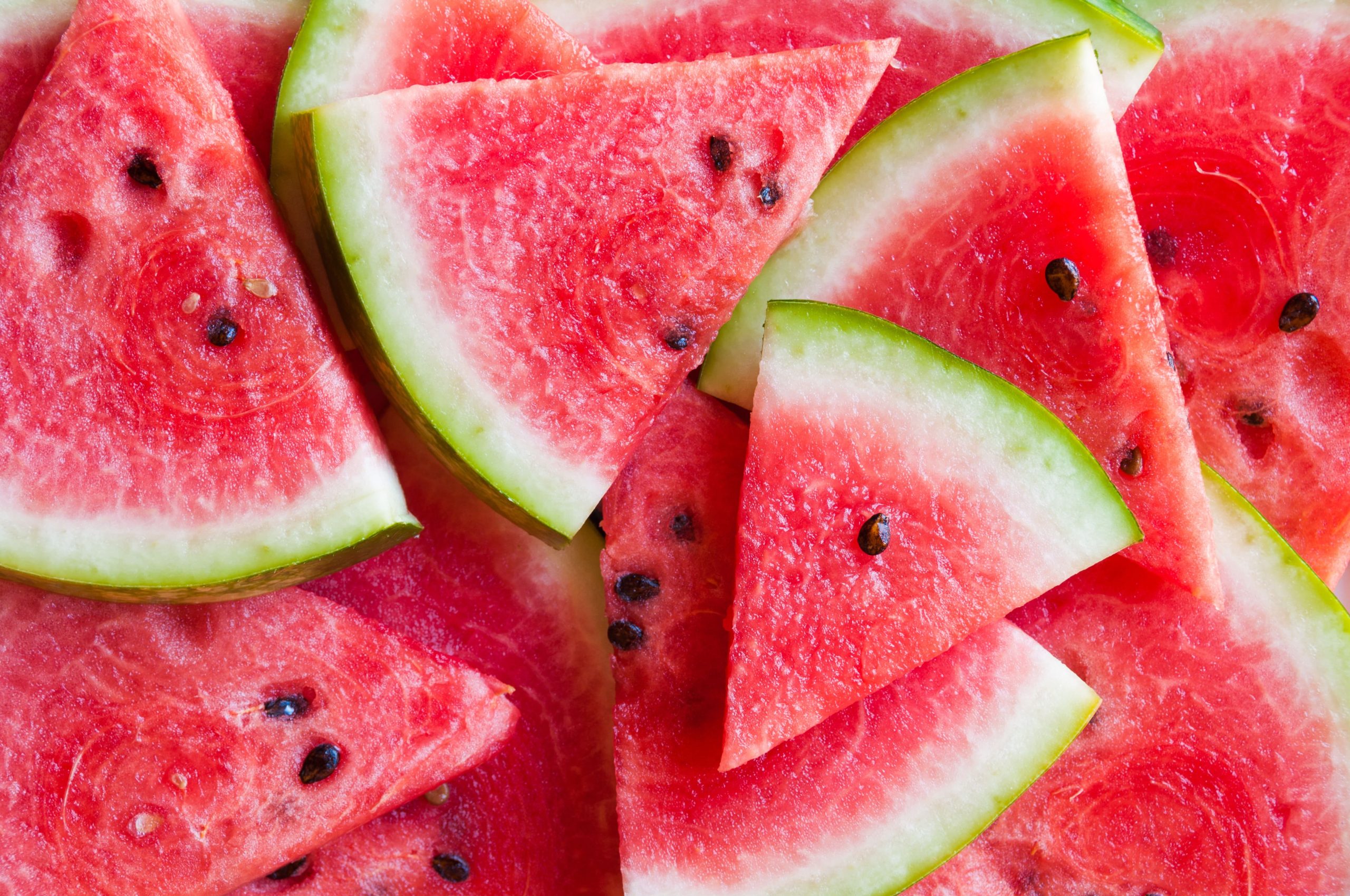
At peak ripeness, watermelon has a sweet, refreshing taste. It is eaten by either cutting it into slices or chopping the entire melon in half and removing the flesh inside. The rind isn’t typically eaten, though it can be pickled and used for other purposes. Just like the rind comes in multiple different colors, watermelon flesh also ranges from deep red to yellow.
If a watermelon is at its ideal ripeness, the flesh inside the rind is crisp yet easy to chew. When watermelons are past ripe, their flesh can become mushy, soggy, and overly sweet.
A typical serving size for watermelon is one cup. This serving size contains roughly 45 calories, just over 11 grams of carbohydrates, and about 170 milligrams of potassium, among other vitamins and minerals. The benefits of the fruit can also be enjoyed in liquid form, as its juice provides a nutritional value similar to a serving of whole watermelon.
Though watermelon is a healthy food low in calories, you should try to consume no more than a serving at a time. This is because watermelon is a high-FODMAP food. This means it is made of short-chain sugar fibers that cause digestive issues in certain people. Additionally, excessive fruit consumption can pose risks to those with diabetes or a limited carbohydrate diet.
Best Ways to Enjoy Watermelon
There are so many ways to enjoy the benefits of watermelon during the summertime (or any time). Thanks to its sweet and refreshing flavor, watermelon can be enjoyed on its own in slices or chunks. To save time, you could even simply grab half a watermelon and a spoon.
The team at Clean Juice loves the benefits of watermelon just as much as you do, which is why our menu features multiple delicious and healthy treats featuring this incredible fruit. If you’re looking for a summertime pick-me-up with mocktail vibes, try The Hydrating One, a juice made of watermelon, pineapple and mint that’s just as refreshing as it is health-boosting.
Another great option for a summertime sip is The Strawberry Watermelon One, which begins with a sweet and tangy blend of watermelon and lemon juices. strawberries, honey, and coconut water are added to the blender as well to create a thick and scrumptious healthy summer beverage.
Are you looking for something even more filling and nutrient-dense to satisfy your craving? The Watermelon Bowl is a unique take on your typical acai bowl. The base is made from frozen acai and is combined with watermelon, banana, pineapple, maca, and strawberry. After adding this tasty concoction to a bowl, we top it with crunchy granola, fresh pineapple and watermelon, chia seeds, and coconut chips for extra flavor and texture.
Your healthiest summer starts now with Clean Juice. Find your nearest Clean Juice location to discover the benefits of watermelon and your next favorite summer treat while still supporting your health goals.
Health Benefits of Watermelon
So why exactly is watermelon such an important addition to any healthy diet? The benefits of watermelon span many categories, and its refreshing, sweet flavor makes this fruit feel more like a dessert than a healthy food. Let’s take a closer look at some of the most significant benefits of watermelon for your health.
Great Source of Antioxidants
If you’re a health-conscious individual, you are probably familiar with antioxidants, what they do, and why they’re important. Antioxidants are disease-fighting compounds that occur naturally in the body but can be supplemented by your diet. Specifically, antioxidants combat free radicals, which can cause a variety of health issues due to oxidation.
One of the great benefits of watermelon is its high content of lycopene, a known antioxidant. In fact, watermelon has more lycopene than many other fruits and vegetables, with nearly 7,000 micrograms per one-cup serving. Including plenty of lycopene in your diet has been linked to decreased risk of diseases, including diabetes and cancer.
Keep in mind that some watermelon types are richer in lycopene than others. To maximize your antioxidant intake — and in turn the benefits of this fruit — choose watermelons that are bright red on the inside rather than orange or yellow. Lycopene is the compound that gives watermelon flesh its bright red color.
Reduced Inflammation
One of the most common issues caused by free radicals and oxidation within the body is inflammation, which can lead to multiple diseases. However, even without a larger issue, inflammation alone can create discomfort that makes day-to-day tasks difficult.
Among the best benefits of watermelon is its ability to help decrease inflammation. If you experience symptoms of chronic inflammation like swelling and flushed skin, including watermelon in your diet on a regular basis could help ease your discomfort. Not only could this habit help reduce inflammation, but it could also reduce your risk of developing inflammation-related diseases like heart disease, cancer, and diabetes.
Better Digestion
Maintaining healthy digestion is a key part of good health. That’s why increased efficiency in your digestive system is one of the important benefits of watermelon. If you regularly experience symptoms of improper digestion, such as bloating or constipation, consuming more of this fruit could help ease your discomfort.
Watermelon has a very high water content. Indeed, this fruit is mostly made up of water, which is why it has such a juicy and refreshing taste and texture. Many people don’t drink enough water throughout the day to keep their body as hydrated as it needs to be for smooth digestion. Eating watermelon is almost like a cheat code to get more hydrated and help your digestive system work more effectively.
Additionally, like most fruits and vegetables, every serving of watermelon contains a small amount of fiber. Fiber is an essential nutrient in the digestive process, helping to support regular bowel movements.
An increase in your fiber intake, in addition to plenty of hydration, will help your system move waste through your digestive tract more smoothly. This means that less bloating, fewer instances of constipation, and an overall healthier digestive system are all typical benefits of watermelon consumption.
Increased Heart Health

Did you know that heart disease is one of the leading causes of death throughout the world? While genetic factors can affect your likelihood of developing it, lifestyle choices can also make a huge difference in your everyday and long-term health markers.
When it comes to preventing heart disease, your blood pressure and cholesterol are two of the most important details to pay attention to. Studies have shown that high lycopene content, one of the known health benefits of watermelon, could help to keep both cholesterol and blood pressure in healthy zones.
And if your body has already experienced oxidative stress due to high cholesterol, consuming plenty of lycopene could help reverse some of that damage. Watermelon is much higher in lycopene than the vast majority of fruits and vegetables, making this delicious fruit the best option in order to include this essential nutrient in your diet.
Aside from its high levels of lycopene, watermelon is also packed with numerous other vitamins, minerals, and amino acids that support a healthy heart. Some of these include citrulline, potassium, magnesium, and Vitamins A, C, and B6.
Healthier Skin and Hair
There are many rules of thumb to follow to keep your skin and hair as healthy as possible. To achieve supple hair, you should avoid too much heat styling and harmful dyes. And for luminous skin, you should wear sunscreen regularly, drink lots of water, and use clean skin care products.
But what about supporting healthy skin and hair from the inside? The more health-boosting vitamins and minerals you include in your diet on a daily basis, the healthier your entire body will feel, which includes both your hair and your skin.
The first step to getting your best skin and hair is to drink plenty of water. If you aren’t properly hydrated, all of the water your body gets will be put to the essentials, such as making sure that your internal organs are functioning properly.
When you drink enough water throughout the day, there will be enough hydration left over to support glowing skin and strong, healthy hair. And always remember that increased hydration is one of the major benefits of watermelon.
Every serving of watermelon also contains plenty of vitamins and minerals, including vitamins A and C. Vitamin C in particular is essential in the production of collagen, the protein known for keeping skin youthful and keeping hair thick and strong. Vitamin A works to repair damaged skin cells and create new ones, which is another essential process for attaining beautiful skin.
Boost of Hydration
As this guide has shown, watermelon is packed with health-boosting nutrients that are essential for any balanced diet. In addition to all the antioxidants, vitamins, minerals, and amino acids present in every serving of the fruit, the overarching effects of increased hydration can’t be overstated. It makes total sense that the word “water” is one half of the word “watermelon.”
- Staying hydrated is essential for all kinds of bodily functions, including the following:
- Maintaining a healthy internal temperature
- Delivering nutrients to cells
- Ensuring effective organ function
- Keeping energy levels high
The more watermelon and watermelon juice you include in your diet, the easier it will be to hydrate your body and feel your best.
>
Enjoy Your Summer to the Fullest at Clean Juice
Maintaining a healthy diet doesn’t mean having to eat foods that are boring or tasteless. In fact, it can be exactly the opposite. When you browse our varied menu of fresh pressed juices, smoothies, sandwiches, and bowls, you’ll see just how delicious healthy living can be.
Enjoy our limited-time, seasonal watermelon bowl or smoothies like The Hydrating One or The Strawberry Watermelon One!
Ready to visit a Clean Juice near you? Find your nearest location and stop by in person or simply order your healthy and delicious meals straight to your door.
Sources:
- Cleveland Clinic
- Mayo Clinic
- Northwestern Health Sciences
- Biomedical and Pharmacology Journal
- National Library of Medicine
Disclaimer: The information presented here is for educational purposes only and is in no way intended as a substitute for medical counseling. Consult your doctor before using any health treatment, including natural remedies, and tell your doctor if you have a serious medical condition or are taking any medications.
If you’re unsure whether a watermelon is right for you, ask your doctor if any of your health details might make watermelon unsafe for you.
Spice Up Your Life: How Cayenne Pepper Benefits Your Health and Heart

Making sure your diet is filled with a whole litany of fresh, nutritious, whole foods is the key to setting yourself up for a happy, healthy life. In many regards, what you eat dictates a lot of what you do and how you feel. There are so many crazy benefits to eating food that isn’t processed and Clean Juice is a big advocate of this. Now, we can’t speak for every health ailment as we aren’t doctors, but eating a balanced diet can be a solution for a lot of health issues many may be facing.
Though other factors, such as physical activity, stress, and pre existing medical conditions, also play a huge role in your overall health, it is difficult to maintain good energy levels, a healthy weight, and properly functioning bodily systems without paying close attention to your daily food intake and what exactly you are consuming. “You are what you eat.” We know you have heard that once or twice before.
Most people know about the importance of protein, complex carbohydrates, and healthy fats in your diet. However, there is so much more to a nutritious, varied diet than just the major macronutrients. Foods packed with micronutrients can be extremely effective for proper bodily function and keep you feeling your best each day.
One example of these foods is cayenne pepper, a relatively well-known spice that may have more health value than expected. And cayenne peppers, well peppers in general are definitely having their moment. Check out this cutie Macho Pepper plant you can purchase at your local Trader Joe’s.
Let’s take a closer look at some of the ways cayenne pepper benefits health, wellness, and longevity when included as a regular part of your diet. And just as an aside, although some people can handle eating a cayenne pepper by itself, we’d suggest trying it in a few other forms and with a few other food options. If you are feeling like your diet is pretty bland, cayenne, in any form, is a great one to add into the rotation. More on it’s spice level later . . .
Table of contents:
- The Basics of Cayenne Pepper Benefits: Size, Taste, Texture, and Nutrition
- Where Does Cayenne Pepper Come From?
- What Are the Cayenne Pepper Benefits for Health?
- Ways to Include Cayenne Pepper Benefits in Your Daily Routine
- Best Superfoods to Pair with Cayenne Pepper
- Experience How Cayenne Pepper Benefits Your Health with Clean Juice
The Basics of Cayenne Pepper Benefits: Size, Taste, Texture, and Nutrition

Even if you’ve seen powdered cayenne pepper in a spice drawer before, you may never have thought about where this household spice comes from.
Cayenne peppers, in their most natural form, are long, thin, bright red peppers, and their scientific name is Capsicum Annum. In fact, cayenne peppers are included in the same plant family as tomatoes, which can explain their nearly identical color.
One of the key compounds found in cayenne peppers is capsaicin, which gives the pepper its hot, spicy flavor. In addition to capsaicin, cayenne pepper contains a long list of health-boosting nutrients, including vitamins C, E, B, and A, as well as antioxidants and minerals like manganese and potassium.
Cayenne peppers, in their whole form, are usually between 4 and 10 inches long and provide a slightly sweet and smoky taste underneath the spiciness when eaten raw. When ripe, the cayenne pepper should feel smooth but firm to the touch and have a crunchy texture when bitten.
Though cayenne pepper is spicy, it’s not the hottest pepper you can find. On the Scoville scale, which measures the spiciness of substances, cayenne peppers rank between 30,000 and 50,000 SHU (Scoville heat units). That puts it near the lower middle when ranking all known chili peppers from around the world against one another.
Generally, a tablespoon is considered to be the proper serving size for cayenne pepper, though if you’re eating it in its whole form, your serving size may be larger.
One tablespoon of cayenne pepper benefits your body with a huge variety of vitamins and minerals, including calcium, magnesium, multiple B vitamins, iron, and more, at around 17 calories. Additionally, a serving of cayenne pepper contains small amounts of protein, fat, and carbohydrates.
Where Does Cayenne Pepper Come From?

Cayenne pepper originated in the Cayenne region of French Guiana. Today, the pepper grows around the world in multiple countries, including India, eastern Africa, Central and South America, and some parts of the United States. Cayenne peppers grow on a specific type of shrub that thrives in tropical and subtropical climates.
Historically, cayenne pepper was used as a remedy for several ailments, such as heart disease, respiratory problems, arthritis, indigestion, and more.
Though this pepper has been used and consumed in many different forms throughout North, Central, and South America for thousands of years, cayenne pepper benefits came to Europe later.
The pepper was reported to have been originally brought to Europe by Christopher Columbus in the 15th century, as it doesn’t naturally grow in most European climates.
Different Forms of Cayenne Pepper
If you want to enjoy the many cayenne pepper benefits as well as its sweet, smoky, and spicy flavor palate, there are many ways to do so. Whole fresh cayenne peppers can often be found at your local grocery or health food store, especially if you live in or near an area where the climate is right for the growth of these peppers. Or if you’re feeling bold and want to quickly add it into your system, you can always take a hot shot (there is turmeric in this one, too!) to boost your overall daily wellness.
Whole dried cayenne peppers are readily available throughout the United States and beyond since they can be transported quite a distance from their growing site without sacrificing the quality of taste and nutrition.
One of the most common forms of cayenne pepper is its ground form, which is, by far, the most accessible. The vast majority of major grocery store chains carry ground cayenne pepper no matter how far from a growing site they might be located, as this spice is easily stored and transported without losing freshness and potency.
How to Store Cayenne Pepper

Storing methods for cayenne pepper will depend on whether your pepper is fresh or dried and whole or ground.
Fresh cayenne pepper should be stored inside of a plastic bag in the refrigerator, preferably in the vegetable or crisper drawer for optimal freshness. Aim to consume your fresh cayenne pepper within a few days of purchasing. If it loses its tight texture and starts to become soft or mushy, it may be past ripe. Most people are pretty familiar with the firmness of a pepper so if your gut is telling you it’s not a good idea to consume it, you are probably right.
Dried and ground cayenne pepper can both be stored in the pantry or another cool, dry place. While ground cayenne pepper should come in its own container, you may need to allocate a glass jar, Tupperware, or similar container for your whole dried cayenne peppers to keep them fresh and protected from mold.
Dried cayenne pepper can also last for several months in the freezer when stored in a freezer-safe container.
Are There Any Cayenne Pepper Side Effects?
The many cayenne pepper benefits make it a desirable food to include in your diet, and this pepper is generally safe for consumption by the general population. However, there are a few features of cayenne pepper to keep in mind before you consume it regularly or in large quantities.
Capsaicin, the compound that gives cayenne pepper and other peppers their spice and heat, should be consumed with care. Capsaicin causes irritation and a burning sensation in any tissue it comes into contact with, which is why foods containing this compound give the sensation of heat and spiciness.
Though your tissue isn’t actually being burned, eating too much cayenne pepper at once can cause extreme discomfort and even pain in the mouth and throat.
Additionally, some preexisting conditions may not combine very well with cayenne pepper benefits. Those with irritable bowel syndrome, or IBS, should use caution when consuming cayenne pepper. The high capsaicin content in this pepper can cause painful flare-ups for people that suffer from IBS or other digestive concerns.
Allergies to cayenne pepper are not typical. However, if you consume cayenne pepper and notice any skin breakouts, abnormal coughing, or swelling, make sure to contact a physician right away.
What Are the Cayenne Pepper Benefits for Health?

You may be wondering about the specific cayenne pepper benefits that can be seen when including this powerful food in your diet regularly. Here are just a few of the ways in which cayenne pepper benefits health and makes an impact on your well-being. And if you are curious of the actual nutritional breakdown, Mike at Chili Pepper Madness provides an awesome visualization.
Packed with Antioxidants
One of the best cayenne pepper benefits is the food’s high antioxidant content in all its forms. Antioxidants are naturally occurring chemicals that help neutralize free radicals in the body.
Free radicals damage our internal organs and tissues through oxidative stress. The more antioxidants you consume in your diet, the better your body will be equipped to fight against these harmful compounds. Essentially, these antioxidants can help fight against illnesses
Aid in Digestion
Cayenne pepper benefits the digestive system using its primary compound, capsaicin. This compound can help increase the rate at which your digestive organs secrete gastric juices, making the digestion process occur more smoothly and preventing bloating in the gut.
Capsaicin also helps to reduce gut inflammation and decrease the risk of developing metabolic disease. Additionally, the vitamin B content in every serving of cayenne pepper also aids digestion and increases the metabolism by helping break down sugars and fats in the system.
Pain Relieving Properties
Though capsaicin can cause a hot, burning sensation when consumed in the form of peppers, the compound can also help stimulate the body’s natural pain receptors when applied topically.
If you struggle with chronic pain or arthritis, a topical cayenne pepper solution might help reduce inflammation and relieve pain. Just make sure to ask your doctor if this option is right for you.
Better Heart Health
There are many ways that cayenne pepper benefits your heart health. Capsaicin has vasodilatory properties, which means that it helps keep your blood vessels wide so that blood can flow in and out of your heart with ease and your blood pressure remains in a healthy range.
Additionally, the potassium found in cayenne pepper benefits your heart by helping regulate your heartbeat. Regular ingestion of capsaicin can also aid in keeping your levels of bad cholesterol at a low range and prevent harmful blood clotting, which reduces the risk of having a stroke.
Helps Decrease Congestion

If your sinuses are congested due to a cold or flu, taking cayenne pepper can help clear your nose and throat and decrease congestion. It’s an awesome home remedy, as is ginger and horseradish. The capsaicin found in cayenne pepper benefits your sinuses and nasal pathways by thinning mucous, which makes your coughs and nose blowings more productive and decreases the length of your symptoms. Besides thinning mucus and keep your from feeling so stuffy, the pepper can alleviate any sinus pressure that you may be feeling and can reduce inflammation. Just add a little dash to some hot water or tea. There is also scientific evidence that says that snorting cayenne pepper (in moderation, of course) or running a Q-tip with cayenne around the nostrils can help, too. This wouldn’t be our preferred method at Clean Juice, but if it helps!
Supports Tooth and Bone Health
Two of the most important minerals for dental and bone health are magnesium and calcium, which are both found in every serving of cayenne pepper.
Not only are these minerals effective for strengthening your bones and teeth, but capsaicin also has powerful anti-inflammatory effects that can help relieve arthritis and fibromyalgia symptoms.
Strong Immune System
Strong immunity is important to most people, and cayenne pepper benefits your immune system directly due to the pepper’s ability to restrict disease-carrying microbes from entering your body when ingested.
Additionally, the proteins found in cayenne pepper can help stimulate antibody synthesis, which strengthens the body’s immune response when pathogens are present. Vitamin C is also abundant in cayenne pepper, and it is well known to support the functionality of the immune system as well as many other internal systems. Thinking that cayenne pepper might be a good addition to your diet but wanting to start slowly? Our “Yellow” cold-pressed juice may be the way to start. While it has cayenne, it also includes pure maple syrup to create a harmonious balance.
Ways to Include Cayenne Pepper Benefits in Your Daily Routine
Cayenne pepper benefits are easy to incorporate into your daily meals, especially if you like the taste of spicy foods. You can add a hint of cayenne pepper to pasta dishes, on top of baked chicken or salmon, or even sprinkle it over some roasted sweet potatoes.
If you’re feeling congested, adding some cayenne pepper to your tea, along with some ginger and lemon, is a great way to help clear your sinuses and relieve your symptoms.
Best Superfoods to Pair with Cayenne Pepper
Cayenne pepper benefits can combine with the health-boosting properties of other superfoods in order to have an even greater effect on your overall well-being. The pepper can add a delicious kick of flavor and heat to any tasty beverage or meal, such as beet juice, celery juice, and even a blended acai bowl.
When consuming cayenne pepper in its powdered form, this spice mixes very well with cinnamon to elevate the taste and nutritional profile of your meal.
The sweet, earthy flavor of cinnamon and the smoky spice of cayenne pepper complement each other well and can be enjoyed in a variety of foods, including soups, stews, juices, and baked vegetables.
Experience How Cayenne Pepper Benefits Your Health with Clean Juice
Eating for great health can (and should!) be delicious, easy, and enjoyable. With Clean Juice, you can take advantage of all the best cayenne pepper benefits and other superfood benefits with fresh juices, acai bowls, sandwiches, and so much more.
Additionally, you can get your nutritious meals delivered right to your door to make getting healthy more convenient!
Ready to get started on your health journey with Clean Juice? Boosting your health has never been so easy — or so tasty. Order now from one of our many locations across the U.S.
Sources:
Disclaimer: The information presented here is for educational purposes only and is in no way intended as a substitute for medical counseling. Consult your doctor before using any health treatment, including natural remedies, and tell your doctor if you have a serious medical condition or are taking any medications.
If you’re unsure whether cayenne pepper would be a healthy addition to your wellness routine, ask your doctor if any of your health details might make cayenne pepper unsafe for you.

What Is the History of Juice Cleanses and Their Rise to Popularity?

You’ve probably heard about juice cleanses before, either from a friend or an acquaintance who has touted their benefits and experiences. Perhaps you’ve considered doing one for yourself. With a little research, you can discover the many great experiences others have had with a variety of juice cleanses.
Before you make any decision regarding your diet or health, however, you should be as informed as possible about the topic. It’s also good practice to discuss with your general physician or family doctor.
Different juice cleanses can be used for a wide range of wellness goals, which means the right cleanse for someone else might not be the right one for you. And if you’ve never tried a juice cleanse before, you should be ready for some of the changes your body will experience.
Let’s take a deep dive into the world of juice cleanses and the history of juice cleanses, exploring how this unique wellness strategy could make a significant difference in your day-to-day or even long-term health.
Table of contents:
- What Is a Juice Cleanse?
- Early History of Juice Cleanses
- Juice Cleansing for Religious Reasons
- Juice Cleanses in Modern Day
- How Fresh Juice is Made
- Today’s Health-Focused Juice Cleanses
- Should You Try a Juice Cleanse?
What Is a Juice Cleanse?
A juice cleanse is a short-term change in diet in which you either consume juice exclusively or consume mostly juice, along with some solid food. Juice cleanses can range from 8 hours to 10 days or more. Partial day cleanses exist too including Clean Juice’s Juice ‘Til Dinner cleanse, which is only 4 bottled juices.
Most juice-only cleanses will be shorter, while longer cleanses will often include some solid food (we recommend organic food, of course). However, some more extreme juice-only cleanses last for multiple days at a time – like a 5 day juice cleanse (that’s 30 bottled juices!). These types of cleanses are usually prescribed for a specific purpose and monitored by a medical professional.
Most people who use juice cleanses will remain on the plan for one to three days. While some use juice cleanses primarily for the physical effects, it’s common to get a great deal of value out of the mental effects as well.
Some of the most common physical benefits that people experience during and after juice cleanses include:
- Improved digestion
- Weight loss
- Clearer skin
- Increased energy
- Enhanced focus
The goal of most juice cleanses is to clear the body of toxins and give the digestive system a break. This process causes many of the positive health effects of the cleanse. Specific effects will depend on the type and length of the juice cleanse, but these physical results are the primary reasons that juice cleanses are so popular.
Juice cleanses can also have a significant impact on mental and even spiritual well-being. Some of the mental benefits can include:
- Reduced stress
- Better focus
- Increased connection to self
- Mood stability support
- Better sleep
With this impressive combination of physical and mental benefits, it’s clear why people are drawn to juice cleanses.
A juice cleanse can be especially effective if you’ve been consuming large amounts of processed food and have been seeing and feeling the effects of these food choices, such as low energy, acne breakouts, brain fog, and poor sleep quality.
During your juice cleanse, you’ll give your system some time away from processed food and feed it only high-quality nutrients, which will leave you feeling so much healthier inside and out.
Are you interested in learning more about Clean Juice cleanses? Check out our page dedicated to such so you can become an expert before you begin cleansing.
Early History of Juice Cleanses

Juice cleanses have risen in popularity in the last few decades. In fact, this diet strategy is more accessible than it has ever been. However, the concept of a juice cleanse is not new.
One of the earliest instances of drinking juice for health reasons may date back when a tribe near modern-day Israel known as the Essenes mashed figs and pomegranates to access the health-boosting juices within these fruits.
Since then, the concept of juicing has come a long way within the medical field as well as the worldwide community of health enthusiasts.
In the 1920s, the German-American physician Max Gerson created one of the first health-focused diets based on consuming fruits and vegetables. At the time, this diet aimed to treat patients battling cancer and other chronic diseases. However, it was adopted by many for its general health-boosting and disease-preventing properties.
Throughout the 1930s, ’40s, and ’50s, juicing veggies and fruits became one of the most popular ways to consume these essential nutrient-dense foods. The first commercial juicers were created, making it possible to enjoy fresh juice from the comfort of one’s home.
Wheatgrass, a commonly known health-boosting juice today, was popularized by health food guru Ann Wigmore in the 1960s. And since the 1970s, juice cleansing has continued to gain traction. In the 1980s and ’90s, celebrities started to endorse juice cleanses, boosting their popularity even further.
While it started as a way for the small community of health food enthusiasts to consume more of their favorite foods, juice cleanses gradually made their way into the mainstream.
Juice Cleansing for Religious Reasons

Cleanses and fasts can be found in the common practices of many religions, including Christianity, Judaism, and Islam. One made popular recently by actor Chris Pratt, is the Daniel Fast.
During a religious fast or cleanse, the focus is generally on the spiritual and mental benefits rather than the physical effects. Many devout people use periods of fasting or cleansing to feel more connected to their faith or gain greater mental clarity.
In some religious fasts, no food or drink is allowed for a period of time, sometimes even including water. However, some religious fasts allow certain beverages, including fruit or vegetable juice, that contain nutrients to help keep fasters energized and alert. This allows them to fully participate in the religious significance of the fast without feeling faint or fatigued.
Make sure that you have the support of a medical professional before embarking on a fast or extended juice cleanse, whether for religious or personal reasons.
Juice Cleanses in the Modern Day
Throughout the history of juice cleanses, this wellness tool has evolved a great deal from its humble beginnings in 150 B.C.
Juice cleanses are no longer a rare fad that only health fanatics take part in. Today, most people have tried or at least heard of juice cleanses and understand the positive health effects they can have when done properly.
Not only are juice cleanses at the height of their popularity, but they’re also more accessible than ever before.
Plenty of affordable at-home juicers are available for purchase anywhere kitchen appliances are sold. This means you can follow a predetermined juicing plan from home or simply create your own delicious and healthy concoctions out of your favorite fruits and vegetables.
Brands like Clean Juice are making it more convenient than ever has been in the history of juice cleanses to get everything you need for the perfect juice cleanse delivered right to your door. Learn more and then join our Cleanse Club to get involved in the Clean Juice community!
How Fresh Juice Is Made
Creating healthy and tasty juices is easier than it’s ever been. That’s because there are so many different types of juices you can purchase.
Throughout the history of juice cleanses, most commercial machines have created juice by pushing pieces of fruit and vegetables through a series of sharp blades. The blades move extremely fast, allowing the machine to extract the juice within seconds.
But in the last several years, cold-pressed juice has become a very popular way to consume this healthy beverage, especially during juice cleanses.
Some standard methods of juicing might reduce the nutritional value of whole fruits and vegetables. That’s because most standard juicers separate the pulp from the juice, which is often one of the most nutrient-dense parts of a vegetable or fruit.
Another common reason nutrients are removed during the juicing process is the application of heat.
Standard hydraulic juicers that use blades to extract juice can apply heat to the fruits and vegetables being juiced. This heat can damage the nutritional content of the foods. That’s why many juice-making companies are now using the cold pressing method.
The cold pressing method of juicing uses a specialized hydraulic press that turns whole fruits and vegetables into juice without removing any of the nutrients. No heat is ever applied, which means the nutritional value of your juice remains intact throughout the whole process. That’s why it’s very important to juice cleanse with cold-pressed juices.
Additionally, cold pressing usually extracts a larger quantity of juice from the same amount of fruit and veggies than a hydraulic juicer.
Today’s Health-Focused Juice Cleanses
The history of juice cleanses has included so many different strategies, including changes and innovations in juice ingredients, meal timings, and length of the cleanse.
While some common cleanses in past decades have been more focused on a quick fix for weight loss than their health benefits, many of today’s most popular cleanses are geared toward boosting health above all.
Weight loss might be typical after a juice cleanse, but the best cleanses to try are those that are designed to make you feel your best on the inside through improved digestion, higher energy, and better moods.
Fresh cold-pressed juice is such a delicious way to get all of your essential nutrients in and give your body a much-needed rest from heavy or processed foods. Juice cleanses can even be an effective way to prevent or fight disease.
During the COVID-19 pandemic, many people gained a new awareness of their health goals and needs. Relying on the health-boosting power of juice can be an effective way to strengthen your immune system and give your body better tools to either prevent disease or make sickness shorter and milder. Our most popular Clean Juice Cleanses include:
- The Super Greens Cleanse
- The Beginner Cleanse
- The Energy Cleanse
- The Original Cleanse
- The Immunity Cleanse
- The Anti-Inflammatory Cleanse.
We have a lot of options to suit every person so make sure to read their descriptions in full to see what might be best for you.
Should You Try a Juice Cleanse?
Are you wondering if a juice cleanse is right for you? There are so many different types of juice cleanses out there that you’re sure to find one that suits your needs and preferences.
Whether you’re looking for more energy throughout the day, a stronger immune system, or an anti-inflammatory boost in your diet, you can find a juice cleanse that will support your goals.
At Clean Juice, we offer six distinct juice cleanses that are each designed with a different goal in mind. By browsing our various juice cleanses, you can learn more about the different types of juices we offer, what they can do for your health, and what cleansing plan is best for you.
We’ll also explain exactly what you can expect while on your juice cleanse, how to prepare for it, and what your next steps should be.
Ready to learn more? The ideal juice cleanse to boost your health and make you feel great is waiting for you at Clean Juice. Order now and get everything you need for your cleanse conveniently delivered to your home. Make sure to try our other delicious and nutritious offerings, including smoothies, bowls, sandwiches, and more!
Sources:
Disclaimer: The information presented here is for educational purposes only and is in no way intended as a substitute for medical counseling. Consult your doctor before using any health treatment, including natural remedies, and tell your doctor if you have a serious medical condition or are taking any medications.
If you’re unsure whether a juice cleanse is right for you, ask your doctor if any of your health details might make a cleanse unsafe for you.

Sour Power: Unleashing the Health Benefits of Lemon Juice

Lemons are one of the world’s most commonly consumed citrus fruits. Unlike some citrus fruits like oranges and tangerines, however, lemons are not often eaten plain. That’s because lemons have a much more sour taste than many of their relatives in the citrus family. They’ll cause your mouth to pucker with their sourness!
However, lemons and lemon juice are essential to many favorite beverages and foods, including lemonade, lemon meringue pie, and chicken or fish baked with lemon slices. While this natural food has a unique, tangy flavor that elevates many dishes, lemon can offer so much more than that.
Many positive health effects are associated with lemons and lemon juice. In fact, including lemons in your everyday diet could help boost your wellness in multiple ways, in both the short term and the long term.
Are you looking for an easy and delicious way to fit lemon juice into your diet? With Clean Juice, you can enjoy all of the benefits and tangy flavors of lemon alongside many other tasty and nutritious natural foods. Find your nearest Clean Juice location and order now to get fresh, healthy foods and beverages delivered right to your door!
Table of contents:
- Lemons and Lemon Juice History
- Lemon Nutrition and Taste
- Ways to Enjoy Lemons
- Lemon and Lemon Juice Health Benefits
- Clean Juice Products with Sour Power
Lemons and Lemon Juice History
Lemons are easy to find at just about any grocery store, whether you live in a big city or a rural area. But where did lemons originate?
The first lemon trees likely grew in South Asia and Northeast India and slowly spread throughout Europe, Asia, and the Middle East. Lemon trees didn’t come to the Americas until the Spanish conquest in the mid-1700s, when lemon seeds were spread throughout much of the land that would become the United States.
California and Florida have become hot spots for many different types of citrus, including lemons. A huge amount of the continent’s lemons are grown in these places. In addition to these states’ millions of acres of citrus groves, it’s common for property owners in both California and Florida to have their own citrus trees.
Historically, lemon has been used in many medicinal ways over the centuries. One of the most significant roles that lemon juice and lemons have played was in the 17th and 18th centuries, when it was used to cure sailors who developed scurvy while at sea.
James Lind, an 18th-century Scottish doctor, performed some of the first trials on sailors with scurvy and found that giving them lemon juice helped to improve their conditions.
Today, lemons are primarily used for their nutritional value and their bright, sour taste. However, lemons and lemon juice are still highly regarded as a natural remedy for the common cold or sore throat, as their high vitamin C content can help to fight the early symptoms of these conditions.
Lemons and lemon juice can even be used as an all-natural cleaning agent. Lemon juice is high in citric acid, which can disinfect many surfaces and remove stains. The fresh scent of lemon also helps to make any space smell and feel cleaner, which is another reason many cleaning agents contain lemon extract.
Lemon Nutrition and Taste
What nutritional value do lemons and lemon juice have to offer? Lemons are very low in calories, which means that adding a lemon slice or a serving of lemon juice to a beverage or meal is an extremely low-calorie way to add some flavor and zest.
A single lemon contains roughly 17 calories and 1 milligram each of sodium, protein, calcium, and sugar. Lemons are free of saturated fats, trans fats, and cholesterol.
The most important vitamin found in lemons is vitamin C, and eating one whole lemon can provide you with roughly half of your daily intake of this essential nutrient. Lemons also contain a small amount of fiber, which supports gut health and digestion.
Never eaten a lemon on its own? You’re not alone. While most citrus fruits have a bright and tangy taste, lemons are among the sourest citrus fruits, along with limes.
Lemons are extremely tart because the fruit contains high levels of citric acid. While some people who enjoy sour tastes can eat lemons plain, most prefer to strategically use the citrusy tang of lemons or lemon juice to enhance the flavors of other beverages and foods.
Ways to Enjoy Lemons

There are so many ways to get creative with lemons and lemon juice to fit them into your diet. One of the most basic methods is to squeeze a bit of fresh lemon juice into your morning glass of water. This is a fresh and delicious way to start your day and could even help set you up for better digestion.
Since sugar counterbalances the sour taste of lemon and brings out its other flavors, lemon is a popular ingredient in many desserts and sweet drinks. These include lemonade (or perhaps our “The Wakeup One” that combines ginger and lemon and orange), lemon bars, lemon sorbet, and lemon meringue pie, among many others.
While sugar should be consumed in moderation, desserts made with fresh lemon could still provide some of the fruit’s health benefits.
Lemon is also commonly used as a flavorful addition to savory recipes. The next time you prepare baked chicken or fish, try splashing some lemon juice over the top or even placing lemon slices over the meat before placing the tray in the oven. This is a nutritious and low-calorie way to bring out the natural flavors of the meat and keep it tender and juicy as it bakes.
One of the easiest ways to get more lemon juice into your daily diet is by drinking it in a cold-pressed juice or smoothie. At Clean Juice, we’ve found so many delicious ways to mix lemon with other nutrient-dense foods in our nourishing and tasty juices and smoothies. Order now to try out your next favorite Clean Juice product, or start a cleanse to boost your wellness!
Lemons and Lemon Juice Health Benefits
Now that you understand a bit more about where lemons came from, what they’ve been used for historically, and what role they play today, it’s important to know the specific benefits that you can receive from including lemons in your daily diet.
Full of Vitamin C
One of the most well-known health facts about lemons is their high vitamin C content, which they share with most citrus fruits. Including a single lemon in your daily diet could boost your vitamin C intake by a significant amount and have noticeable effects on your wellness.
Vitamin C supports health at the cellular level with many different functions. It helps to create a strong and protective immune system, and it can even make your body absorb iron from other foods more effectively. Vitamin C is also a well-known antioxidant.
Rich in Antioxidants
Antioxidants are compounds that work within the body to prevent harmful cellular oxidation. Specifically, antioxidants fight off free radicals, which are harmful substances created when the food you consume gets converted into energy. Free radicals can cause all kinds of health issues, from inflammation to serious diseases.
The more antioxidants you have in your diet, the better your body will be equipped to fight free radicals and keep your cells healthy and properly functioning. Vitamin C is the most powerful antioxidant found in lemons, but this fruit also contains ascorbic acid, limonoids, and flavonoids, which have strong antioxidant properties as well.
The benefits of a high-antioxidant diet could include a lower risk of heart disease, cancer, and other serious health conditions. Also, consuming plenty of antioxidants may reduce inflammation, a common symptom of many autoimmune diseases that can cause daily discomfort.
Aids in Digestion
Soluble fiber is one of the most important players in a healthy digestive system, and lemons contain this crucial compound. When you regularly consume soluble fiber, your body will digest sugar and starch more slowly and effectively.
These nutrients are often digested too quickly, which can cause gastrointestinal issues and fluctuations in blood sugar. When your blood sugar rises or drops too drastically, you might feel unwanted swings in your daily energy levels or experience even more serious issues like fainting and severe fatigue.
Keep in mind that the soluble fiber in lemon is found in the pulp. While lemon juice contains many of the fruit’s positive health effects, you’ll have to include the lemon pulp in order to reap the benefits of a fiber-rich diet.
Supports Skin Health
While vitamin C plays a major role in your health as an antioxidant, it also has other positive health effects when you consume the proper amount every day. One of these effects is brighter, younger-looking skin thanks to this vitamin’s ability to increase collagen production.
This effect of vitamin C is a primary reason many beauty brands use lemon extract and lemon juice in facial products designed to boost skin elasticity. Including lemon in your diet as well as your beauty routine could lead to even more noticeable results!
Can Help with Weight Management

Lemon may be a useful tool for those looking to maintain or lose weight for a few reasons. One of these is lemon’s soluble fiber content, which helps support proper digestion while also causing you to feel fuller for longer. This can aid in reducing your overall calorie intake, which is the most effective way to lose weight.
Some studies have also shown that lemon extract may help to prevent weight gain. This study was performed on mice, which means the efficacy in humans is still unknown.
However, the study found that mice who ate a diet of fattening foods maintained or even lost weight when they also consumed polyphenols extracted from lemon peel.
If you’re looking for weight management strategies, consuming more lemon in your diet could be helpful. It’s important to find what works for you and remember that your overall daily calorie intake will make the most difference in your efforts.
Prevents Kidney Stones
Regularly consuming lemons and lemon juice may be an effective method to prevent kidney stones. Kidney stones are formed when waste particles in the kidneys crystallize and form tiny lumps. Eliminating these stones can be very painful, depending on the amount of waste in your kidneys.
Citric acid helps increase the pH of urine, which makes the environment in your kidneys much less optimal for forming kidney stones. Lemons and lemon juice are very high in citric acid. You could also consider taking a shot of lemon juice like with our Immune Booster shot. It contains lemon, carrot, and ginger. If you’re not into the shot, the “Yellow” juice might be another great option. Interested in ordering now? Go for it!
If you want to prevent more kidney stones from developing in the future or have never had one but want to avoid them, including more lemon juice in your diet could help. However, more studies are needed to prove the connection between citric acid consumption and kidney stones.
Supports Low Cholesterol and a Healthy Heart
Many compounds found in lemons and lemon juice could support a healthier heart. One of the most important is the fruit’s vitamin C content, which is known to contribute to heart health when consumed on a regular basis.
Soluble fiber is also present in lemon juice and lemons, as are two plant compounds called diosmin and hesperidin. Diosmin, hesperidin, and soluble fiber are all known to help keep cholesterol low. This means that multiple compounds are working to lower your cholesterol each time you consume a serving of lemons or lemon juice.
The lower your cholesterol is, the more likely you are to avoid heart disease and stroke. This means that including plenty of lemons and lemon juice in your diet could have positive long-term effects on your health. Just make sure to pair your lemon consumption with other healthy foods like leafy greens, proteins, and complex carbohydrates.
Clean Juice Products with Sour Power

We’d be remiss if we didn’t mention some of our other absolute favorite products that contain lemon juice, one of those being our Blue Cold-Pressed juice. It gives off those tropical vibes and contains lemon juice, agave, pineapple, and blue spirulina (hence the blue color.)
A few other faves worthy of mentioning are “The Blueberry Lemonade One” made with lemon juice, apple, coconut water, honey, and blueberries and “The Hot Pink Summer One” which blends lemon juice with pineapple and dragon fruit. These are both part of our $6 summer menu so if you have two hands available, it would be worth trying both! Order this way.
Our inclusion of lemon doesn’t stop at drinks, either. We also whip up a delicious Avocado toast, our best seller in fact, that has a squeeze of lemon juice right on top.

Looking for even MORE products that contain lemon? You are in luck as we really do LOVE lemons over here at Clean Juice. There’s the ”Dragon Fruit Lemonade Refresher” to keep you hydrated and our “Immunity 2.0” immunity shot. So many options to choose from! Almost all of our cold-pressed juices contain some amount of lemon, too!
Create Lifelong Healthy Habits that Taste Great with Clean Juice
Supporting your health isn’t hard when you trust the pros at Clean Juice. You’ll be amazed at how delicious a nutrient-dense and balanced diet can be when you order our smoothies, juices, bowls, sandwiches, and more. Check out our specials or simply order now to get your favorite Clean Juice products delivered to you!
Sources:
Disclaimer: The information presented here is for educational purposes only and is in no way intended as a substitute for medical counseling. Consult your doctor before using any health treatment, including natural remedies, and tell your doctor if you have a serious medical condition or are taking any medications.
If you’re unsure whether lemons would be a healthy choice for you, ask your doctor.

Organic Iced Coffee Reimagined: A Delicious Route to Better Health

It’s no secret that coffee is a very popular drink among people of all ages and lifestyles. Many people don’t go a single day without their coffee because they need the caffeine boost, they love the taste, or a mixture of both. Some people like fresh-brewed hot coffee, while others prefer it over ice. Have you ever heard that saying, “No coffee before talkie?”
If you’re a health-conscious person, you may wonder if a coffee habit is healthy. You’ve probably heard people warn against consuming too much caffeine at some point in your life. Like many foods, coffee can cause health issues if consumed in excess. However, a moderate coffee intake can be a regular part of any healthy diet. Additionally, coffee itself might have some particular health benefits.
Interested in how iced coffee could contribute to better health? Let’s take a look at organic iced coffee’s history and the properties present in this popular drink (needing some right now to get through this blog? Order here!) that could be just as health-boosting as they are delicious.
Table of contents:
- A Brief History of Iced Coffee
- Organic Iced Coffee vs. Cold Brew Coffee: What’s the Difference?
- Why Did Cold Brew Get So Popular?
- Organic Iced Coffee vs. Hot Coffee Taste Differences
- Organic Iced Coffee and Cold Brew Health Benefits
- Are There Long-Term Health Effects of Iced Coffee and Cold Brew?
- Introduce Cold Brew into Your Health Routine with Clean Juice
A Brief History of Iced Coffee
Coffee has been around for centuries and has been enjoyed in countless cultures and nations. One of the first known instances was when Japanese sailors in the 17th century drank their coffee cold to avoid any fire hazards while onboard ships.
Another early instance of iced coffee occurred in Algeria during the Battle of Mazagran when tired soldiers craved a hit of caffeine that was cold and refreshing while also boosting their energy.
This concoction was named Mazagran after its historical context, and soldiers and families from both sides of the battle started to enjoy this cold beverage. In some places, it was served plain, and in others, it was mixed with syrup for a bit of sweetness.
When the French soldiers in Algeria returned to France, they brought this unique coffee drink with them and encouraged their local cafes to create their own version.
This concoction has taken on many different forms over the generations as it has spread throughout Europe, Asia, and the U.S. The Austrian version of a Mazagran includes a shot of rum, and in Vietnam, iced coffee is mixed with sweetened condensed milk for a rich and satisfying flavor.
In America today, iced coffee is generally thought of simply as the chilled counterpart to regular hot coffee. In many coffee shops, this is exactly how iced coffee is made. Brewed coffee is allowed to chill to room temperature or refrigerator temperature and poured on ice.
In recent years, however, the brewing process for iced coffee has received a serious upgrade — the cold brewing method. Cold brew coffee is now widely available in most coffee shops, so iced coffee lovers can have easy access to this upgraded version of their favorite drink.
Organic Iced Coffee vs. Cold Brew Coffee

How exactly are traditional iced coffee and cold brew different? Traditional organic iced coffee is made with cooled hot-brewed coffee, a brewing process that uses hot water to draw out the caffeine and flavor of the ground coffee beans.
By the time this coffee has cooled down and is served over ice, it’s no longer at peak freshness and can develop some bitterness.
On the contrary, cold brew coffee never uses hot water during the brewing process. To create a cold brew, the ground coffee is steeped in cold water for anywhere from 12 to 24 hours. The longer the grounds steep in the water, the more flavorful and rich the cold brew will be.
Why Did Cold Brew Get So Popular?
Why has cold brew seemingly popped up all over coffee shops and restaurants over the past several years? Cold brew coffee has existed for many years, but it’s experiencing a huge increase in popularity.
Since cold brew is designed to be served cold and never heated, it tends to have less bitterness than organic iced coffee or even hot coffee served fresh. Additionally, cold brew tends to have higher levels of caffeine and a bolder flavor than traditional organic iced coffee.
This is why many organic iced coffee lovers tend to prefer cold brew when it’s available.
Additionally, for those who like to brew their own coffee at home, cold brew coffee is now just as accessible as hot coffee. Individuals can buy their own cold brew coffee kits that make it easy to create this delicious beverage at home.
Cold brew is present in many healthy beverages and dishes, making these items even more delicious and optimal for wellness. At Clean Juice, we love the way cold brew increases the flavor profile of our smoothies, bowls, and bottled juices. Order now!
Organic Iced Coffee vs. Hot Coffee Taste Differences

Are you a hot coffee drinker who’s curious about switching over to organic iced coffee or cold brew? You may be wondering what the differences in taste tend to be, and that all depends on the type of hot coffee you usually drink.
Light roast coffees tend to be bright and acidic, while dark roast coffees are earthy and robust. Medium roast usually has a mixture of both, making it the most similar to the taste of cold brew coffee. You will likely notice that cold brew is less acidic than many hot coffee blends and has a more smooth flavor overall.
Additionally, cold brew is typically made in a concentrated form and mixed with water. That means the less water is mixed with cold brew concentrate, the stronger your cold brew coffee will taste.
Drinking plain cold brew concentrate isn’t recommended, as the taste will be too rich for most people’s liking, and the caffeine content could create unwanted effects.
If you simply prefer a hot beverage over a cold one most of the time, it may be difficult to switch to cold brew from hot coffee. However, cold brew can be a refreshing treat on a particularly hot day.
Just keep in mind that cold brew is served without ice in many coffee shops, which can actually be a benefit as it prevents your beverage from becoming watered down over time.
Organic Iced Coffee and Cold Brew Health Benefits
Organic iced coffee and cold brew are more than just a tasty pick-me-up. These beverages have many potential health benefits that can be enjoyed with regular consumption.
Many of these benefits are similar to those you can take advantage of with hot coffee, but you may prefer cold brew for any number of reasons, and it is easier to mix with other things, while hot coffee is generally consumed on its own.
More Energy for Daily Tasks
Most people know that coffee gives them a boost of energy thanks to its caffeine content. Caffeine is a naturally occurring substance in coffee beans that stimulates the nervous system, increasing your sense of alertness and possibly even increasing performance at work, at school, or during physical activity.
If you’re feeling tired during your day and need a boost to get things done, a cup of organic iced coffee or cold brew can give you that quick boost of energy you need. Just make sure you don’t drink too much, as excessive caffeine intake can create unwanted symptoms like anxiety, headaches, and restlessness.
Great Source of Antioxidants
Did you know that all coffee drinks are great sources of antioxidants? These naturally-occurring substances are found in many different plants, including coffee beans. Antioxidants work to prevent a bodily process called oxidation, which can create damage in the body and put you at higher risk for many different types of diseases.
Antioxidants also help sweep up harmful agents known as free radicals in the body, which may contribute to many diseases, such as cancer and heart disease. That’s why consuming foods like coffee that have high levels of antioxidants is such a good decision for your health.
Are There Long-Term Health Effects of Iced Coffee and Cold Brew?
Including organic iced coffee and cold brew in your daily life can have some great short-term effects, but what about the long-term? When you make iced coffee part of your daily life, you could be making a great choice for your health for the long haul while also reaping the benefits in the short term.
Are you looking for an easy way to combine cold brew with other nutrients? Boost your health the tasty way with Clean Juice. We have a ton of coffee-friendly options available right now like our “The Coffee One” or “The Iced Latte One” or if you want some chocolate in your life, “The Mocha One.” Order now!
Decreased Risk of Heart Failure
Heart failure is one of the most common causes of death in the U.S. The best way to avoid heart failure is to decrease your risk of developing heart disease, and regular servings of coffee are a convenient way to help keep your heart healthy.
Studies show that a few cups of coffee per day could decrease your risk of heart disease by as much as 15% compared to those who don’t drink any coffee. If you have high blood pressure, consult with your doctor about your caffeine intake.
Decreased Chance of Developing Parkinson’s and Alzheimer’s
When you drink coffee, the caffeine stimulates your central nervous system, which includes your brain. In this way, drinking organic iced coffee regularly could help protect your brain from developing neurodegenerative diseases. That’s because regular mental stimulation helps keep your brain function strong.
Some of the most common neurodegenerative diseases are Parkinson’s disease and Alzheimer’s disease, which have many symptoms in common, including memory loss and disorientation. Alzheimer’s tends to affect the brain and memory more significantly, while Parkinson’s mostly creates physical symptoms like tremors.
These conditions can come along with decreased quality of life and many significant health consequences of their own. By including organic iced coffee in your daily routine, you could reduce your risk of developing these conditions later in life.
Reduced Stroke Risk
The high levels of antioxidants in iced coffee and cold brew can work to prevent many unwanted health conditions. One such condition is stroke, which can occur due to an artery blockage or blood vessel bursting. Strokes are the fourth leading cause of early death in women in the U.S.
When you consume iced coffee regularly, you can support good heart health, which will help reduce your chance of stroke later in life. This is mostly due to the high antioxidant content in coffee.
Lessened Odds of Developing Colon Cancer
Cancer is never good news, and colon cancer can be one of the toughest to treat. However, drinking iced coffee and cold brew might be a helpful way to reduce your odds of developing this type of cancer.
According to a study by Johns Hopkins Medicine, coffee drinkers are about 26% less likely to be diagnosed with colon cancer during their lifetime. This study found that the benefits of drinking coffee to prevent colon cancer were the same with regular coffee drinkers and decaf coffee drinkers.
Helps the Body Properly Process Glucose
According to some studies, people who drink iced coffee or cold brew regularly (or perhaps you’d rather eat it, like in our “Cold Brew Bowl”) might have an advantage with their body’s ability to process glucose. This means a reduced risk of developing minor conditions like anemia or major conditions like type 2 diabetes. However, the research on this topic is still in the early stages.
Introduce Cold Brew into Your Health Routine with Clean Juice
Our team at Clean Juice knows just how delicious and health-boosting cold brew coffee can be. That’s why we offer multiple products that feature several ways to consume this amazing healthy food. We have “The Iced Latte One,” “The Mocha One,” and “The Coffee One,” which as you guessed it, contain coffee.
Drink your coffee in a bottled smoothie or juice, or enjoy it in bites in bowl form! There’s no wrong way to add cold brew to your daily diet, and you’ll love the rich taste that fresh cold brew adds to our nutritious products.
Order now to get your favorite Clean Juice products delivered right to your door for a fresh, nutritious meal on your timeline.
Sources:
Disclaimer: The information presented here is for educational purposes only and is in no way intended as a substitute for medical counseling. Consult your doctor before using any health treatment, including natural remedies, and tell your doctor if you have a serious medical condition or are taking any medications.
If you’re unsure whether iced coffee would be a healthy choice for you, ask your doctor.
How to Care for Your Body During a Clean Juice Cleanse

If you are considering a clean juice cleanse, you are likely curious about what benefits a cleanse can offer you. A clean juice cleanse can help you rid your body of harmful toxins, among other advantages.
To get the most out of your cleanse, however, it’s important to know how to care for your body before, during, and after a clean juice cleanse.
Here is everything you need to know about what a juice cleanse is, the benefits it can offer, and what steps you can take to ensure yours is successful.
Table of contents:
- What Is a Clean Juice Cleanse?
- What Are The Benefits of a Juice Cleanse?
- What Should You Consider Before Starting a Juice Cleanse?
- How Should You Care for Your Body During a Juice Cleanse?
- What Care Does Your Body Need After a Juice Cleanse?
- Ready to Start Your Cleanse? Contact Clean Juice Today
What Is a Clean Juice Cleanse
A clean juice cleanse is essentially a detox diet where you consume vegetable and fruit juice over a specific period of time. Clean juice cleanses usually only last for a couple of days and can potentially benefit the body by ridding it of toxins and other waste. However, it is important to closely monitor your health during this period of time.
What Are the Benefits of a Juice Cleanse?
Juice cleanses have several benefits. One of the most significant advantages is their effect on the gut. Juice cleanses are thought to promote a healthy gut biome due to their fermentable fiber. If you have cleansed in the past, you likely know that a healthy gut biome can help prevent you from contracting certain illnesses.
Another benefit of a juice cleanse is due to the effects that fasting has on the body. When fasting, your body will use and deplete its glycogen reserves, which allows the body to clean out damaged cells and replace them with healthy ones.
Juice cleanses are also thought to jump start weight loss. This is due to the fact that, during the cleanse, you are restricting your caloric intake.
What Should You Consider Before Starting a Juice Cleanse?
Juice cleanses are not without risks, which is why it is important for anyone undergoing one to consider what your goals are and how to achieve them safely. With that in mind, here are some considerations to take into account before starting your clean juice cleanse.
The Importance of Preparation
It is essential to prepare your body before a juice cleanse. First, try implementing a daily juice into your current routine. This will allow your body to get used to the effects. From there, make sure you maintain healthy levels of hydration and get plenty of sleep. Both are important for keeping your body healthy throughout the process.
What to Eliminate
When it comes to eliminating specific foods from your diet before a cleanse, two of the foods you should focus on are coffee and junk food.
Coffee is a stimulant that can prevent your body from experiencing the full effects of a juice cleanse. Beyond this, withdrawing from caffeine can have a host of nasty side effects that can be detrimental to the overall goal of a cleanse.
When it comes to junk food, you want to make sure your body is digesting optimally. This is difficult when ingesting foods that are high in sugar and carbs, which are two of the primary characteristics of most junk foods.
Even before your cleanse, you can find acai bowls and healthy alternatives on our menu. Order now!
When to Increase
Before the cleanse, increasing your intake of alkalising foods can help your digestive system prepare for the effects of the cleanse.
Your Exercise Regimen

Modifying your exercise regimen will enable you to keep your body safe and healthy during the cleanse.
Your Sleep Regimen
Increasing your sleep regimen will help you get the rest you need so that you can replenish your mind and body during the cleanse.
How Should You Care for Your Body During a Juice Cleanse?
Juice cleanses can take a physical toll on the body. Here are some considerations to take during a cleanse.
When to Drink Your Juice
Once you have begun your cleanse, drink your first juice when you wake up and time each subsequent juice at two-hour intervals after that.
Looking for the perfect source for your juice cleanse? Look over our selection and order now!
How Water Can Help
Drinking water throughout your cleanse will keep your body hydrated and help you expel waste more quickly.
Exercise Considerations
During your cleanse, you might want to switch to low-intensity workouts that will still benefit your body without causing too much stress. Make sure to move in the morning and incorporate stretching into your routine.
Monitoring Your Sleep Regimen
Many people claim that their quality of sleep improves during a juice cleanse. Conversely, others report erratic sleep and general fatigue. Regardless, always make sure you are allotting at least eight hours of sleep per night.
Watching Out for These Side Effects
Since juice cleanses can reduce your calorie intake, they can result in headaches, dizziness, and general fatigue. You may also get cravings for other foods.
What Care Does Your Body Need After a Juice Cleanse?
Proper care after a clean juice cleanse is essential. Here are some physical considerations you should consider after a cleanse.
Diet Transition

Once your juice cleanse is over, try to consume whole foods instead of processed foods. Start with whole fruits and vegetables and gradually integrate other solid foods back into your diet.
Foods like acai bowls and salads can help you come off of a juice cleanse and continue feeling healthy. Order one of these delicious items from our menu here.
Easing into Exercise
After you’ve completed your cleanse, you might want to wait until you have been able to resume your regular diet before leaning into the high-intensity workouts.
Sleep Changes
Your sleep may still be somewhat disrupted after a cleanse. However, you should reach equilibrium once your eating and exercise patterns are more aligned.
Ready to Start Your Cleanse? Contact Clean Juice Today
A juice cleanse can be a great way to improve your gut biome and help your body get rid of toxins. However, it’s important to make sure you take proper care of your body before, during, and after your cleanse. By monitoring things like your diet and your activity level, you can ensure you get the most out of your clean juice cleanse.
If you are ready to start your cleanse, contact Clean Juice today.
Sources:
Disclaimer: The information presented here is for educational purposes only and is in no way intended as a substitute for medical counseling. Consult your doctor before using any health treatment, including natural remedies, and tell your doctor if you have a serious medical condition or are taking any medications.
If you’re unsure whether a cleanse would be a healthy choice for you, ask your doctor.

The Superfood You’re Overlooking: 5 Healthy Cherry Benefits

No matter how you like to eat them, cherries are a powerful super fruit that can be integrated into just about any diet. (Hence why they are a main ingredient in our “The Chocolate Cherry Smoothie and our “Don’t Worry” Acai Bowl)! In addition to being low in calories and full of fiber, cherries contain a wealth of incredible benefits that should make the most health-conscious people consider them as a daily addition to their diets.
Low calories and fibrous content aside, cherries contain all of the following benefits:
- Vitamin A
- Vitamin C
- Vitamin K
- Potassium
- Magnesium
- Antioxidants
- Beta Carotene
- Choline
All of these ingredients are great for the body and complement a healthy lifestyle. If that’s news to you, read on. This post will list 5 healthy cherry benefits and explain why they’re the superfood you’ve been overlooking.
Table of contents:
- What Are Cherries?
- 5 Surprising Health Benefits of Cherries
- 1. Antioxidants to Reduce Oxidative Stress and Other Issues
- 2. Melatonin to Promote Better Sleep
- 3. Potassium for Boosting Heart Health
- 4. Fiber for Gut Health
- 5. Anti-Inflammatory Properties
- Can Cherry Benefits Extend to Other Major Health Concerns Like Gout?
- Delicious Options for Cherry Benefits
- Other Ways to Enjoy Cherry Benefits
- Ready to Harness the Full Power of Cherries?
What Are Cherries?
Research shows that all the nutrients contained in cherries are good for humans. This knowledge has given them a hearty reputation among health experts and dietary aficionados. However, more research is needed before definitive conclusions can be drawn.
Furthermore, one would need to consume a very high number of cherries to get many of the purported benefits. More specifically, people would need to eat between 40 and 280 cherries every day to see the greatest results. However, that doesn’t mean certain cherry benefits can’t be achieved by consuming them in concentrated amounts.
Taste and Texture
The diameter of the average cherry is between two and four centimeters. They feature an oval shape and a smooth surface. They contain soft red flesh just underneath the surface, which surrounds a pit that is located in the center of each cherry.
In terms of flavor, cherries have a range of possible tastes. What they taste like depends on what type of cherry they are and how high their sugar and acid contents are. Sour cherries feature a high acid content that gives them a tangy, tart flavor. On the other hand, sweet cherries are more balanced in their tartness and have fruitier notes.
Sweet cherries sounding good to you? You can enjoy them with the goodness of chocolate in our The Chocolate Cherry One. Order it here!
Nutritional Value
Cherries are a fantastic source of anthocyanins. These antioxidant-rich flavonoids are present in many fruits and vegetables and protect cells against the damage caused by free radicals. Additionally, anthocyanins can reduce inflammation.
Since cherries are also high in vitamins A and C, they have the potential to boost the immune system. Beyond that, their high potassium content means they can balance the body’s fluid levels. Finally, cherries also contain iron, fiber, and calcium, which provide a host of other benefits.
5 Surprising Health Benefits of Cherries

The potential health benefits of cherries cannot be overstated. Since they are rich in so many essential nutrients, they have many potential applications that can prove useful for a wide variety of people from all walks of life. This section will look more closely at their potential health benefits.
1. Antioxidants to Reduce Oxidative Stress and Other Issues
Cherries feature a high concentration of plant compounds, including anthocyanins and quercetin. Anthocyanins are known for their antimicrobial properties, while quercetin could potentially guard against toxin-induced tissue injuries. In addition to these compounds, cherries contain varying amounts of antioxidants and anti-inflammatories.
Antioxidants are thought to reduce oxidative stress, which is linked to premature aging and chronic diseases. One review found that 11 out of 16 studies demonstrated a positive reduction in inflammation. This same review found that eating cherries reduced signs of oxidative stress in 8 out of 10 studies.
Cherries also feature a high concentration of polyphenols, which are thought to promote general health, reduce inflammation, and potentially prevent cell damage. Studies have shown that diets containing high amounts of polyphenols could potentially help with the following chronic conditions:
- Heart disease
- Mental reduction
- Various types of cancer
The anthocyanins present in cherries can also potentially help with diabetes. While some people believe they cause a spike in sugar levels, this is only partially true. Furthermore, the sugar present does not outweigh the potential of anthocyanins to lower the risk of type 2 diabetes and improve insulin resistance. However, it is important for anyone considering dietary changes to consult their doctor before implementing anything new.
2. Melatonin to Promote Better Sleep

Cherries contain melatonin, which means that eating them or drinking cherry juice can potentially help people achieve a higher quality of sleep. Melatonin is known for helping humans regulate their sleep-wake cycle.
One study revealed that 20 individuals who drank cherry juice for seven days exhibited higher melatonin levels than another group who received a placebo. In addition to melatonin levels, these individuals also exhibited better sleep quality and longer sleep duration.
Similarly, another study found that adults who drank one cup of cherry juice before they went to sleep extended their sleep time by an average of 84 minutes. While these results are undoubtedly promising, it should be noted that they utilized concentrated cherry products rather than the fruit itself. This is why more research is necessary.
3. Potassium for Boosting Heart Health
Cherries could potentially improve heart health by reducing blood pressure and cholesterol levels. That’s because cherries contain polyphenol antioxidants, potassium, and other nutrients thought to boost heart health. Studies have shown that potassium has the potential to regulate blood pressure by reducing sodium levels.
Research has shown that individuals who maintain diets high in potassium are at a decreased risk of a heart attack or stroke. Combine this with the fact that cherries contain polyphenol antioxidants, which help fight against inflammation and cellular damage, and it’s easy to see how they could make for a healthier heart.
4. Fiber for Gut Health
Gut health is directly impacted by microbiomes, tiny bacteria and microbes that live in the intestinal tracts of human beings. When the gut microbiome is healthy, it can potentially prevent disease and boost immunity.
If there’s one thing microbiomes love, it’s fiber and plant compounds, which is great news for cherry lovers. That’s because cherries contain polyphenols, which are thought to stimulate the growth of benevolent gut bacteria.
Several studies have shown a positive correlation between a healthy gut and a diet rich in cherries. However, due to the complexity of the human gut, more research is needed before definitive conclusions can be drawn.
5. Anti-Inflammatory Properties
Cherries are thought to aid in bodily recovery due to their high number of antioxidants and anti-inflammatory properties. This is good news for those who exercise frequently, as cherry benefits extend to inflammation, muscle pain, and muscle damage. These properties are thought to apply more to tart cherries than their sweet counterparts.
Cherries have also been purported to help with overall stamina while exercising. However, many of the studies that led to these theories were conducted using trained athletes. More research is needed to determine how tart cherries can benefit non-athletes in this regard.
Another important point is that these studies were conducted using concentrated cherry juice rather than the fruit itself. At the present moment, it is unknown how many cherries one would need to consume to yield similar results.
Can Cherry Benefits Extend to Other Major Health Concerns Like Gout?
Because cherries contain so many beneficial elements, it stands to reason that they could potentially help with a number of other major health concerns. One specific health issue that researchers believe cherries could help with is gout, thanks to their ability to reduce uric acid.
What Is Gout?
Gout is a specific type of arthritis characterized by a sudden and rapid onset of pain and inflammation in the joints. Many people afflicted with this condition treat it with medication, natural health remedies, and changes to their diet.
Gout typically manifests in all of the following areas:
- Big toe
- Other toes
- Feet
- Heels
- Knees
Gout can affect other areas in addition to the body parts listed above. However, these instances are not as common.
What Causes a Gout Attack?

Gout attacks are initiated by an increase of uric acid in the bloodstream. This type of acid is produced when the body digests specific foods and as a byproduct of waste. High levels of uric acid can result in the formation of crystals along the joints, which is what causes inflammation and pain.
When uric acid crystallizes, the body isn’t able to remove it as efficiently as its liquid form. However, changes in diet, particularly to diets rich in anti-inflammatories, have shown promise in some individuals struggling with gout. As noted, cherries contain powerful anti-inflammatory properties. Additionally, their ability to reduce uric acid levels makes them a good choice for people wanting to decrease the risk of gout.
Delicious Options for Cherry Benefits
Clean Juice is proud to provide some delicious options designed to harness the full power of cherry benefits. Each of these items is beloved by our customers and contains its own unique presentations, so you can mix and match what you want to order depending on the nutrients you need that day.
And don’t forget that you can add the powerful benefits of cherries to other health products, resulting in a powerful, tasty combination. For example, consuming cherries with foods containing hemp and whey proteins can help with maintaining one’s overall health as well as provide an energy boost after a good workout.
The Chocolate Cherry Smoothie
Our Chocolate Cherry Smoothie contains organic cherries, bananas, and cacao blended into a sea of organic vanilla, organic maple syrup, and organic almond milk. With only 320 calories, this is the perfect drink for an energy boost alongside some cherry benefits. Needing it now? Order now!
Acai Bowls
Clean Juice has a comprehensive selection of acai bowls, with one harnessing the full power of cherry benefits.
Don’t Worry Bowl
Our Don’t Worry Bowl contains all of the following ingredients:
- Organic acai
- Organic banana
- Organic cherries
- Organic cacao
- Organic maple syrup
- Organic coconut oil
- Organic almond milk
- Organic chia pudding
- Organic granola topping
- Organic cherry topping
- Organic coconut topping
- Organic cacao nibs topping
- Your choice of drizzle
The Don’t Worry Bowl is a great way to mobilize the power of cherry benefits with some additional energizing supplements. The chia pudding can help with digestion, and the cacao nibs can provide an additional boost of energy. Tempted yet? Order now!
Other Ways to Enjoy Cherry Benefits
Cherries are easy to integrate into just about anything. These versatile fruits pair well with many foods, and given that they come in sweet and tart varieties, they can be expertly incorporated into various recipes.
If you are looking for some ways to add cherries to your diet, try any of the following:
- Eat raw, fresh cherries
- Cut a few cherries in half, pit them, and include them in a salad
- Dry the cherries and put them in trail mix
- Add tart cherry juice to sparkling water for some extra flavor and an energy boost
- Make a smoothie using frozen cherries
- Dry the cherries and bake them in your favorite bread
These are only a few of the array of options cherries provide. Feel free to experiment and discover what works best for your palate.
Ready to Harness the Full Power of Cherries? Contact Clean Juice today
If you are ready to see what cherries might be able to do for your daily routine, or if you are looking for a place to get some delicious cherry-centric snacks, contact Clean Juice today. In addition to two delicious cherry-imbued items, we have a comprehensive selection of some of the healthiest foods around.
Whether your goal is to get in shape, maintain your health, or both, the best way to start is by eating a healthy diet. At Clean Juice, we understand what is required to yield those results. Contact us today or stop by one of our locations for more information.
Sources:
Disclaimer: The information presented here is for educational purposes only and is in no way intended as a substitute for medical counseling. Consult your doctor before using any health treatment, including natural remedies, and tell your doctor if you have a serious medical condition or are taking any medications.
If you’re unsure whether cherries would be a healthy addition to your wellness routine, ask your doctor if any of your health details might make cherries unsafe for you.

Sleep Music and Juice Cleansing: A Match Made in Detox Heaven

Sleep music and juice cleansing make quite the combo. If you have never personally tried either, fear not. This post will explain what they are, why they integrate so well, and how using them together could potentially help you achieve much better sleep during your juice cleanse.
Table of contents:
- Juice Cleansing in Theory and Practice
- Sleep Music 101
- The Science Behind Sleep Music
- Types of Sleep Music
- The Importance of Sleep During a Juice Cleanse
- How Sleep Music Can Help
- Tips for Incorporating Sleep Music into Your Juice Cleanse
- Sleep Music Bedtime Routine
- Want to Learn More? Clean Juice Can Help
Juice Cleansing in Theory and Practice
Juice cleansing is a dietary detox regimen where the person undergoing the cleanse abstains from solid foods and only consumes juice for a short period of time. It is typically used in alternative medicine treatments and detoxification practices.
When cleansing, the person will drink their juice at specific intervals throughout the day. This will allow them to achieve many of the benefits of fasting while still yielding essential nutrients from the juices. If you want to get a taste for delicious organic juices, you can incorporate into your next juice cleanse, you can order from our menu here!
Sleep Music 101
Sleep music is a collection of specific sounds and arrangements designed to help the listener fall asleep and stay asleep for longer. While sleeping, sleep music is designed to help the listener achieve deeper, more restful sleep. There are several different types of sleep music, which will be explored in more detail later in this post.
The Science Behind Sleep Music
In general, sleep music has psychoacoustic properties that can lull the brain into a deeper state of relaxation. In turn, the rest of the body will slowly follow suit. Once relaxed, listeners may be able to sleep deeper and for longer periods.
Types of Sleep Music
There are a few different types of sleep music. This section will briefly explore the most popular ones.
Binaural Beats
Binaural beats are a fantastic example of the psychoacoustic properties of sleep music. A binaural beat is a perception of sound that is created in the brain. It presents two tones at different frequencies, with each tone sent to only one ear. When this happens, the brain makes up for the difference by creating an additional tone at a frequency between the two primary tones that the listener is able to perceive.
White Noise

White noise is a consistent tone that contains all perceivable frequencies across the auditory spectrum in equal measure. The result is a random signal with equal intensity distributed across different frequencies. White noise is great for tuning out external noise. Additionally, its consistent tonality is calming and ideal for meditation and falling asleep.
White noise is particularly beneficial if you live in an apartment or another area where noisy neighbors could potentially disrupt your sleep. Because it contains all perceivable frequencies, the white noise will block out the outside sounds and give you something calming and consistent to focus on. Just make sure the track you are listening to is long enough to allow you to fall asleep. Otherwise, you may have to get up to restart it.
Instrumental Music
Instrumental music is the type of sleep music most people are probably familiar with. That’s because it is essentially regular music without vocals. Instrumental music can be from any genre, though people trying to sleep most often prefer classical or ambient styles of music since those styles tend to have organic changes organized around a musical idea that appeals to the brain without perpetrating anything erratic or obtrusive.
The Importance of Sleep During a Juice Cleanse
Sleep is crucial during a juice cleanse because it gives the body time to recharge and heal. It also provides ample time for detoxification. Since a cleanse deprives the body of many of its normal nutrients, sleeping allows the glymphatic system to clear the body of excess waste. Unfortunately, a lack of nutrients can make falling asleep more difficult. This is where sleep music can help.
How Sleep Music Can Help
By now, it should be no secret that sleep music can help improve an individual’s sleep quality during a juice cleanse. The types of sleep music best suited for relaxation and stress relief are white noise, binaural beats, and calming instrumental music. Simply turn the music on before you go to bed, shut your eyes, and let the sounds take you on a journey. If all goes according to plan, you should be asleep before you know it.
Tips for Incorporating Sleep Music into Your Juice Cleanse
Besides selecting quality organic juices, sleeping is one of the most important things you can do to ensure your cleanse yields the desired results. The first objective you can achieve easily; simply order from Clean Juice’s extensive menu here.
But if sleeping is proving difficult, we have tips for that too. By incorporating sleep music into your bedtime routine, you will likely fall asleep easily.
Sleep Music Bedtime Routine

The first step to any sleep music bedtime routine is to create a relaxing environment for yourself. You’ll need your bedroom to be dark with no distracting lights or sounds. Make sure the speakers you are using are functional and appropriately placed. Additionally, if you are sensitive to smells, consider using incense or oils to imbue the air with your favorite relaxing scent.
Once your environment is ready, consider putting your phone on the charger somewhere out of sight so it does not distract you. As far as electronics are concerned, using them too much before bed can lead to restless sleep.
You can also try meditating and deep breathing, which are great ways to regulate your nervous system and get your breathing in alignment. If you still aren’t feeling relaxed, consider taking a warm bath before bed. Warm baths calm the mind and regulate body temperature, facilitating easier relaxation.
Want to Learn More? Clean Juice Can Help
If you want to learn more about the benefits of sleep music and juice cleaning, contact Clean Juice or stop by one of our locations today. We have a collection of quality juices and other health-conscious food products that can help with your diet, whether you are preparing for a cleanse, undergoing a cleanse, or recovering from a cleanse. Order your favorites here!
Sources:
Disclaimer: The information presented here is for educational purposes only and is in no way intended as a substitute for medical counseling. Consult your doctor before using any health treatment, including natural remedies, and tell your doctor if you have a serious medical condition or are taking any medications.
If you’re unsure whether a cleanse would be a healthy choice for you, ask your doctor.

Today’s episode is all about fertility, struggles conceiving, prenatal care, and the impact chiropractic care can have on the birthing process. Our guest, Dr. Courtney Kahla, shares her story about infertility, birth, and tips that helped both her and her patients on their journey. Listen & learn about all the things that could be impacting your fertility! (Yes, even that root canal could be making a difference.)
Dr. Kahla specializes in fertility, preconception, prenatal, pediatric, women’s health and whole family wellness with additional training and certifications from ICPA (International Chiropractic Pediatric Association). She was featured in Well Being Journal, received the Parker University Chiropractic Philosophy Awad for friendship, love of mankind, and the compassion to serve in April 2018, is the owner and founder of Our Well House in Frisco, TX.
TIME STAMPS
2:57 Dr. Kahla’s Take on Chiropractic Care for the Female Body (jump to section)
8:23 The Truths Behind Fertility Medicine (jump to section)
10:00 Fertility Struggles & Stress for Women (jump to section)
13:08 Dr. Kahla’s Struggle with Infertility (jump to section)
14:24 Preconception Health (jump to section)
16:00 Acupuncture for Fertility (jump to section)
17:35 Fertility Naturopathy (jump to section)
21:00 Root Canals & The Effect on the Body (jump to section)
22:52 Thermography (jump to section)
26:05 Men’s Preconception Health (jump to section)
29:08 Dr. Kahla’s Experience with the Birthing Process (jump to section)
38:30 Chiropractic Care for Birthing Trauma or Strain (jump to section)
44:20 Things to Look for When Searching for a Chiropractor (jump to section)
Transcription Below
Kat Eckles: What’s up, Be Organic listeners? Thank you so much for joining us today. This is Kat Eckles, one of the hosts of Be Organic, and I’m so excited to have you all.
As always, my husband Landon and I are so grateful for your support of Clean Juice and this podcast. Thank you for joining us. Today, we have a very exciting topic and a very exciting guest.
This is one that I followed personally on Instagram for a long time, and just someone that I look up to and I respect a lot of things that she says. I’m just really excited to have her on and share more of her background, insight, and just brilliance that she has going on.
I am excited today to introduce Dr. Courtney Kahla. From the time Dr. Kahla was a child, she had a firm belief that the body was self-healing and self-regulating. She played collegiate volleyball on a full ride scholarship and attended Abilene Christian University, where she graduated with a bachelor of science and exercise science. She attended chiropractic school at Parker University and became passionate about serving families.
She specializes in fertility, preconception, prenatal, pediatric women’s health, and whole family wellness, with additional training and certifications from ICPA, which is the International Chiropractic Pediatric Association. She was featured in Wellbeing Journal, received the Parker University Chiropractic Philosophy Award for Friendship, Love of Mankind, and the Compassion to Serve in April of 2018, and she’s the owner and founder of Our Well House in Frisco, Texas. And now we have the utmost pleasure of having her on with us today.
Dr. Kahla, thank you so much for joining.
Dr. Courtney Kahla: Thank you so much for having me. I drink Clean Juice all the time, so this is such a treat.
Kat Eckles: Aw, that means so much. It’s really cool when I hear people that I just really respect and also respect their lifestyles, I know they’re doing the right thing when they say they drink our products. It’s a little joy to my heart. I really appreciate hearing that from you.
Dr. Courtney Kahla: Absolutely, and not even just drinking the juices, but all the products that y’all offer. Big fan of it. When I opened my new office, everyone that came to visit, asked if there is was a Clean Juice nearby.
I always said yes, five minutes down the road.
Dr. Kahla’s Take on Chiropractic Care for the Female Body
Kat Eckles: I love that. So good. Well, awesome. I talk to a lot of different chiropractors. I believe in chiropractic care. It’s funny actually, after I finish recording this, I’m headed there with my kids. One thing I love about what you focus on is family and children and the women’s body in fertility.
Obviously I’m a woman. I have five children, so I’ve been through the birthing thing and women are so strong and powerful. I would like to understand how you went down that path and what you think chiropractic care really does for the female body, and all that we can do..
Dr. Courtney Kahla: Oh, absolutely. I didn’t know you had five kids. That’s amazing. I’m the oldest of five, and so that was my life growing up.
Kat Eckles: Aww.
Dr. Courtney Kahla: As a parent, you see the growth and development that occurs in your kids, right? You remember the day where you had your baby just on the floor and they were just looking at what was within a one foot radius in front of them, and then all of a sudden, one day, they can track you as you’re walking across the room and you say, “oh my gosh, my baby sees me.”
You didn’t have to teach your child that, right? They just started doing it. It’s their brain making their own connections with their own body. I think just being a witness to the development and the intelligence that is God-given and within us really has just fostered. I wanted to serve that community really well. So much is happening within our brains and bodies at such a young age and that just continues through the years. I wanted to be able to steward health within this community of growing their families.
Kat Eckles: I love that. That’s so good. I can look back at some experiences I’ve had as a mom with those type of things where you watch children and they’re so instinctual. It really brings me back to even what Jesus says in the Bible. He says, “the ones who come to me are little children. That’s who enters the kingdom of God.”
And I really believe so much of that is about following your instincts. It’s about following the Holy Spirit inside of you, and it’s about listening to your body and the way, you know, Jesus communicates with us to take care of ourselves.
So I can really appreciate that and, and, you know, think back on moments I had with my kids where it’s that resounds, you know, it really, it really sets in when you, I think probably more so when you become a parent and you can watch these little kids 24/7 that are really living by their instincts and living by their emotions, and really knowing what they need for themselves to take care of themselves. It’s really miraculous.
Dr. Courtney Kahla: Oh, for sure. As a parent, you get a front row seat because you are with them 24/7. The little things where, if someone just sees your kid one time a week, they just see that, for example, Sally’s walking this week, which seems great.
But you saw every time that they tried to stand up and maybe their foot wasn’t completely flat on the ground. You saw every little bit of their brain just building and making those connections with their bodies. Parenting is really refining. I’ve learned so much more about normal h an physiology just by watching my little one develop.
Kat Eckles: That’s so true. Fertility is something that you really focus on and I’d love to hear about some of the ways that you think chiropractic care really helps with that. We can maybe get more into the things you can do outside of chiropractic care. But what are some of the things you’ve seen specifically as it relates to fertility in your practice?
Dr. Courtney Kahla: Fertility struggles are near and dear to my heart because that was our journey. We struggled for almost two years to conceive our daughter, who’s now one and a half years old. So I firmly believe that couples on this journey just deserve careful detectives to work, to uncover what’s really going on, and to reveal how best to address it. I want the couples that I serve to have wise guides to help them navigate their choices- all of their choices- until that primary need is fulfilled.
I have to disclaim, first and foremost, that as a chiropractor, I do not treat anything. The purpose of chiropractic care is not for the treatment of conditions or disease, but rather the restoration of normal body function.
That totally applies to preconception infertility, but it also applies to digestion, sleep, scan, et cetera, because every function in the body depends on the optimal function of the nervous system. When your body has a decreased ability to adapt physical, chemical, or emotional stressors, what that does is it creates a roadblock between your brain and your body.
Your brain is trying to send messages to every cell, organ, and tissue, telling it what to do, but that message either can’t get there or has to sit in traffic or take a detour. It might get there, but it’s probably pretty late and frustrated. As a chiropractor, I’m able to remove those roadblocks, restore that proper communication, whether that communication is to the uterus, the ovaries, or the glands in the brain that produce the hormones that tell those organs what to do.
We remove that to allow the body to function the way that God created it to.
Kat Eckles: That’s amazing. What are some things that might affect fertility even outside of chiropractic care that some people are doing that really can have an impact on that, hether it’s products they use or foods they’re eating?
Sometimes people don’t even realize that they’re doing things that can really be impacting their fertility, whether it’s fragrances or candles, or even birth control pills. I’d love to talk about a couple of those things.
The Truths Behind Fertility Medicine
Dr. Courtney Kahla: Heck, yeah, all of the above, girl. But I can’t talk about fertility without diving into some of the truths of the fertility industry.
Just to backtrack a little bit.
Kat Eckles: Yeah.
Dr. Courtney Kahla: To me, it’s unacceptable that 80% of patients don’t actually know what their diagnosis is and neither do their doctors when it comes to why they’re not getting pregnant. That’s just the unfortunate reality of fertility medicine. There are plenty of talented, well-intentioned practitioners out there, of course, but they are usually the rare ones.
What’s more common is just this general attitude of, “Why figure out why she’s not getting pregnant if we’re not going to give her drugs anyway?” Or, “I don’t need to know if he’s making healthy sperm because we’re just going to get enough to combine with eggs for IVF.”
I always want to communicate that I stand for informed choices and making empowered decisions. That’s why I can’t talk about fertility without talking about how too often in this culture of modern fertility, medicine harms more than it helps because it’s more common for doctors to steer women immediately toward drastic medical interventions, which is just wild to me because the odds are that it won’t work.
The chances of having a healthy full term baby after one IVF hovers around 30% to 40%, and that actually even varies between 10% and 50%. In fact, one of the best IVF programs in the country, for example, sends 47% of patients under the age of 35 home with a baby in any given IVF cycle.
It’s the best program with the most likely to succeed patients, and the patients still get what they came for less than half the time.
Kat Eckles: Wow.
Fertility Struggles & Stress for Women
Dr. Courtney Kahla: Yeah. For me, as someone who studies normal human physiology with an emphasis on women’s health and reproduction, I think that those struggling with fertility, more often than not, don’t need the physical strain of extreme hormone doses and repeated invasive procedures.
They don’t need long-term increased health risks to mother and baby, and they don’t need the emotional strains the IVF rollercoaster puts couples on. In psychological testing measuring stress levels, infertility patients actually scored higher than cancer patients.
Kat Eckles: Hmm.
Dr. Courtney Kahla: Yeah. I also think that they don’t always need the tremendous expense. In the DFW area, it’s an average of $15,000 per IVF cycle, and insurance doesn’t even touch financial support, usually, in those areas.
Kat Eckles: Right. Well, you know what’s so funny? You say that about the stress and you hear these stories all the time about couples who were trying and going through IVF and did all these things, and then maybe they had a baby, or maybe they went the route of adoption and then they get pregnant completely, naturally about a year later.
It’s almost the body, that stress, whether it’s IVF, or whatever they’re going through, as soon as that stress is gone, the body can do what it needs to do. I’ve heard that story more often than not, and it’s just always unbelievable to me that sometimes it’s just that piece of stress that they need to release and then the body can do what it does.
Dr. Courtney Kahla: Yes. It is really cool to hear stories like that. I know when we were on our journey, I was researching all those things, because you’ll do anything to get pregnant. I said, do I just need to give up this hope that I have, because once I give up, then I’ll get pregnant?
Even giving up the desired result to get pregnant, research actually shows that it only happens to 5% of couples, so…
Kat Eckles: Oh wow.
Dr. Courtney Kahla: That was encouraging because the Bible tells us in Romans 5:3-5, “Endurance produces character. Character produces hope.” I can’t remember the exact words of that verse, but it just basically says we are supposed to have hope.
I know for many people they do have that testimony of just giving up and surrendering and said this isn’t part of our story. They had moved on and then got pregnant. I’m not there yet. I’m not ready to give up. I want to still have this hope.
That statistic of it just being 5%. I love hearing those stories from people, but it’s only 5% of couples that it actually happens to.
Dr. Kahla’s Struggle with Infertility
Kat Eckles: I would love to hear a little bit about your story, if you’d be willing to share just the things you tried and the different things that you went through. So we can maybe share that hope with people that are on that same struggle.
Dr. Courtney Kahla: Absolutely. For me, when I’m serving people that are struggling with fertility, and this kind of ties into just my story, but I am laying that foundation.
What I want people to have is support in weighing the risks and benefits of their choices. I want them to try the most natural options first. I want them to have advice that they can trust about when to consider assisted reproductive technologies. The truth is that with careful diagnosis, basic fertility education and some simple but detailed diet and lifestyle advice, many women using assisted reproductive technologies could actually conceive much more naturally.
Preconception Health
That was our philosophy. We wanted to try everything natural and available to us and if we needed to go the assisted reproductive technology route, we tried to surround ourselves with those wise guides who would help us navigate all of our choices. We started working on our preconception health.
That is a big piece that’s missing from modern fertility and just the entire healthcare system in general. Most doctors will say, “Don’t come and see us unless you’ve been trying to get pregnant for over a year. Then we’ll talk about it.”
Why do we have to wait and go through the struggle? Why can’t we focus on preparing our bodies and being proactive? We tried to be proactive in all these other areas of our health. We started preconception health, which really just looked at working with a functional medicine doctor, doing some basic lab panels, hormone testing, just kind of seeing where we were at and what things looked like. We focused on some dietary and lifestyle changes. I worked through healing of candida overgrowth infection and some food allergies. It was really beneficial. I remember when we had our meeting with our functional medicine doctor and he said:
“You know, we’ve worked through a bunch of stuff the past 10 months and I’m not really seeing anything else that we really need to focus on. Everything looks great.”
We said let’s go ahead and start trying to conceive. In my mind, I said okay, I’ve done all this work, so now that when I physically try and when I’m emotionally invested, my body’s just going to be ready and I’m just going to get pregnant. Another piece to that puzzle was really the fertility education – really studying and charting my menstrual cycle. I had been doing that for two years. I knew exactly when I was ovulating based off of three ovulation signs, which would be basal body temperature, cervical fluid, and cervix positioning. I know exactly when I’m ovulating. It just was not that easy for us. It was a very humbling moment for me.
Acupuncture for Fertility
We tried for six months before I started acupuncture and that was great. I went to someone who specializes in fertility and she specializes in pregnancy as well, which I think is important when you see an acupuncturist.
That helped really with all kinds of blood and circulation. Of course it’s going to help with a menstrual cycle because of massive blood circulation going on there. I had great improvements with my menstrual cycle with that after doing that for three months. I also started seeing a local woman who practices what’s called Las Sobadas, which is a womb massage.
It’s a very cultural thing, but it’s a visceral manipulation and helping, just making sure my uterus was in the right position, that my ovaries were doing what they’re supposed to do. It’s something that only people from Mexico will practice. It’s not something that’s taught in massage school.
It’s definitely very cultural, but I love it and have so much respect for it. The woman who served me in that way served me all through my pregnancy and then was even at my birth with my daughter.
Kat Eckles: Oh, that’s really cool.
Fertility Naturopathy
Dr. Courtney Kahla: Yeah, she’s very special to me. It wasn’t until about 10 months of trying to conceive unsuccessfully that I finally decided to go see a fertility naturopath.
I knew that I didn’t want to go to a reproductive endocrinologist because I knew what services they were gonna offer me, right?
Kat Eckles: Mm-hmm.
Dr. Courtney Kahla: We chose to not go that route until we exhausted all of the other options. We did more extensive blood work and testing with a fertility perspective, not just an overall health perspective.
A great example of that is vitamin D levels. If you’re anywhere between 20 and 40, they’ll say it’s within a normal range. But for fertility, you really want to be between 60 and 80. You go through things with a fine tooth comb within the eyes of reproduction.
My husband ended up doing a semen analysis while we were under care with this fertility naturopath. We saw her for six months and the last little piece of the puzzle – we worked through everything we could with her. I had an abnormal pap smear, so we went down the rabbit hole of doing some further testing to figure out what was going on there. It ended up coming back normal. We had these rabbit holes, but nothing actually gave us answers.
We went down every path that we needed to. We got to the point where we didn’t really have anything else to investigate.
Root Canals & The Effect on the Body
We did everything we could with this fertility naturopath. We switched back to a functional medicine doctor, and under his care, I finally got this root canal tooth removed.
I had a tooth that I had a root canal on about 10 years before it had bothered me. I had watched some documentaries, I’ve read five different books and studied a lot of Weston A. Price’s research. I had it looked at. I had a cone beam, a CT scan on it, which showed a pocket of infection above it and I had that tooth pulled. A month later, we got pregnant. Naturally.
Kat Eckles: Wow, that’s unbelievable.
Dr. Courtney Kahla: I feel all of that played a piece in the puzzle and even during that time, I know God was working on my heart. I was learning things about how I wanted to parent and birth that I didn’t know of before.
I’m so grateful for the time that it took, as hard as it was. I can’t help but deny that the one month before we miraculously conceived, I had an infected root canal tooth extracted.
Kat Eckles: I think that’s something we’re probably just on the tip of the iceberg with understanding – how much our dental care and, especially root canals and wisdom teeth extractions, and all of the things we’re doing with our teeth, has such an impactful effect on our body that we really, really need to be paying attention to. I just applaud you for going down that route because we’re just getting into that.
Even then in the natural world, people are just really starting to understand how important that is. I actually wish my husband was here because he has a few root canals that I’ve really been hounding him to get out and he doesn’t want to listen to me.
Dr. Courtney Kahla: It’s crazy – the more I researched it, which I know we weren’t planning on talking about this today, but the more I researched it, I saw that what they do with the root canal is completely cut off the blood and nerve supply because there’s infection and inflammation. They cut off the supply and that basically kills that root of the tooth, and then they pack it down with this tar- and cement- material.
The problem with it is that our teeth have so many little tiny micropores that bacteria and organisms and microorganisms are going in and out of. When we cut off the blood supply and the nerve supply, we’re then just leaving dead tissue in the body. A root canal is the only procedure where we leave dead tissue within the body.
That’s creating the perfect scenario for an infection because we don’t have the blood supply and the nerve supply to then bring more of the body’s innate immune system to the area. Some of the research by Weston A. Price showed that he would take root canal teeth that had been extracted from a hen, place it under the skin of a rabbit, and 80% of the time that rabbit would develop the disease that the hen had.
Kat Eckles: Wow.
Dr. Courtney Kahla: Yeah.
Kat Eckles: I had heard a statistic, and I might get this wrong, so I hate to quote it, and maybe you can correct me, but I think it was 80% of women that had breast cancer also had a root canal on that same side.
Dr. Courtney Kahla: Yes. I don’t know the statistic there, but I do remember seeing that as well. There’s a toxicologist that works at my dentist’s office and she owns a thermography center. She does thermograms on these women and it shows these heat patterns between the tooth and the breast and that lymphatic circle there.
Thermography
Kat Eckles: I would love for you to quickly to explain what thermography is because I know what it is and love it, but I think it’s actually something that I wish more people understood. I know we weren’t going to talk about that, but since you mentioned it, I would love for you to just explain it a little bit.
Dr. Courtney Kahla: Thermography is basically just getting heat readings from the body. I actually did a full body thermography scan a few months ago at a center in Dallas, and I think it’s good information to have. It wasn’t the end all be all for me, and it’s a good tool to have in my pocket, but it’s not something that I need to do all the time. But what was really interesting is it showed over my thyroid that it was colder.
I wasn’t getting as warm of heat signals that I should have, which meant that my thyroid was probably a little bit more underactive than what it needed to be, which made sense. At that point, I was six months postpartum. The load of my thyroid had been a lot from pregnancy and birth.
Really interesting information you can gather. What I think is most beneficial for, and where I’ve referred some of my practice members to do thermography scans, is if you have breast implants.It’s really great to be checking on those heat patterns with that change there. Because breast implant illness is real.
For breast health, I really liked the information I gathered. It’s a less invasive way. Instead of doing a mammogram, you can do a thermograph, which would be a less invasive way of getting information about breast health. Mammograms have been shown to not be as effective and have caused cancer in situations. I don’t think they should be completely thrown out. There’s a time and a place for them, but I think there’s an over-reliance on them. We could be using tools like thermography and then if we see something we could follow up with a mammogram.
Kat Eckles: Exactly. What I liked about it too is you can do the scan and then if you see a few areas of concern, you can keep an eye on it and work on really treating that, whether it’s the lymph around your breast, and then you can go back and see if that’s changed.
You can use it as a good baseline tool, which I really like.
Dr. Courtney Kahla: Yeah, absolutely. It’s great when we look at metabolic health, right? Our metabolism, our bodies, are supposed to be warm and increasing in heat. If we have areas on my thermograph, my feet, it doesn’t show up on it at all because my feet were so cold we didn’t get any heat patterns.
That’s not healthy. It shows circulation issues. But also from a metabolic perspective, am I eating enough? Am I nourishing my body so that I’m actually warm?
Men’s Preconception Health
Kat Eckles: Mm-hmm. That’s so good. Something that piqued my interest is you were talking about your journey and all the testing you did, but also a lot of the testing that your husband did, and I think that’s probably something that sometimes people might overlook, or might not realize how important it is for the male and his sperm to be healthy as well.
Even if it’s healthy enough to get pregnant, it is just as important for what a male does preconception as what a female does, and I think that’s an important concept for people to understand.
Dr. Courtney Kahla: Absolutely. That was something I felt we had to really push against; what society and culture tells us with that. I think the more common messaging is that women’s reproductive health is more important. But no, it’s 50/50, right? They’re getting genetics, gene expression, they’re getting so much more and it really takes three months to produce healthy sperm.
There were times during our fertility journey that we just took a flat out three month break to just give my husband an opportunity to work on some dietary changes. He was taking some supplements for some deficiencies and just really focusing on sperm health.
A big part of our journey is I had my husband come to all of these fertility appointments with me, because we did make the active decision of that we’re going to pursue my health first because I’ll be the one carrying the baby. I have more time and I really like going to doctor’s appointments.
We can focus on that. I really worked on bringing him along with me to do some of his own testing and just making sure that he’s as healthy as possible. We did do a semen analysis, which is very invasive, and we processed that really heavily because most of these reproductive centers that take semen analysis have a ton of pornography in their rooms.
We processed it to where we just don’t think that on this pursuit of getting answers for growing our families, that it would involve sin. We’ve found another option where you can collect a semen analysis sample within a 30 minute radius of the facility, such as at your house, and then keep it in the container and place it warm between your legs and drive it and drop it off at the facility.
Kat Eckles: I love that. That stuff’s so important. I don’t think that we even think about it in modern culture, but it’s our child. It’s putting all these things and all of this energy into our future and if it’s rooted in sin or rooted in these things that are wrong it’s just something you want to be aware of.
I love your discernment there, and I respect that a lot.
Dr. Courtney Kahla: Thanks. I know that was probably tmi.
Kat Eckles: No, not at all.
Dr. Courtney Kahla: It’s the nitty gritty stuff that when you’re walking that journey, no one talks about. I’m going to talk about it.
Dr. Kahla’s Experience with the Birthing Process
Kat Eckles: Now let’s talk about once the baby’s born and this miraculous life is here, what are some of the things that you did differently with your daughter and some of your patients that people might not be thinking about. I read that you didn’t cut the umbilical cord right away as they normally do and there’s reasons for that. I’d love to just kind of go through the birthing process and how yours was a little bit more unique than the modern way that everybody does it.
Dr. Courtney Kahla: I don’t know if I did anything that people would say is culturally normal. I feel everything I did goes against the grain, but let’s talk about it. Through pregnancy, I had a midwife. Instead of having an OB-GYN, I went the midwifery model route. I had a midwife.
I declined having any ultrasounds, so I didn’t do any ultrasounds during my pregnancy. I also, for the glucose tolerance test, I did not drink the glucola drink. I monitored my own glucose levels by pricking my finger multiple times a day, which was really cool. Really interesting. I declined any doppler check for checking heart rate.
I did the fetoscope instead. I ultimately had a home birth. I birthed Rosie after 32 hours, at home in my bed. With the post-birth stuff, I delivered the placenta naturally. Rosie was still attached, the umbilical cord was still attached to the placenta and to Rosie as I delivered the placenta and we left it attached until it was shriveled up and completely dry. We didn’t do what’s called lotus birth.
Lotus birth is where you leave the placenta and the umbilical cord attached until two weeks, until the umbilical cord, little stump actually falls off. We didn’t do that because there is a risk of infection with that. But we left the cord attached for 30 minutes to an hour before we cut it, just to make…
Kat Eckles: and is the baby getting more oxygen? Or what’s the benefits of that?
Dr. Courtney Kahla: The benefits are really cool and there’s so much here, but basically the baby is getting the rest of its blood supply. I can’t remember the exact percentage, but I wanna say it’s 20% of their blood is still within the placenta after they’re born. If you cut the cord right away, they’re not getting all of their blood and that would involve all of their clotting factors.
That’s something that you see in our modern birthing society right now; we’re cutting cords really quickly. Part of the reason for that is that once the cord is cut, the hospital and the doctor are no longer liable for anything that happens.
I’ve seen videos and some of the most traumatic births I’ve ever seen, and that doctor cuts that cord so quick to decrease liability. They’re not getting all the clotting factors. What we’re doing currently is we’re cutting cords quickly and then we’re giving babies vitamin K. Which vitamin K shot is their clotting factors.
Kat Eckles: Right.
Dr. Courtney Kahla: We’re cutting the cord so they’re not getting clotting factors, and then we’re giving them synthetic and artificial clotting factors.
Kat Eckles: Right.
Dr. Courtney Kahla: You know?
Kat Eckles: Which they already have in the…
Dr. Courtney Kahla: In a hospital setting, they’ll usually, if they do what’s called delayed cord clamping, their standard practice, which this is now, the research shows that you should do delayed cord clamping.
If your practitioner is not, they are not practicing evidence-based medicine within the appropriate standard of care. You should make sure you talk to your provider about it, but they typically will only wait just one minute, which is better than not. You should be able to wait as long as you want to make sure they’re getting everything that they need.
Kat Eckles: There’s also something with the cord and the vagus nerve, correct? Keeping it connected for longer gives them a stronger nervous system essentially.
Dr. Courtney Kahla: Oh yeah. I mean, that kind of goes into a little bit of polyvagal theory of the social vagus emerging instead of it just being the parasympathetic and the sympathetic nervous system, there’s a social vagus nervous system, which is having the cord connected, having the mom and baby be able to just gaze into each other’s eyes immediately upon birth, having baby be able to do the breast crawl to get up to the breast to nurse for the first time. That stimulates the contractions to help the placenta come out. There are a lot of pieces of that normal physiological labor and birth process that we’re definitely interfering with.
Sometimes the interference is appropriate, necessary, and lifesaving. It’s the over-reliance on that or that being the standard that I have a problem with.
Kat Eckles: When was the first time that you had your daughter adjusted?
Dr. Courtney Kahla: I got to adjust her myself when she was an hour old.
Kat Eckles: Wow. That’s awesome.
Dr. Courtney Kahla: Some other things we did is we didn’t bathe Rosie for the first two weeks to a month. When babies are born, they are delivered with- sometimes they have this white cheesy stuff on them and that’s called vernix. It’s just amazing. That’s their whole immune system. We definitely want to leave on as much of that as possible. Babies that are born maybe a little bit early tend to have more vernix than not. Rosie didn’t, she didn’t have a whole lot of vernix on her, but I wanted to leave what she had. What else have we done? We didn’t use a pacifier. We did not swaddle. We practice safe bed sharing and co-sleeping. We nurse on demand. Mm. We contact nap. I’m going to try to think of all these names for all the weird things that we do, but I just put it all through the lens of, how did God create us? And what are our bodies created to do?
Now that may work for some families, it works for us right now. It may not work for other families and it may not work for us when we have subsequent kids. We just don’t know. But we’re so open to just leaning into the needs of our family and doing what works best.
Kat Eckles: Well, I said earlier I have five kids and I would say my three youngest who they’re eight, seven, and four, sleep in our bed in our room every night.
I would say 50% of the time, my teenagers end up on the couch in our room too. Even with big families, it’s just instinctual. We all want to be together. You know? It’s not that they’re scared or not independent. They are, but it’s that family feeling of nurturing and that’s always been the instincts of my kids and myself.
We’ve just always tried to honor it. It’s funny, we fought it a little bit with our oldest because we thought that that was what we should be doing, teaching her to stay in her own room and the poor thing, she would, I remember we’d open the door and she’d be sleeping outside of our door cuz she just wanted to be close to us and it would just break my heart.
I said you’re coming in my room now,. But it’s there because instinctually and deep down we all love our families and we want to be together.
Dr. Courtney Kahla:That’s the part that I just want to help families understand is that there’s a reason why. If you try sleep training and you’ve got your baby and they’re in their bed and they’re crying and you’ve closed the door and you’re sitting on the outside of their door and you’re crying because everything in you says that you just wanna go in and soothe your baby, you’re not wrong. You’re not wrong for feeling that way. There’s a reason you just want to go and soothe your baby. There’s a reason you want your baby close to you and I think some of the messaging our world gives us says otherwise of that we’re teaching bad habits and we’re spoiling our kids.
That’s not normal human physiology. God created that for a reason, and I just want families to listen to that. If you say “hey, I have to get sleep trained because of X, Y, and Z, and that’s what our family needs,” then do it and have peace about it, but don’t deny yourself your own instincts of knowing what’s best for your family.
Kat Eckles: That’s so true. It’s, it’s so true. It really is. Thank you for sharing all that. I love that. I think it’s beautiful when God’s able to just use your story to inspire others, motivate others and teach others. I appreciate you sharing that and all you’ve been through and just your strength.
Thank you so much.
Dr. Courtney Kahla: Thank you.
Chiropractic Care for Birthing Trauma or Strain
Kat Eckles: Before we wrap up, I want to talk a little bit more about bringing your kids and your family into a chiropractor. There’s probably a bunch of people listening to this that might have not even done chiropractic care or really understand. I know for years I said I don’t go to a chiropractor, I don’t have back pain. I didn’t ever think it was something I needed to do. What are some things, especially with children, that parents might notice that you think chiropractic care can really help?
Dr. Courtney Kahla: Oh yes. This is my jam. I love serving babies and families because it is always going to be healthier, or it’s always going to be cheaper to create a healthy adult than it is to fix a broken one.
When we look at why would you bring kids in, let’s start with birth. Birth is tough work for moms and babies. There’s a ton of pressures and forces being exerted on the baby during their journey into the world. In a recent study, actually by Viola Frymann, it demonstrated that 90% of newborns suffered the effects of birth trauma, which would be associated strain through the neck and cranial areas following birth.
She studied about 1500 babies over an eight year period, and all of these babies within the first five days of birth, and many were checked within the first 24 hours. It showed that 10% of the babies had perfect heads. 10% had trauma that even untrained, I could see. A parent without any medical history could see this doesn’t look right. The other 80% all had some sort of strain patterns in the cranial mechanisms within the head and neck. Birth, in its many different forms, if we want to, we could talk about all of the interventions that are currently happening and the trauma that is inherently there for both mother and baby, but just in any kind of form, even the most natural form, it’s, it’s a lot of work and quite traumatic.
There’s just a great chance that babies are suffering some sort of strain due to a variety of reasons. A researcher, G. Gutman, actually wrote that, “The trauma from the birth process remains an under publicized and therefore significantly undertreated problem.”
That’s where I step in. Basically some of the things that you can see that can cause a traumatic birth event for an infant, would be if you had a very short labor. I consider that anything under two hours. A very long labor, which is anything really over eight hours. If you’re using Pitocin to strengthen or induce uterine contractions, if you’re using any sort of pain medication, whether that’s an epidural or any sort of pain medication.
If the mom is having any restricted birthing positions, meaning she’s required to just lay on her back, if there’s any pulling or twisting on the head to deliver the infant’s body, which this is a very standard practice. One thing that I was very adamant about was that no one touches my baby’s head but me during my own birth.
If they’re having to use forceps or vacuum to extract the baby, or if there’s a c-section. Any of these events, the trauma just impacts the baby’s spinal growth and development, which can reduce the healthy function of a nervous system. When we look at a baby, and this is where I was talking about earlier, you remember the day where they started tracking you from across the room and you didn’t have to teach them that?
That’s because 65% of their neurological development, which is development of their brain and nervous system, occurs in their first year. That’s where I think it’s imperative that your baby has every opportunity to maximize their nerve function during this critical period in their development. It’s why I see kids that after their first adjustment, they will crawl for the first time. The parents are freaking out. They say they’ve never done that.
It’s because crawling is a neurological developmental milestone. It’s a connection their body is having to make with their brain. By releasing any miscommunication or roadblock between their brain and body, whether that’s from the birth process or something in a few months of life, we’re giving their body every opportunity to do exactly what it needs to do.
Kat Eckles: That’s amazing.
Dr. Courtney Kahla: It’s so cool.
Kat Eckles: My youngest had, and I’m going to be careful here, but you and I have similar thoughts on this. He had an injury from a medical procedure that’s standard that he got when he was younger. He was really sick. I mean, very sick.
Anyway, he was extremely delayed in his walking and everything at that point. We started seeing a chiropractor three to four times a week. He went from essentially not even crawling, honestly, to walking within probably two months. And of course we were doing many other things cuz he was very ill.
Especially the chiropractic care, I attribute his physical movements to quickly. And I always thought it was because of the physical body, but it’s not, it’s the neurological pathways. It’s all of a sudden his nerves were firing on correct. He was able to start to use his body correctly. I just wanted to share that because we experienced that firsthand with our child.
Dr. Courtney Kahla: Yeah, for sure.
Things to Look for When Searching for a Chiropractor
Kat Eckles: If our listeners finish this and they want to find a chiropractor for their family, what are some things that they would look for in the chiropractor’s training or, I know certain chiropractors have different methods that they use, and what would you recommend when they’re looking for someone for their family?
Dr. Courtney Kahla: First and foremost, I definitely believe that some chiropractic care is better than no chiropractic care. If you have some options in your area, the first thing I recommend looking for is someone who will talk about your nervous system. This can simply just be their communication of what chiropractic is on their website.
It should be communicated on their website, but you can always call and ask if they assess the nervous system. You definitely want someone assessing that, but we can kind of dive into why. Chiropractic techniques fit into three basic models. There’s the skeletal system, the muscular system, and the nervous system.
All chiropractic techniques involve all three, but why would we prefer a nervous system approach? I think it’s important to really just understand how this interference happens within a person’s body in the first place. Maybe a bone moved out of place, which then affects the nerve, and the muscle, but when we look at bones, they can’t move by themselves.
Maybe a muscle pulled it. Let’s look at the muscles. The muscle doesn’t have a mind of its own. It doesn’t just push or pull whenever it wants to. Something’s controlling and coordinating and communicating that function.
It’s the nerves. The nerves are telling those muscles and those bones exactly what to do. The muscle imbalance or the bone moving can only be the result of that miscommunication between the brain and the body. To me, it just makes more sense to address the nervous system first so that all else can follow.
That’s the first thing I recommend looking for. Now, if you are pregnant, I do think it’s important to go to a chiropractor who is certified by the International Chiropractic Pediatric Association, the ICPA, in what’s called Webster Technique. That’s a certification that really helps your chiropractor have a greater understanding of all the changes that are occurring throughout literally every single day of your pregnancy and serve you very specifically.
I personally do not think it’s appropriate for a chiropractor to adjust pregnant women without this certification, because they’re just missing so much of what is happening. I would agree too, with kids, you definitely want to see that they are listed on the ICPA website as someone who has taken trainings to be able to see and serve kids.
Some chiropractors will say they see kids and they’re just miniature adults. No. In their first year of life, 65% of their nervous system develops and their spine doubles in size. That doesn’t happen with adults. I want to assess them very specifically. Those are kind of the two things that I definitely recommend looking for.
At the end of the day, if you don’t have as many choices, some chiropractic care is better than none. I definitely just want people under chiropractic care.
Kat Eckles: That’s awesome. Well, Courtney, I could talk to you all day, and I think that you’re just a wealth of knowledge. I hope we get to bring you back on here one day to talk about more things.
I just want to first thank you for being open and ust your pursuit of knowing the body and knowing what God wants for the body, and just your journey and how you’ve gotten there. Thank you for taking the time to share that with me and our listeners today, and for all you do, whether it’s on social media with your patients, you’re just making a difference.
I appreciate you and I enjoy learning from you and I just really honor your path and walk of life. Thank you so much for just being you and for joining us today, I really appreciate it.
Dr. Courtney Kahla: Thank you so much for having me. I just love clean juice.
Kat Eckles: Aw, well I appreciate that. Before we sign off, what is your one tip- if you could give just one- for living life organically?
Dr. Courtney Kahla: You know, I was thinking about this and I said okay, we can get into some of the free stuff, right? Which I love, that is what I advocate for – health being simplified. It does not have to be expensive. I just think as a chiropractor, I have to recommend chiropractic care.
That’s where I want to say that you can totally go out into the sunlight, get fresh air, drink water, and do all those wonderful things, which are so beneficial for your body, but I don’t know of anything else that actually removes any interference between your brain and your body chiropractic care can.
When our nervous system is what is processing and sensing all of these stressors within our environment, we have to allow our body an opportunity to work through that and adapt at a higher capacity. I definitely think that chiropractic care is the foundation for all health. When we have a disruption to that pattern of ease within our body, that’s what causes dis-hyphen ease.
I’m going to say say go find a chiropractor that will talk about your nervous system and get under some consistent care.
Kat Eckles: I second that. Very, very true. Where can our listeners find your Instagram and website? And your center, if they’re in the Texas area.
Dr. Courtney Kahla: On Instagram, I’m Dr. Courtney Kahla. My last name is spelled k-a-h-l-a. It looks Kala, but yeah, it’s pronounced Kayla. I’m also the owner of Our Well House and you can find Our Well House on Instagram as well. My website is drcourtneykahla.com, which is actually in the process of being refreshed. There’s going to be a cool section on there where I’m actually going to have a data base where you can search to find a nervous system centered chiropractor. Be on the lookout for that. It’ll be a free resource for everyone.
There’s also ourwellhouse.com and if you’re in the Dallas area, we’re in North Dallas, win Frisco. It’s a holistic wellness center where we have two chiropractors that specialize in pediatric and prenatal chiropractic while assessing nervous systems. We have two pelvic floor physical therapists that specialize in prenatal and postpart care. We have a massage therapist that specializes in prenatal massages, prenatal and postpart . We also have a functional medicine doctor and a nutrition therapy practitioner that specializes in thyroid.
Kat Eckles: Awesome. Well, again, thank you so much for everything you’re doing and thank you so much for your time today and , we appreciate you and I know our listeners are gonna enjoy just learning from you more and following you. Everybody go follow her, and thanks again for joining us today.
Dr. Courtney Kahla: Thank you so much for having me.
Kat Eckles: Thank you so much for tuning in today to be organic. We’re so excited for you to become healthier in body and stronger in spirit.
Landon Eckles: If you like what you heard today, please be sure to subscribe on Apple Podcast to never miss an episode.
Kat Eckles: We’d love to connect with you over on Clean Juice’s Instagram. Give us a follow and slide into our dms with any suggestions for guests or topics that you might wanna hear more about.
Landon Eckles: All right, y’all, thanks for listening. Have a great week and remember to be organic.
Kat Eckles: Just a quick legal disclaimer, we are not doctors. While we absolutely love discussing wellness nutrition with our expert guests, you should always talk to your physician or other medical professional before making any dietary or lifestyle changes. They can assess your specific needs and come up with a plan that works best for you.
In addition, this is for educational purposes only. Clean juice franchises are only offered by delivery of a franchise disclosure document in compliance with various state and federal laws.